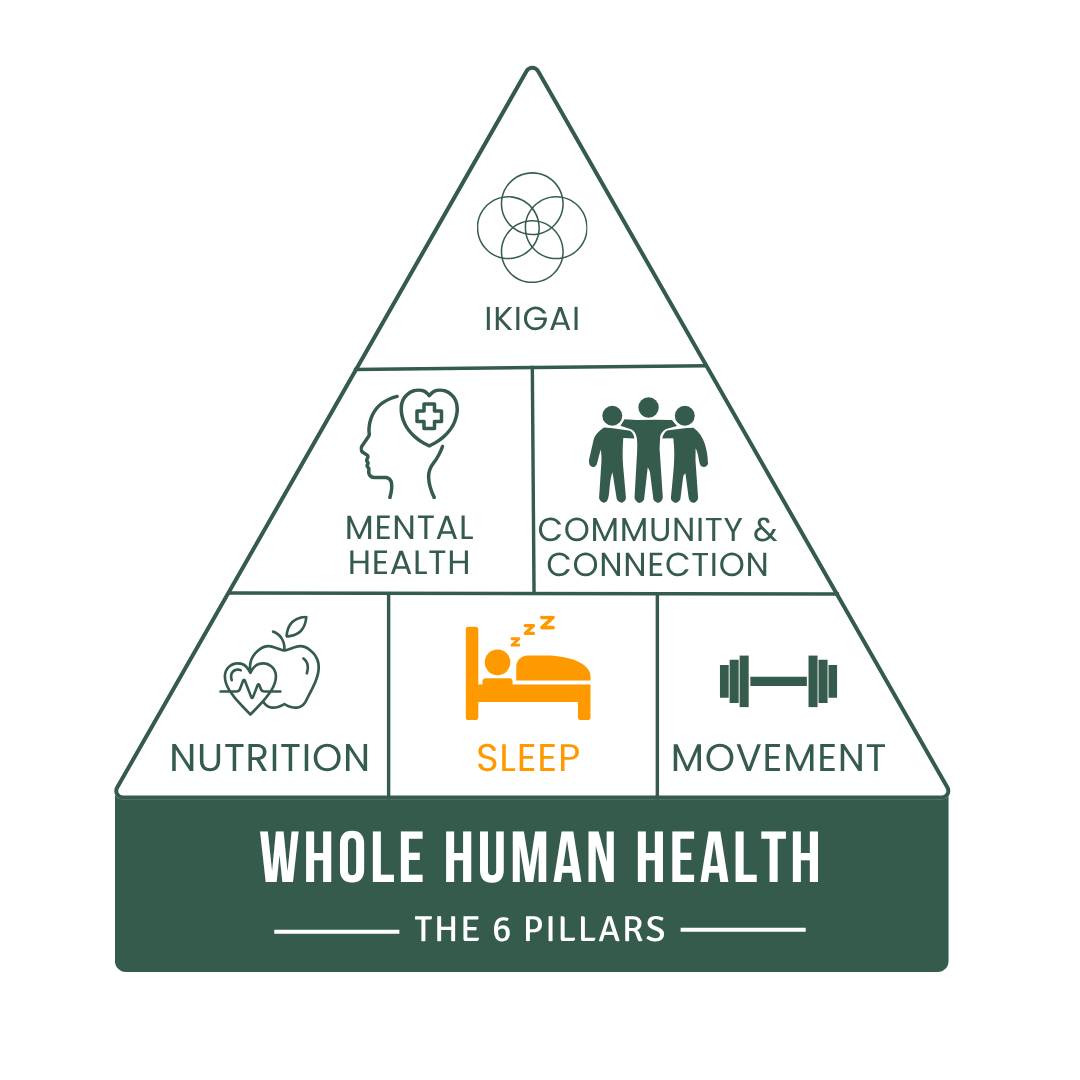
Getting good sleep doesn’t just determine if you feel tired or refreshed.
Sleep is one of the most important processes in the human body and is one of the biggest factors determining how you think, feel and behave.
Healthy sleep supports your memory…
Your mood…
Your metabolism…
Your immune system…
How well you manage stress…
Your digestion, gut health and so much more.
And when it comes to sleep, science shows that quality is just as important as quantity.
Yes, 7-8 hours per night is the target.
But 8 hours of poor sleep is NOT the same as 8 hours of deep, restorative sleep.
So I want to skip straight to the actionable stuff you can do right now to 10x the quality of your sleep.
#1: No Screens 1 Hour Before Bed
The blue light from your screen mimics the blue in the sky and tricks your brain into thinking it’s still daytime.
This causes your brain to suppress melatonin (the hormone that tells you it’s time to sleep) which makes it much harder to fall and stay asleep.
If you absolutely MUST be on a screen, grab a pair of Blue Blocking glasses to mitigate the blue light effects.
#2: Cut Off Caffeine by Noon
Even if you can fall asleep after drinking caffeine it’s still ruining the quality of your sleep.
Caffeine works by keeping your brain locked in a high-frequency, alert state — which blocks the slow delta brainwaves where your body actually repairs and recovers.
So even though you’re getting the hours, you’re not getting the depth. The science on this is actually pretty fascinating, just Google “Caffeine Sleep Architecture”.
#3: Consistent Bedtime & Wake Up Time
Your body runs on a circadian rhythm, which is an internal clock that regulates pretty much every process in your body.
Going to bed and waking up at a consistent time (yes, even on the weekends) helps keep your internal clock regulated.
If you only remember one tip from this email… make it this one.
#4: Supplementation
Once you've got the basics dialed in, the right supplements can take your sleep quality to another level. Ingredients like Saffron, L-Theanine, and Magnesium Glycinate have strong research behind them for improving sleep depth and recovery.
The first two are actually in MTE — and while MTE isn't a direct sleep aid, many of its ingredients work to regulate stress and your nervous system, which directly impacts how well you sleep.
If you can do all 4 of these every single day…
You’ll be amazed by what happens to the quality of your sleep.
But I actually recommend just picking one to start (whichever feels the most doable) and building from there.
I’ve also put together a list of my favorite content on sleep and why it’s so important below:
>> Check it out here
Next week we're diving into Pillar #3 — exercise.
Specifically, how to get the minimum effective dose so you can get maximum results without spending your life in the gym.
You won't want to miss it.