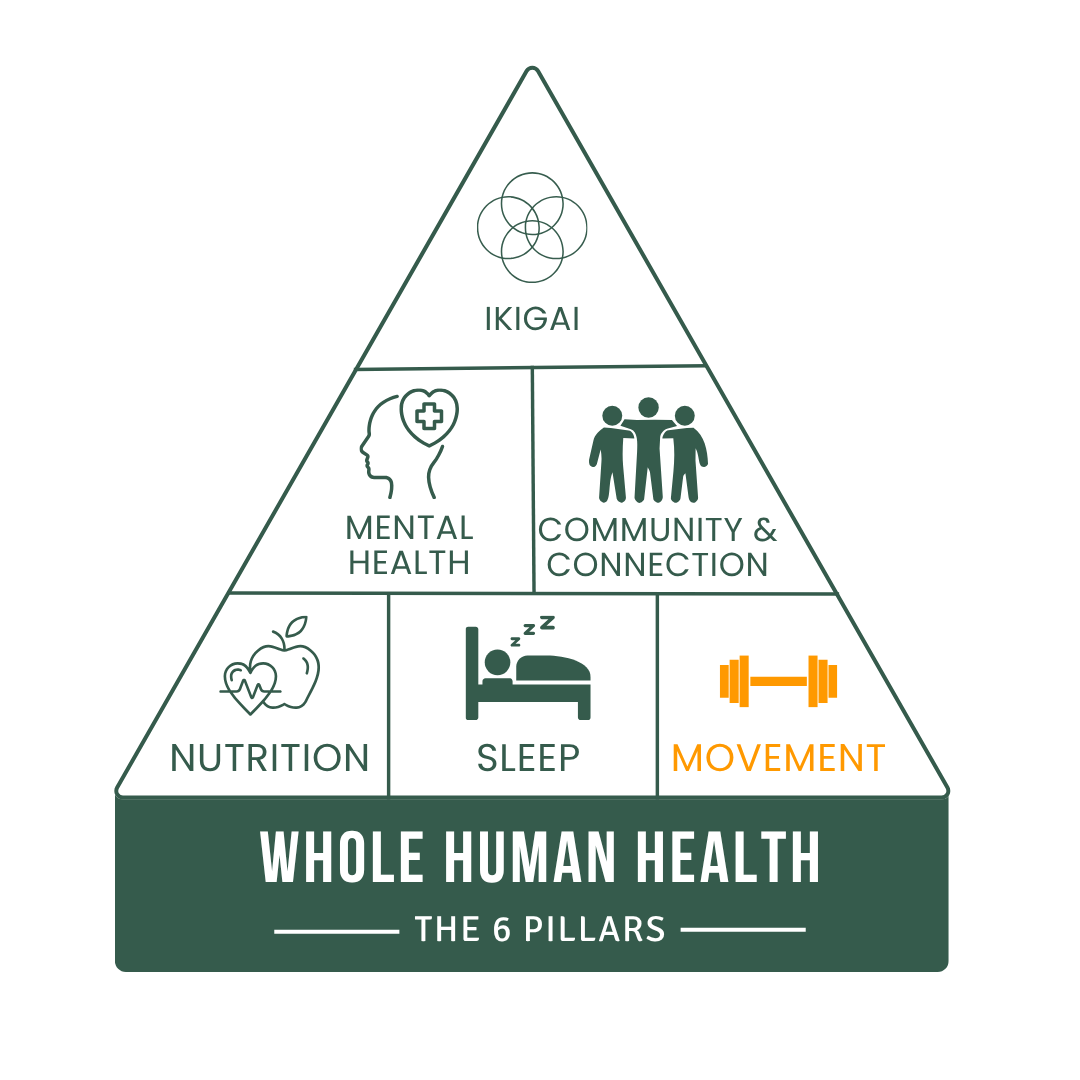
Movement isn't just good for your body — it's essential to it.
The same way food fuels you and sleep restores you, daily movement keeps everything circulating, functioning, and firing the way it should.
It supports your digestion, your lymphatic system, your metabolism, your mood, and your brain.
In fact, a major review of 73 clinical trials found that exercise is just as effective as antidepressant medication at reducing symptoms of depression — with none of the side effects.
Your body was built to move. When it doesn't, things start to break down.
The problem is...
Most people have an all-or-nothing mindset when it comes to exercise.
They think that exercise is supposed to be structured and miserable.
And that if they aren’t hitting the gym 5 days per week, then what’s the point?
But the truth is…
Consistency beats intensity every time.
If you want to be consistent, find something you enjoy - hiking, swimming, yoga, pickleball - and do it as often as you can.
Not only is the extra exercise going to drastically improve your physical and mental wellbeing…
But life is short and the more time you can spend doing the things you enjoy, the better.
Now, that’s my personal philosophy on movement. Keep it simple, make it fun and do it consistently.
But I also want to include some science here and make this a little more actionable with 2 of the best forms of exercise when it comes to longevity.
#1: Walk Every Single Day
Walking is one of the most powerful and underrated things you can do for your health. It's free, it's accessible to everyone, and the research is staggering.
In fact, in a massive University of Sydney study, they pulled data from 57 studies across 10+ countries and found that:
7,000 steps a day significantly reduces your risk of cardiovascular disease, dementia, depression, and early death.
Even 4,400 steps a day is associated with a 41% lower risk of dying compared to being sedentary.
The best way to get started is to organically add more walks into your day.
Stroll around the neighborhood after dinner, take the stairs instead of the elevator, or park further it all adds up.
Set a daily step goal, anywhere from 4,000 - 10,000+ steps per day and try to hit every day.
You can track with a fitness tracker or even just your phone.
#2: Resistance Training
This is the one I wish everyone took more seriously — especially after 35.
Muscle mass is one of the leading predictors of longevity and lifespan.
Adults who resistance train at least twice a week have a 46% lower risk of dying from any cause.
Here's why it matters so much as you age: muscle mass peaks in your 30s, then starts a slow, steady decline.
This leads to weakness, joint instability, metabolic slowdown, and a dramatically higher risk of falls, which is the #1 cause of death in older adults in the U.S.
And it's never too late to start.
Mayo Clinic researchers found that resistance training can slow — and in many cases reverse — age-related muscle loss, even in people who didn't begin until after 70.
Two to three sessions a week is enough. If you’re new to resistance training, the YMCA is a great and affordable place to start.