AU · goodnesslover.com

Your brain eats 20% of everything you do. Here are the top 10 foods to feed it.

Plus a free cheat sheet to stick on your fridge.


This email was sent

Is this your brand on Milled? Claim it.

Plus a free cheat sheet to stick on your fridge.
 ‌ ‌ ‌ ‌ ‌ ‌ ‌ ‌ ‌ ‌ ‌ ‌ ‌ ‌ ‌ ‌ ‌ ‌ ‌ ‌ ‌ ‌ ‌ ‌ ‌ ‌ ‌ ‌ ‌ ‌ ‌ ‌ ‌ ‌ ‌ ‌ ‌ ‌ ‌ ‌ ‌ ‌ ‌ ‌ ‌ ‌ ‌ ‌ ‌ ‌ ‌ ‌ ‌ ‌ ‌ ‌ ‌ ‌ ‌ ‌ ‌ ‌ ‌ ‌ ‌ ‌ ‌ ‌ ‌ ‌ ‌ ‌ ‌ ‌ ‌ ‌ ‌ ‌ ‌ ‌ ‌ ‌ ‌ ‌ ‌ ‌ ‌ ‌ ‌ ‌ ‌ ‌ ‌ ‌ ‌ ‌ ‌ ‌ ‌ ‌ ‌ ‌ ‌ ‌ ‌ ‌ ‌ ‌ ‌ ‌ ‌ ‌ ‌ ‌ ‌ ‌ ‌ ‌ ‌ ‌ ‌ ‌ ‌ ‌ ‌ ‌

Hi ,


Quick question. If your brain could write you a grocery list, what do you think would be on it?


Probably not the cereal you grabbed this morning. (Sorry.)


Your brain is only 2% of your body weight but it gobbles up 20% of everything you eat. It's the most demanding organ you have, and every meal is either giving it what it needs to stay sharp or quietly letting it down.


The good news? Researchers have identified 10 ordinary foods, all available at your local grocery store, that contain compounds proven to protect the brain from cognitive decline.


No exotic superfoods. No expensive supplements. Just real, ordinary food doing extraordinary work.


Here they are.


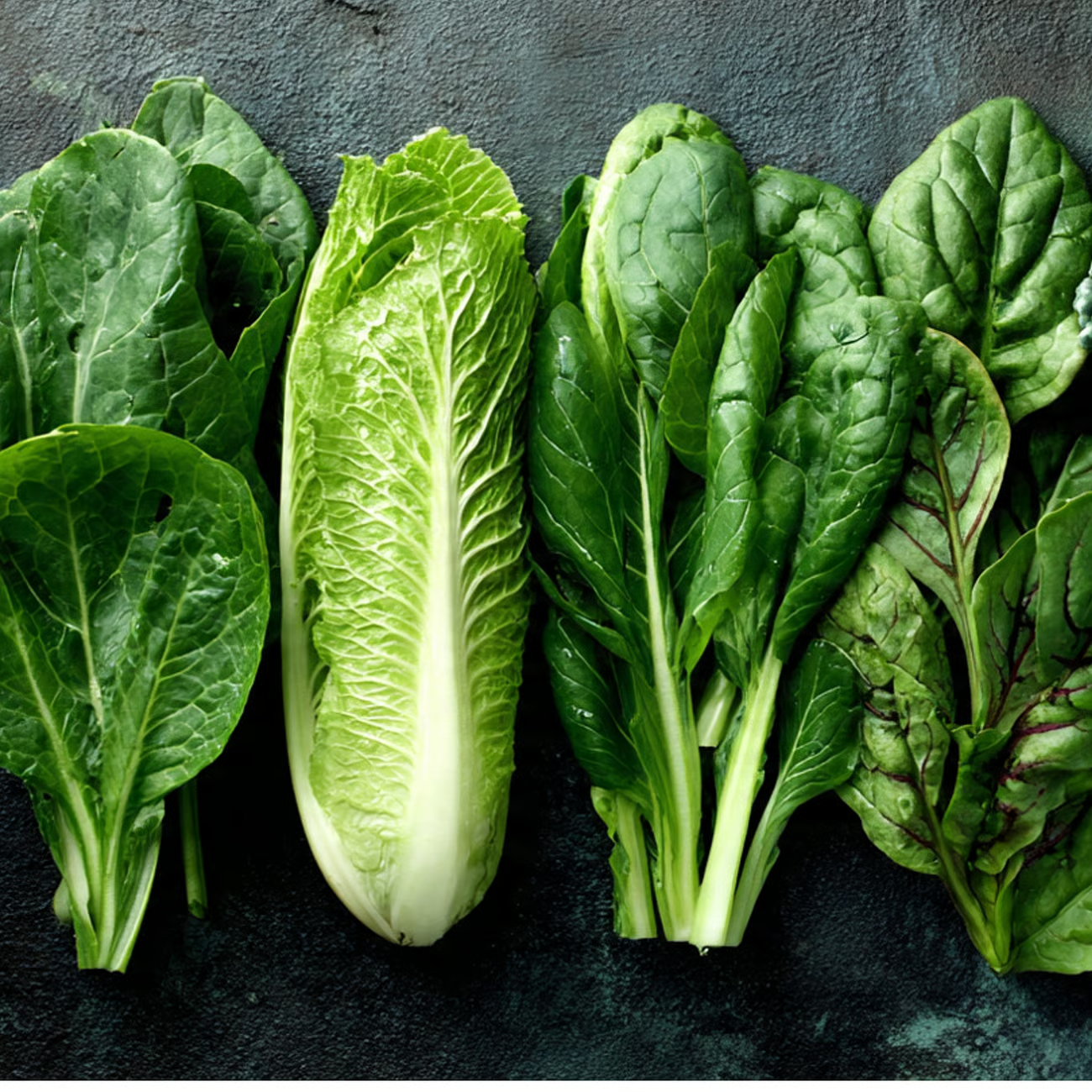
🥬 Leafy greens. A decade-long study found that 1 to 2 servings daily gave people the cognitive abilities of someone 11 years younger. One cup of cooked kale delivers 600% of your daily vitamin K.


🫐 Berries. Regular berry eaters maintained sharper memories for up to 2.5 years longer in a study of 16,000+ women. The anthocyanins cross the blood-brain barrier and directly protect neural connections.


🟡 Turmeric. Curcumin crosses the blood-brain barrier, reduces harmful protein deposits, and boosts BDNF (your brain's growth factor). Pair with black pepper and a healthy fat or most of it passes straight through.


🍵 Green tea. Caffeine for alertness, L-theanine for calm, EGCG for neuron protection. The only food that creates "calm focus." Two to three cups daily.


🍇 Red grapes. Resveratrol reduces the buildup of amyloid-beta proteins linked to Alzheimer's. Grape juice improved cognitive performance in older adults with mild memory problems in just 12 weeks.


🎃 Pumpkin and sunflower seeds. Zinc for brain development, magnesium for neurotransmitter regulation, vitamin E for neuron protection. Higher vitamin E intake was linked to 25% reduced dementia risk.


🫘 Soy. Isoflavones protect neurons from oxidative damage and is especially beneficial for postmenopausal brain health. Stick to whole forms: edamame, tempeh, miso.


🥒 Fermented foods. Your gut talks to your brain through the vagus nerve. Fermented foods support the microbiome that keeps that conversation healthy. Kimchi, kefir, sauerkraut, miso.


🍚 Quinoa. Complete protein for neurotransmitter production, iron for brain oxygenation, and 43mg of choline per cup for memory and cognitive function.


🥦 Cruciferous vegetables. Sulforaphane crosses the blood-brain barrier to fight neuroinflammation. Broccoli sprouts contain up to 100 times more than mature broccoli. Chop and wait 40 minutes before cooking.


Ten foods. All affordable. All accessible. All backed by published research.


I've put together a simple cheat sheet with all 10 foods, what makes each one powerful, how to use them, and daily targets you can stick on your fridge. Print it, screenshot it, or save it to your phone for your next grocery run.


DOWNLOAD THE CHEAT SHEET HERE

The thing I keep coming back to is how consistent the science is. The foods that protect the brain are the same ones that protect the gut. The compounds that reduce neuroinflammation are the same ones that calm intestinal inflammation.


Your brain and your gut aren't separate stories. They're the same story.


Start with your gut. Your brain will notice.


Yours for better health, naturally,


Sarah Otto

Nutritionist (Master of Human Nutrition)

Goodness Lover Co-Founder


P.S. Every food on this list protects the brain through the gut. The leafy greens, the berries, the fermented foods, the cruciferous vegetables, they all work by feeding the beneficial bacteria your microbiome depends on.


Synbiotic Complete was formulated to support exactly that. It combines 8 clinically studied probiotic strains, including the Lactobacillus and Bifidobacterium species that research consistently links to reduced neuroinflammation and better cognitive function, with prebiotic fiber to feed them and Totipro® postbiotics to support gut barrier integrity.


Think of it as reinforcing the ecosystem these 10 foods are building. The food lays the foundation. The synbiotic helps it hold.


Save up to 25% on subscription, backed by our 30-day satisfaction guarantee.


>> Click here to find out more about Synbiotic Complete >>


Your Weekly Brain Workout


Every week, I include a short brain challenge, because keeping your mind active is just as important as feeding it the right foods. And this week's game feels especially fitting given everything we just covered together.


You've just learned that ten ordinary, affordable foods contain compounds proven to protect your brain from cognitive decline. So let's put that fresh knowledge to work right now.


This week we're playing Spot the Odd One Out.


Four groups below. In each group, three things share something in common. One doesn't belong.


Your job is to find the odd one out — and figure out why.


No scrolling back. No peeking. Trust what you just read. 😄


🧠 This Week’s Brain Game: Spot the Odd One Out


Group 1: The Blood-Brain Barrier Club. Three of these compounds are specifically mentioned in today's newsletter as being able to cross the blood-brain barrier. One cannot.


  • Curcumin from turmeric
  • Anthocyanins from berries 
  • Sulforaphane from cruciferous vegetables
  • Choline from quinoa


Group 2: The Fermented Food Family. Three of these are specifically named in today's newsletter as fermented foods that support the gut-brain connection. One doesn't belong.


  • Kimchi
  • Kefir
  • Miso
  • Edamame


Group 3: What Your Brain Needs From Food. Three of these nutrients are specifically linked in today's newsletter to brain protection and function. One was not mentioned.


  • Zinc for brain development
  • Magnesium for neurotransmitter regulation
  • Vitamin E for neuron protection
  • Calcium for bone density and strength


Group 4: The Whole Soy Family. Three of these are specifically recommended in today's newsletter as whole forms of soy worth eating. One doesn't belong.


  • Edamame
  • Tempeh
  • Miso
  • Soy milk


Think you've spotted them all? Scroll down slowly for the reveals...

The Reveals


Group 1 — The Odd One Out: Choline from quinoa


Curcumin from turmeric, anthocyanins from berries, and sulforaphane from cruciferous vegetables are all specifically mentioned in today's newsletter as compounds that cross the blood-brain barrier to do their protective work directly inside the brain. Choline from quinoa is genuinely powerful — it supports memory and cognitive function — but today's newsletter describes it as supporting neurotransmitter production and brain oxygenation rather than crossing the blood-brain barrier directly. An important distinction between compounds that work inside the brain and those that support the systems feeding it.


Group 2 — The Odd One Out: Edamame


Kimchi, kefir, and miso are all fermented foods — meaning they contain live beneficial bacteria that support the gut microbiome and keep the gut-brain conversation healthy. Edamame is whole soy — nutritious, beneficial, and recommended in today's newsletter for its isoflavones that protect neurons from oxidative damage — but it is not fermented. It belongs to the soy family, not the fermented food family. A good reminder that not all gut-friendly foods work through the same mechanism.


Group 3 — The Odd One Out: Calcium for bone density and strength


Zinc for brain development, magnesium for neurotransmitter regulation, and vitamin E for neuron protection are all specifically named in today's newsletter as nutrients found in pumpkin and sunflower seeds that protect the brain. Calcium is genuinely essential for overall health and bone strength — but it wasn't mentioned in today's brain food content. Its primary role is structural rather than neuroprotective, which is why it sits outside this particular group.


Group 4 — The Odd One Out: Soy milk


Edamame, tempeh, and miso are the three whole forms of soy specifically recommended in today's newsletter for their brain-protective isoflavones. Soy milk wasn't included in that list — and for good reason. Most commercially available soy milk is heavily processed, often contains added sugars and stabilisers, and delivers far less of the beneficial isoflavones found in whole soy foods. Today's newsletter specifically directs readers toward whole forms for maximum benefit. The processing matters as much as the ingredient.


How did you do?


4/4 — Outstanding! Your brain is clearly already well fed. You were paying very close attention today.


2–3 — Really impressive! These were genuinely tricky — especially Groups 1 and 2. The fact that you got most of them means today's brain food discoveries are already doing their job.


1–2 — Not bad at all! Every wrong answer is just a new piece of information worth carrying into your next grocery run. That's exactly how this is supposed to work. 


0 — No stress whatsoever. These were designed to make you think carefully. Re-read today's newsletter, download the cheat sheet, and come back stronger next week.


See you next week! 🧡

Let's stay connected!


Are you sure?

Lists help you organize the brands that you care about. Your lists are private to you.