|
Hi there,
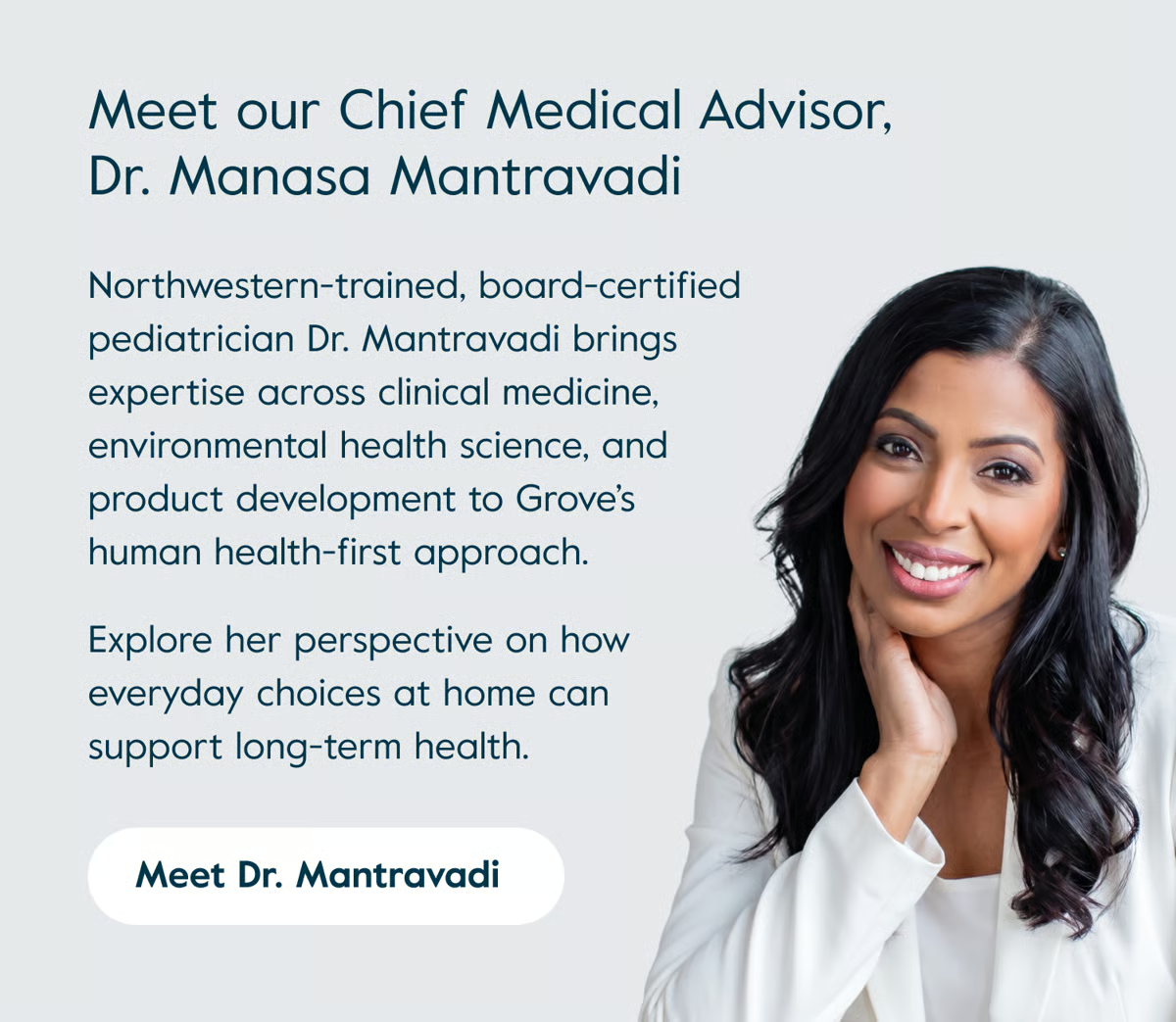
I’m Dr. Manasa Mantravadi, Grove’s Chief Medical Advisor. I'm a board-certified pediatrician and big believer in an evidence-based, human health-first approach for the choices we make every day in our home and how it impacts our health. Every month, I'm sharing something from the world of human health research that's genuinely worth your attention — no fear, no stress. Just important facts and what it means for you and your family.
This month: plastic chemicals. What does this landmark new study show we can actually do about them?
The Research
Seven days. Real numbers. Real results.
A randomized controlled trial called the PERTH Trial — published in Nature Medicine — found that eating food with minimal plastic contact dramatically reduced harmful plastic chemical levels in participants’ bodies in just one week. BPA dropped by ~60%, and two key phthalates dropped by 54% and 38%.
The speed of that change tells us something important: these chemicals don’t accumulate permanently. They clear from your body within hours to days — which means reducing your exposure works, and it works fast.
The Science, Simply
What are phthalates and BPA — and should you be worried?
Phthalates and bisphenols (BPA is the most well-known) are chemicals used to make plastics flexible and durable. They’re in food packaging, canned food linings, and many personal care products — and they make their way into our bodies oftentimes without our knowledge.
Doctors pay attention to them because they’re endocrine disruptors: they can interfere with your hormones. Higher long-term exposure has been linked to:
| → |
Metabolic problems, such as insulin resistance and type 2 diabetes |
| → |
Reproductive health issues, including lower sperm quality and fertility difficulties |
| → |
Heart and blood vessel concerns |
| → |
Possible effects on brain development in children, such as attention difficulties |
| → |
Possible links to certain cancers |
This isn’t cause for panic — a single exposure isn’t going to harm you. But cumulative, daily exposure over years is the concern. The good news is, you have more control over that than you might think.
What To Do
Small shifts, measurable impact.
The PERTH Trial found that food is the biggest lever — choosing foods with less plastic contact throughout the growing, processing, and packaging process had the broadest effect. Here’s what that looks like practically:
|
🍳 In Your Kitchen
| · |
Store and serve food in glass, ceramic, or stainless steel — not plastic |
|
| · |
Never microwave food in plastic containers or plastic wrap |
|
| · |
Swap plastic utensils and cutting boards for wood, bamboo, or stainless steel |
|
| · |
Choose cast iron, stainless steel, or ceramic cookware over nonstick |
|
|
🛒 At the Grocery Store
| · |
Choose fresh, whole foods over heavily processed or pre-packaged options |
|
| · |
Avoid canned foods when possible — many liners contain BPA. Glass jars are better |
|
| · |
Bring reusable bags, including mesh produce bags |
|
|
💧 What You Drink
| · |
Use a glass or stainless steel water bottle |
|
| · |
Don’t drink from plastic bottles left in heat (like a hot car) |
|
|
🥄 Personal Care Products
| · |
Look for “phthalate-free” and “fragrance-free” on soaps, shampoos, and lotions |
|
| · |
“Fragrance” or “parfum” on an ingredient label can mean hidden phthalates |
|
|
🏠 Around the House
| · |
Vacuum and dust regularly — plastic chemicals can settle in household dust |
|
| · |
Simple cleaners (vinegar, baking soda) reduce your chemical load at home |
|
| · |
Take shoes off at the door to avoid tracking in contaminants |
|
|
|
The information provided in this marketing material is for general educational and informational purposes only and does not constitute the rendering of medical advice, diagnosis, or treatment. No physician-patient relationship is created by reviewing or interacting with this content. Always consult with a qualified healthcare professional regarding any medical condition or before making any decisions about your health.
|