Why Palm Beach County Is Ground Zero in the AI Infrastructure War
The Data Centers Are Here

Is this your brand on Milled? Claim it.

Truth That’s Not Fit To Print In The Inverted Matrix of B.S
Follow: Twitter | Instagram Truth Lives Here: Rumble | Odysee | YouTube HONEYCOLONY | Websites: MaryamHenein.com | Georgefloydbook | HoneyColony.com| BUY NOW ON AMAZON!: Operation George Floyd Coming Soon ⟶ ? A child on a bicycle looks across a canal at a gigantic illuminated data center campus at dusk, with transmission towers behind it and lightning in the Florida sky. Something very unsettling is happening across America. Communities that have never hosted heavy industry are suddenly finding themselves targeted for enormous AI data centers. Rural towns. Agricultural communities. Residential areas. Places chosen specifically because people wanted to be far from urban sprawl. The facilities arrive with different names but similar promises: jobs, economic development, technological progress, and a seat at the table of the artificial intelligence revolution. Yet from Virginia to Texas, from Georgia to Florida, residents are increasingly asking whether they are being told the entire story. For years, we were sold the idea of “the cloud.” The cloud sounded harmless. Weightless. Invisible. Our photos lived in the cloud. Our emails lived in the cloud. Artificial intelligence lived in the cloud. Except it does not. The cloud has a footprint. A very large one. And that footprint is beginning to reshape communities across the globe. The Physical Reality of Artificial IntelligenceThe public conversation about artificial intelligence focuses almost entirely on software.
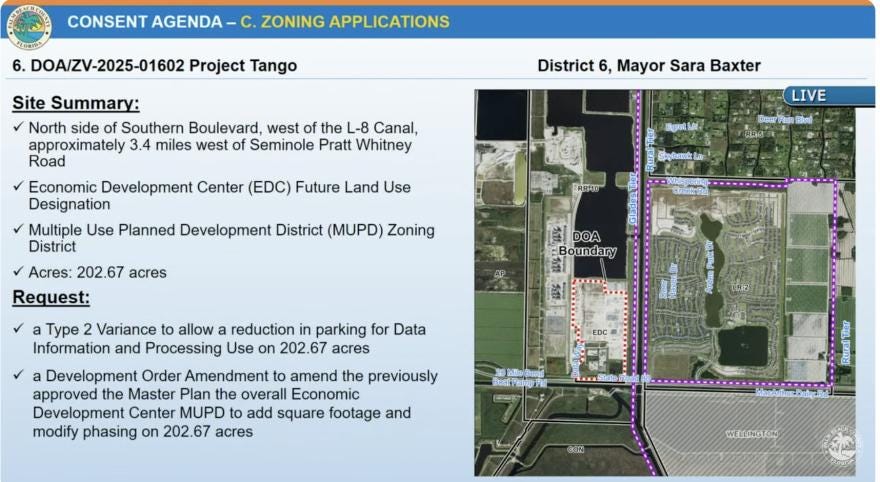
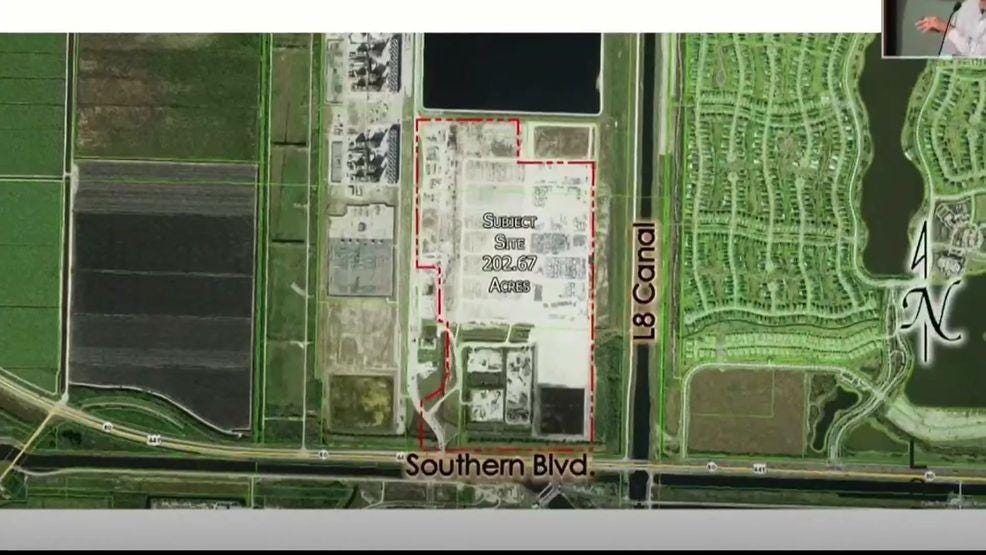
What receives far less attention is the physical infrastructure powering it all. Until now, when it’s seemingly too late. Artificial intelligence requires staggering computational resources. Every prompt, image generation, video rendering, search query, and model training session occurs inside enormous facilities filled with servers operating twenty-four hours a day. These facilities require electricity on a scale once associated primarily with major industrial operations. They require cooling systems, backup generators, transmission infrastructure, security systems, fiber networks, land, and in many cases vast quantities of water. As The Invading Sea reported, the controversy surrounding AI data centers is increasingly centered on electricity consumption, water use, transparency, and whether communities fully understand what is being proposed before approvals are granted. What was once a niche industry supporting internet storage has become the backbone of a rapidly expanding artificial intelligence economy. The result is a worldwide race to build more data centers. Bigger data centers. More powerful data centers. Data centers capable of feeding the insatiable appetite of machine learning systems. The question increasingly being asked by local residents is simple: Who benefits? And who pays? A Growing BacklashAcross the country, opposition is growing. Residents are questioning rising energy demand. They are questioning tax incentives. They are questioning water consumption. They are questioning why some of the wealthiest corporations in human history are asking local communities to absorb the costs of powering the next technological revolution. In Northern Virginia, communities have fought data center expansion over concerns about noise, energy use, and landscape impacts. Similar battles are emerging in Texas, Georgia, Arizona, and elsewhere as AI infrastructure expands at a breathtaking pace. Online discussions reveal growing skepticism. Many people fear that ordinary residents will face higher utility costs while corporations receive incentives and infrastructure support. Others worry about water resources, environmental impacts, and whether communities are sacrificing quality of life to support technologies whose benefits often flow elsewhere. Whether every concern ultimately proves justified is almost beside the point. The perception itself is becoming politically significant. People are beginning to realize that artificial intelligence is not merely software. It is infrastructure. And infrastructure needs space. Welcome to Project TangoThat realization has now arrived in Palm Beach County, where I reside. Project Tango, also known as the Central Park Commerce Center proposal, is a massive development planned near 20-Mile Bend on Southern Boulevard in western Palm Beach County. The location was not selected by accident. The site sits near major electrical infrastructure and offers the type of land increasingly sought by developers racing to build the next generation of AI facilities. According to Stet News, the hotly contested hyperscale data center is proposed for Southern Boulevard at 20-Mile Bend. Supporters describe the project as an opportunity for economic growth and technological investment. Opponents see something very different. They see a massive industrial facility being proposed for an area valued for its open space, rural character, wildlife corridors, and proximity to environmentally sensitive lands. What began as a relatively obscure zoning matter has evolved into one of the most contentious development battles in Palm Beach County. Follow the Money and the MegawattsOne reason residents are paying such close attention to Project Tango is that this is not an ordinary development. When most people hear the words “data center,” they imagine a large warehouse filled with computers. The reality is far more significant. Modern AI data centers have become some of the most expensive infrastructure projects being built anywhere in the world. Industry analysts estimate that a single hyperscale AI facility can cost anywhere from $1 billion to more than $5 billion, including land acquisition, construction, power systems, cooling infrastructure, and computing equipment. The largest AI campuses being planned today are projected to cost tens of billions of dollars. Local opponents describe Project Tango as a $2.6 billion AI data center proposed for 20125 Southern Boulevard in Loxahatchee, encompassing nearly 200 acres. In other words, these facilities increasingly resemble power plants more than office buildings. That reality helps explain why communities across the country are suddenly finding themselves at the center of fierce political battles. The stakes are enormous. A facility requiring billions of dollars in investment does not simply appear because developers like a particular location. These projects are carefully positioned near major electrical infrastructure, fiber networks, transportation corridors, and land that can support future expansion. Project Tango’s location west of Arden and near major utility infrastructure is one reason opponents believe Palm Beach County has become attractive to developers pursuing AI infrastructure.
But residents are asking different questions.
These questions become even more relevant when considering energy demand. Some modern AI data centers consume electricity equivalent to that of tens of thousands of homes. Depending on its size and configuration, a single hyperscale facility can require as much power as a small city. For many residents, this is where the conversation shifts. The issue is no longer whether artificial intelligence is exciting. The issue becomes whether local communities are being asked to dedicate land, infrastructure, water resources, and electrical capacity to support an industry whose primary beneficiaries may exist far beyond county lines. Project Tango has become the local expression of a much larger global question: Who bears the costs of the AI revolution, and who collects the rewards? The Community RevoltOnce residents began learning the scale of what was being proposed, opposition intensified. One of the most fascinating aspects of Project Tango is the diversity of those opposing it.
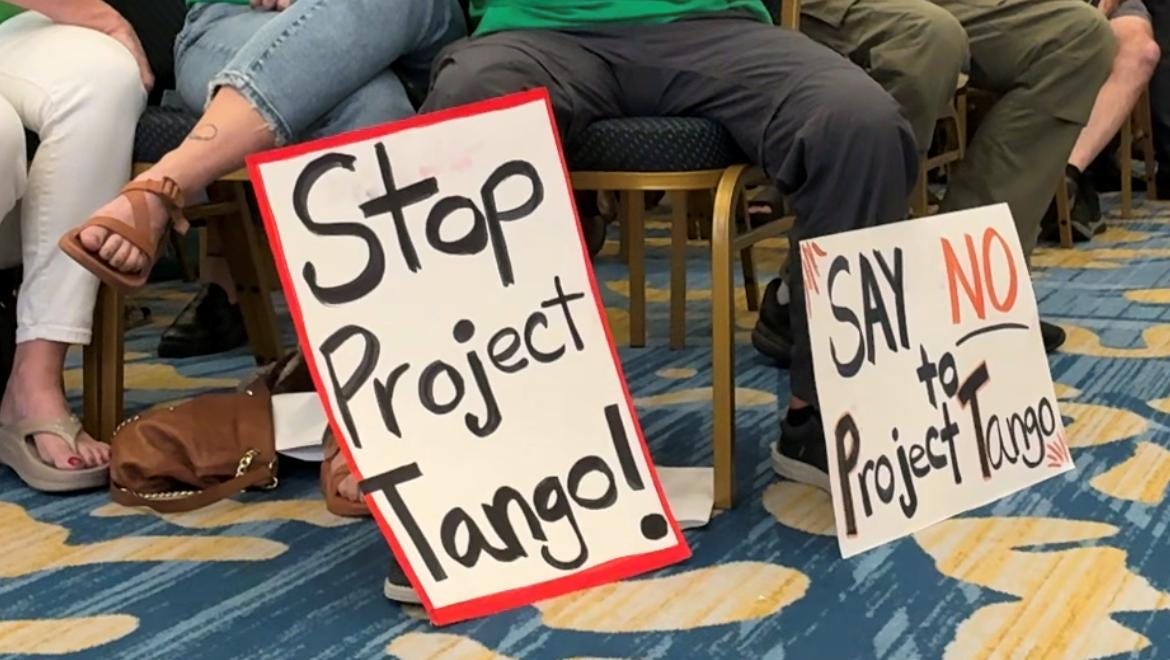
Many have found themselves united by concerns over the project’s scale and potential impacts. At a packed town hall meeting, hundreds of residents showed up to voice opposition. WLRN reported that Palm Beach County Mayor Sara Baxter publicly stated she was not in support of Project Tango. Residents repeatedly raised concerns about water usage, electricity demand, noise pollution, environmental impacts, traffic, emergency preparedness, and the project’s proximity to schools and residential communities. The opposition has expanded beyond neighborhood groups. The Village of Wellington became the first municipality in the region to formally oppose the project. According to WFLX, Wellington’s mayor and council sent a letter to Florida House Speaker Daniel Perez requesting state-level guardrails for hyperscale data center development. For many residents, the issue extends beyond Project Tango itself. They believe they are witnessing a broader transformation of Palm Beach County and are questioning whether local communities have meaningful input into that process. The debate has become as much about transparency as it is about technology. Why People Feel BlindsidedPerhaps the most controversial aspect of Project Tango is the perception that the project evolved into something far larger and more consequential than residents originally understood. Critics point out that earlier approvals involved a very different concept from the hyperscale, AI-focused facility now being discussed. The Invading Sea reported that the project “ballooned” from a 206,000-square-foot data center initially approved in 2016 to a much larger proposal involving 1.8 million square feet of data center space. That distinction matters. A traditional data center is one thing. A hyperscale AI data center is another beast entirely. Project Tango Is Still Not ApprovedAs of this writing, Project Tango has not received final approval. The county has already delayed consideration more than once amid growing public opposition and continuing debate over the project’s scope and impacts. According to Palm Beach County’s official notice, the applicant requested postponement of the April 23, 2026 Board of County Commissioners zoning hearing to July 15, 2026. WLRN also reported that the upcoming zoning hearing was delayed after the applicant requested postponement until July 15. Meanwhile, Stet News reported that competing Project Tango proposals have thrown the development into disarray, with one approach potentially avoiding public scrutiny under existing county rules. That means the decision has not been made. The fight is still alive. Residents, developers, elected officials, and advocacy groups are all preparing for what could become one of the most consequential land-use decisions Palm Beach County has faced in years.
The Cloud Comes Down to EarthFor now, Project Tango remains unresolved. The coming hearings may determine the future of a major parcel of land in western Palm Beach County, but the implications reach far beyond Southern Boulevard. This is about the physical cost of artificial intelligence. It is about whether communities have the right to question the machinery being built around them. It is about whether public officials are prepared to evaluate a new class of industrial infrastructure before it becomes permanent. And it is about the oldest trick in the book: selling something as inevitable before the public has had a chance to consent. For years, we were told the future lived in the cloud. Palm Beach County is discovering that the cloud is made of concrete, steel, water, electricity, politics, and power. And the fight over who controls that future has only just begun.
You're currently a free subscriber to Maryam Henein on Substack. For the full experience, upgrade your subscription.
|