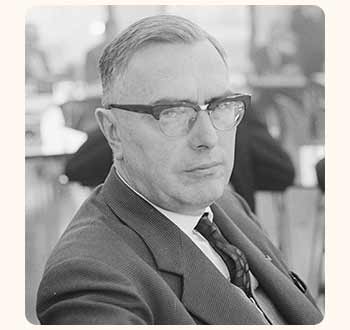
There’s a quiet precision to Max Euwe that becomes more obvious the longer you sit with his games. He approached chess the way a mathematician approaches a problem. Positions were something to be worked through carefully, step by step, until the logic held.
That mindset shaped everything about how he played, and it explains why his 1935 match against Alexander Alekhine unfolded the way it did. Across thirty games, Euwe stayed remarkably consistent. The positions he chose to enter were ones he could understand deeply. His preparation was clear.
His decisions rarely drifted into guesswork.
Over time, that steadiness accumulated into a one-point victory, 15½–14½, and with it, the world title. It is easy to focus on the result and miss the feel of those games. When Max Euwe sat down to play Alexander Alekhine, he was facing a player who thrived in complicated, unstable positions.
Alekhine’s strength came from creating tension early, pushing the game into sharp territory, and then out-calculating his opponent once things became messy.
Euwe’s Methodical Approach
Euwe approached that challenge in a very specific way.
Instead of entering those kinds of positions on Alekhine’s terms, he guided the games toward structures he could evaluate clearly. He chose openings and continuations that reduced unnecessary volatility, maintained the pawn structure, and delayed complications until they were objectively justified.
That approach did not eliminate risk, but it controlled when and how that risk appeared on the board.
That same quality shows up in his tournament play. He remained a strong presence in elite events through the 1930s and 1940s, with results that reflected consistency rather than sudden peaks.
Euwe’s Writing Talent
His writing follows the same pattern. Euwe explained chess in a way that mirrors how he played it. Ideas are introduced, tested, and clarified. Plans are built from the position rather than imposed onto it. When you read his books, you are not being led toward a conclusion for effect. You are being shown how to reach it yourself.
The 1937 rematch with Alekhine, where he lost the title, fits into this picture.
The result was decisive, but it does not contradict what came before. It shows the limits of a method when it meets an opponent who has adjusted.
Euwe accepted the outcome and continued competing, which suggests he understood his career. The title was part of it, not the whole of it.
Reign As FIDE President
Later, his role shifted into leadership. As President of FIDE from 1970 to 1978, he operated under a completely different kind of pressure. The 1972 match between Bobby Fischer and Boris Spassky required constant negotiation and adjustment. Euwe’s handling of that situation reflects the same clarity seen in his games.
He worked through problems directly, made decisions when necessary, and maintained the event's structure. What stays with you, after looking at his career as a whole, is how little of it depends on image. Euwe’s strength lies in the decisions themselves.
They are measured, deliberate, and built to hold up over time.
That kind of approach does not draw attention immediately. It becomes visible when you revisit the games, when you follow the reasoning, and when you realize how few loose ends are left behind.
And that is where his legacy actually lives. Not in a single match, but in the way he made positions make sense.