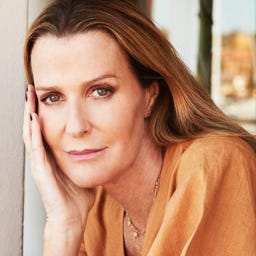
How impossible it is to imagine this world without her in it.
To the world, my mother was Lady Pamela Hicks: daughter of Lord Mountbatten, bridesmaid to Queen Elizabeth II, lady-in-waiting, and one of the last living links to an age that now feels almost impossibly distant.

Is this your brand on Milled? Claim it.

To the world, my mother was Lady Pamela Hicks: daughter of Lord Mountbatten, bridesmaid to Queen Elizabeth II, lady-in-waiting, and one of the last living links to an age that now feels almost impossibly distant. To me, and to those of us who loved her most deeply, she was simply our mother, grandmother, guide and friend—an inspiring example of a life sustained by loyalty, curiosity, discipline and grace, not to mention Elnett hairspray and chocolates. As the BBC wrote at the news of her death, she “moved among kings and queens with ease yet remained profoundly unspoilt,”. She had no time for self-importance. While history surrounded her from birth, she wore it lightly. The ordinary details of human life interested her infinitely more than grandeur ever did. Her memory was astonishing. She could recall amusing family stories, well-worn limericks and ridiculous riddles, but also fascinating conversations and tiny details from decades earlier with breathtaking precision. She continued to answer every letter and card sent to her, replying in her beautiful, unmistakable handwriting. She was also an insatiable reader. Her home overflowed with books. From childhood onwards she kept meticulous lists of every book she finished, recording them carefully until her reading life became a kind of autobiography. Guests who visited her more recently were often surprised, and occasionally scandalised, to find Fifty Shades of Grey resting beside her armchair. At ninety-seven my mother remained gloriously curious about absolutely everything. During her final days, my brother Ashley sat beside her bed with his daughters and read aloud from those little books with their lists: title, author, and then my mother’s own verdict beside each one. “Good.” “Quite good.” “Disappointing.” Occasionally something rather more withering. As she lay there, she smiled, remembering them all.
For those fortunate enough to sit beside her, it often felt like sitting beside living history—except infinitely warmer and more human than history can ever appear on the page. She had known Gandhi, Haile Selassie, Jackie Kennedy and Martin Luther King Jr. She travelled with Princess Elizabeth and Prince Philip during the Commonwealth Tour of 1951 and stood beside them in Kenya when news arrived that King George VI had died, becoming the first person to curtsey to the new Queen. She lived among dazzling people and extraordinary privilege, yet remained profoundly grounded, possessing an instinctive understanding that life was never really about oneself, but about how one behaved towards others. Two principles framed her life: loyalty and duty. Those twin virtues anchored her through almost a century. Inspired first by her parents, and later by the example of the Queen, she developed an unwavering sense of service that remained with her throughout her life. But despite her privileged upbringing, there were episodes from her childhood that today would leave most of us breathless with anxiety. On one occasion she was left in a hotel with her sister and nanny for what was meant to be a few days and did not see her mother again for months. During the war she was sent to America and spent nearly a year separated from her parents, uncertain at times if they were even alive. At seventeen, after arriving in India when her father became the last Viceroy, she was sent straight to work in medical camps outside Delhi helping those displaced by Partition. During this time she took on far more responsibility than would normally be expected of a girl just finding her feet in the adult world, witnessing unimaginable suffering in the makeshift clinics where she worked, all the while taking Hindustani lessons in order to better communicate with those around her. As children, did we fully understand the reserves of strength she possessed? Perhaps not until the murder of her beloved father, Lord Mountbatten, in 1979—a tragedy that would have permanently hardened many people. I was only eleven, too numb and too young, perhaps, to realise that my mother had suddenly found herself almost entirely alone. In the days following the bomb, the people she loved most, the heartbeat of her life, were either dead or lying critically injured in hospital. The pain she must have felt does not bear thinking about. Yet she never faltered. Only a short while later came financial difficulties that forced the sale of the family home, followed by the devastating diagnosis of breast cancer. Through all of this, and through much weightier darkness, my mother lived by the advice her cousin Prince Philip once offered: “Look up, look out, say less, and do more.” My mother never learnt to cook. Although on one occasion tried to prepare supper for her sister and Prince Philip. She read the instructions on a tin of spaghetti which advised: “Place contents in boiling water.” Taking this literally, she lowered the unopened tin directly into the saucepan and returned to the sitting room. A short while later a loud explosion sent everyone racing back to the kitchen, where spaghetti decorated the ceiling. “Well,” remarked Prince Philip, surveying the scene, “at least we know it’s cooked.” Cooking may not have been her strength, but manners certainly were. Years after my father died, I attended an event in North America where two women introduced themselves and told me they had once been invited to visit him at his Oxfordshire home. Arriving on the appointed day, they knocked on the front door and my mother appeared. “We’ve come to see David Hicks,” they explained. “You’ve just missed him,” she replied. “He died earlier this morning” the ladies understandably looked appalled “But you’ve come all this way, so you must come in for tea.” my mother insisted. The world will remember Lady Pamela Hicks for the history she witnessed and the people she knew. We will remember how she made us feel. And though her voice is now absent, her presence remains woven through our lives—in our values, our stories, our memories and our children. How fortunate we were that she was ours. How privileged we were to be loved by her. And how impossible it is to imagine this world without her in it.
Invite your friends and earn rewardsIf you enjoy INDIA HICKS. An Unexpected Journey., share it with your friends and earn rewards when they subscribe.
|