|
|
Can you dropship food or snacks? Yes. |
Should you do it without understanding the operational risk? Probably not. |
Food is one of the few categories where fulfillment mistakes become customer trust problems fast. Margins can work. Repeat purchases can be strong. But beginners underestimate how different this category is from standard ecommerce products. |
The first mistake: treating snacks like normal ecommerce products |
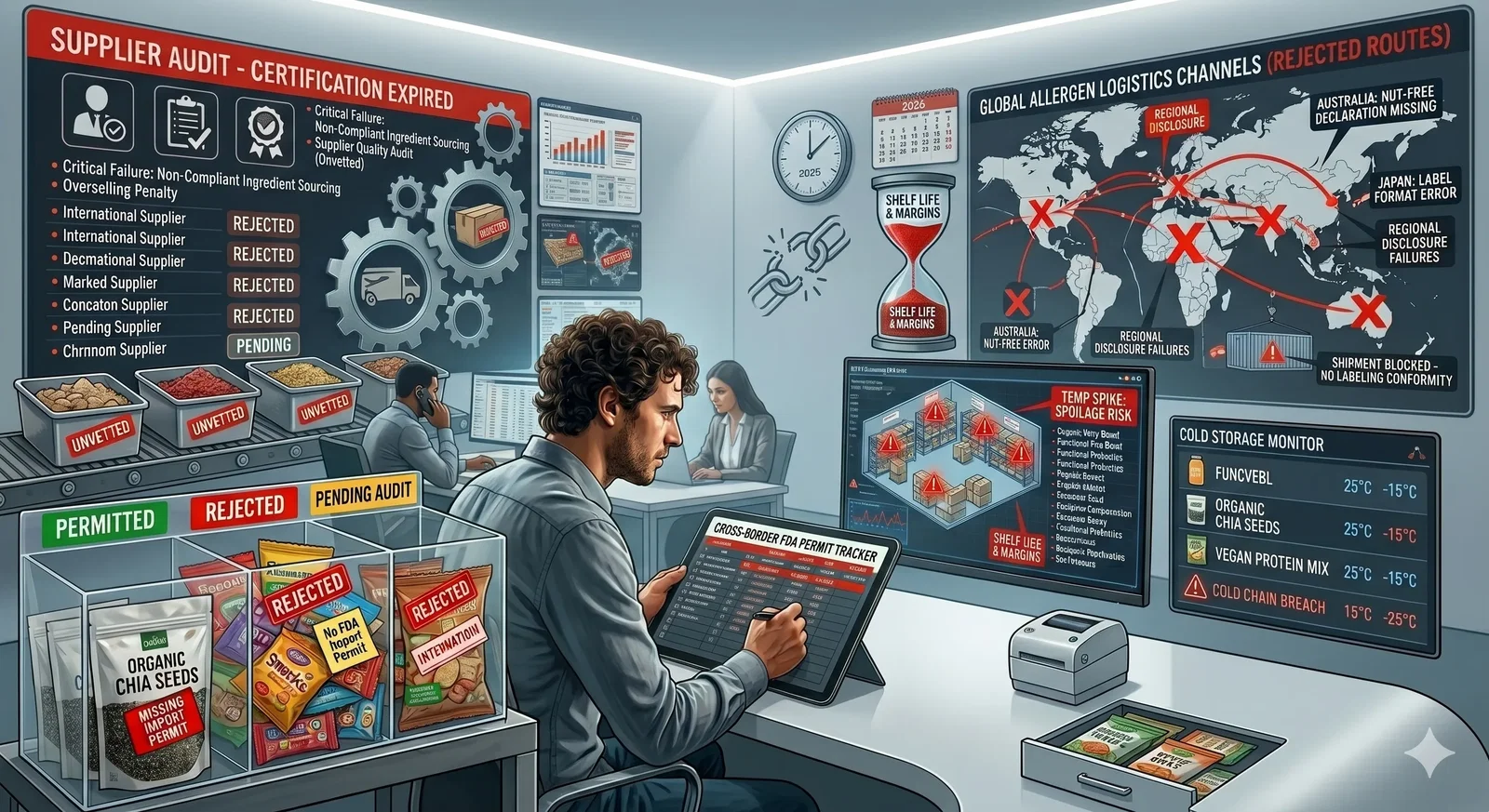
Food inventory behaves differently. Expiration dates, temperature sensitivity, regional regulations, and damaged packaging create operational pressure most beginners never model correctly. |
What matters: |
|
A delayed shipment on apparel creates annoyance. A delayed shipment on food creates refund requests and customer distrust. |
Margins are tighter than most beginners expect |
A $4 snack item can become unprofitable quickly after shipping, payment fees, packaging, and replacement costs. |
Typical cost stack includes: |
|
This is why many successful food sellers focus on bundles, subscriptions, or multipacks instead of single low-ticket items. |
Supplier quality matters more than product selection |
Many beginners spend weeks researching products and almost no time auditing suppliers. |
That is backwards. |
You need suppliers who can: |
Maintain inventory consistency Handle FDA-compliant packaging Ship quickly Provide tracking reliably Manage damaged-item claims professionally |
One unreliable supplier can destroy customer retention in this category. |
Private label changes the economics |
Generic snack products are difficult to scale long term because competition compresses margins fast. |
Private label improves: |
Brand recognition Repeat purchase rates Pricing flexibility Retail positioning |
But it also increases: |
|
Beginners should understand both sides before committing. |
Subscription models outperform one-time purchases |
Snack and beverage brands scale faster when customers reorder automatically. |
Why subscriptions work: |
Predictable revenue Lower acquisition pressure Better customer lifetime value Easier inventory forecasting |
The operational challenge is maintaining product consistency. One bad shipment can increase churn immediately. |
Compliance is not optional |
Food ecommerce introduces legal requirements many dropshippers ignore until problems appear. |
Depending on product category and location, sellers may need: |
Ingredient transparency Allergen disclosures Proper labeling FDA-compliant packaging Local import approvals |
Ignoring compliance is not a growth strategy. It is a liability. |
The category still has a strong opportunity |
Despite the complexity, food and snack ecommerce continues growing because repeat demand is built into the category. |
High-performing niches include: |
Health snacks Protein products International snacks Organic foods Functional beverages Low-sugar alternatives |
The sellers winning in 2026 are not chasing novelty. They are building reliable fulfillment systems and strong supplier relationships. |
Want to source snack and food suppliers more safely before scaling ad spend? |
|