But the issue goes far beyond one IT meltdown at the post office, or even many IT meltdowns at many post offices. As my colleague Ian Millhiser has covered in depth, Trump’s March executive order could effectively end mail-in voting in several states by imposing a slate of last-minute requirements that election officials don’t have time to implement.
Let’s just take the narrow issue of ballot envelopes. Trump’s executive order directed the post office to issue new rules about the design of those envelopes, which the post office did…on August 21.
The new rules required that ballot envelopes bear a unique barcode and a logo that the Trump administration claimed would "facilitate proper handling” of election mail. But by that point in the season, a number of states were already preparing to mail their midterm ballots.
North Carolina starts mailing general election ballots this week, for instance. More than a dozen other states post theirs by late September. And even in the unlikely case that these states could design, order and distribute millions of compliant envelopes in the next few weeks…it’s not clear the post office could process them.
Under the new system, the Postal Service must individually scan every outbound ballot as it heads to voters, a process that the Trump administration says will take “less than a minute” each. Across millions of ballots, however, “less than a minute” adds up: potentially to more than 380,000 hours, in California’s case.
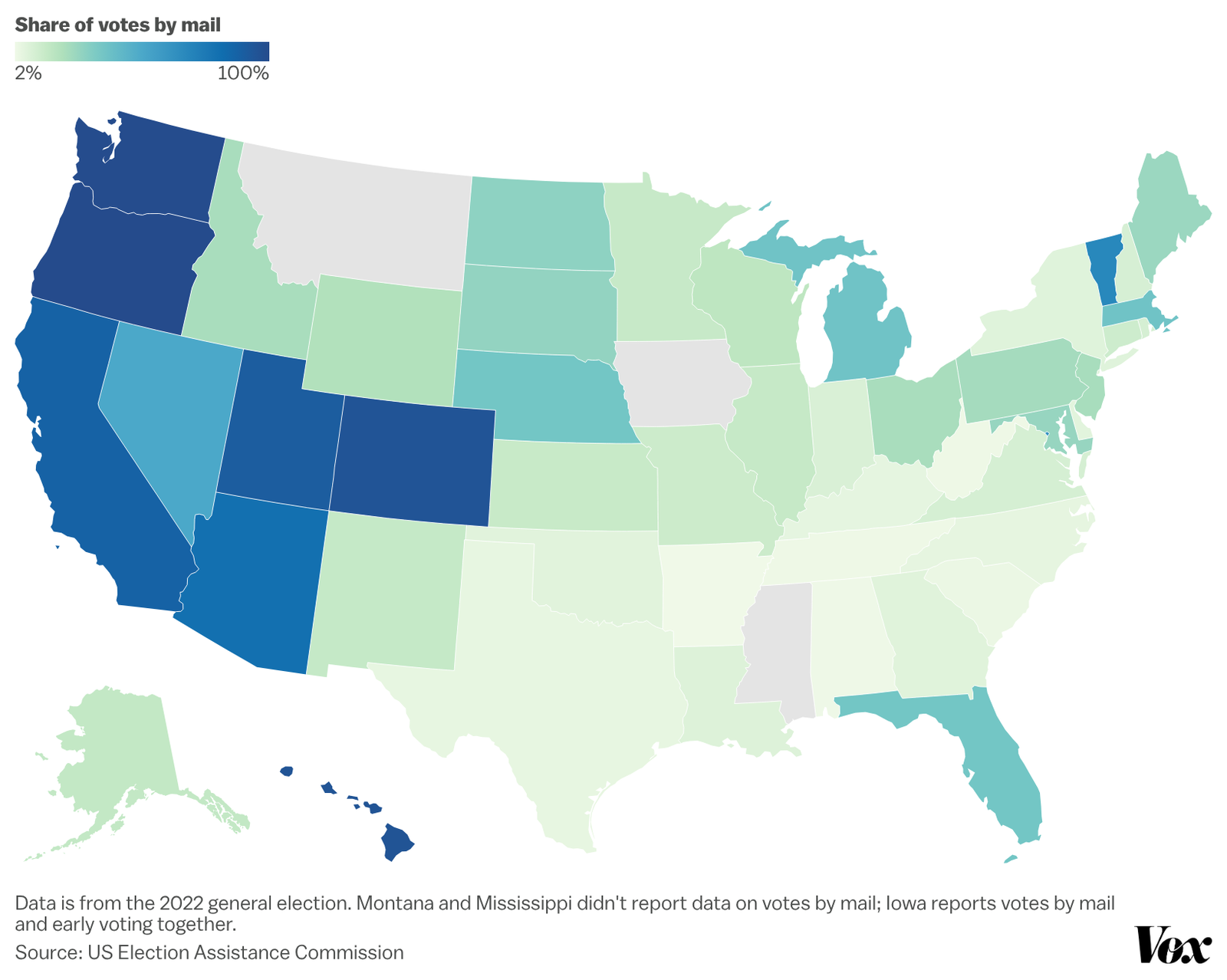
That’s enormously concerning, Ian writes. Should courts allow Trump’s order to go into effect, the states that can’t comply won’t be able to do mail-in voting this year. And there are a number of states — including Oregon, Washington, Hawaii, Colorado, Utah, and California — where the entire election is basically vote-by-mail.
"I think it is more likely than not that SCOTUS does not back Trump's play here. But you can never rule anything out with this Supreme Court,” Ian said.