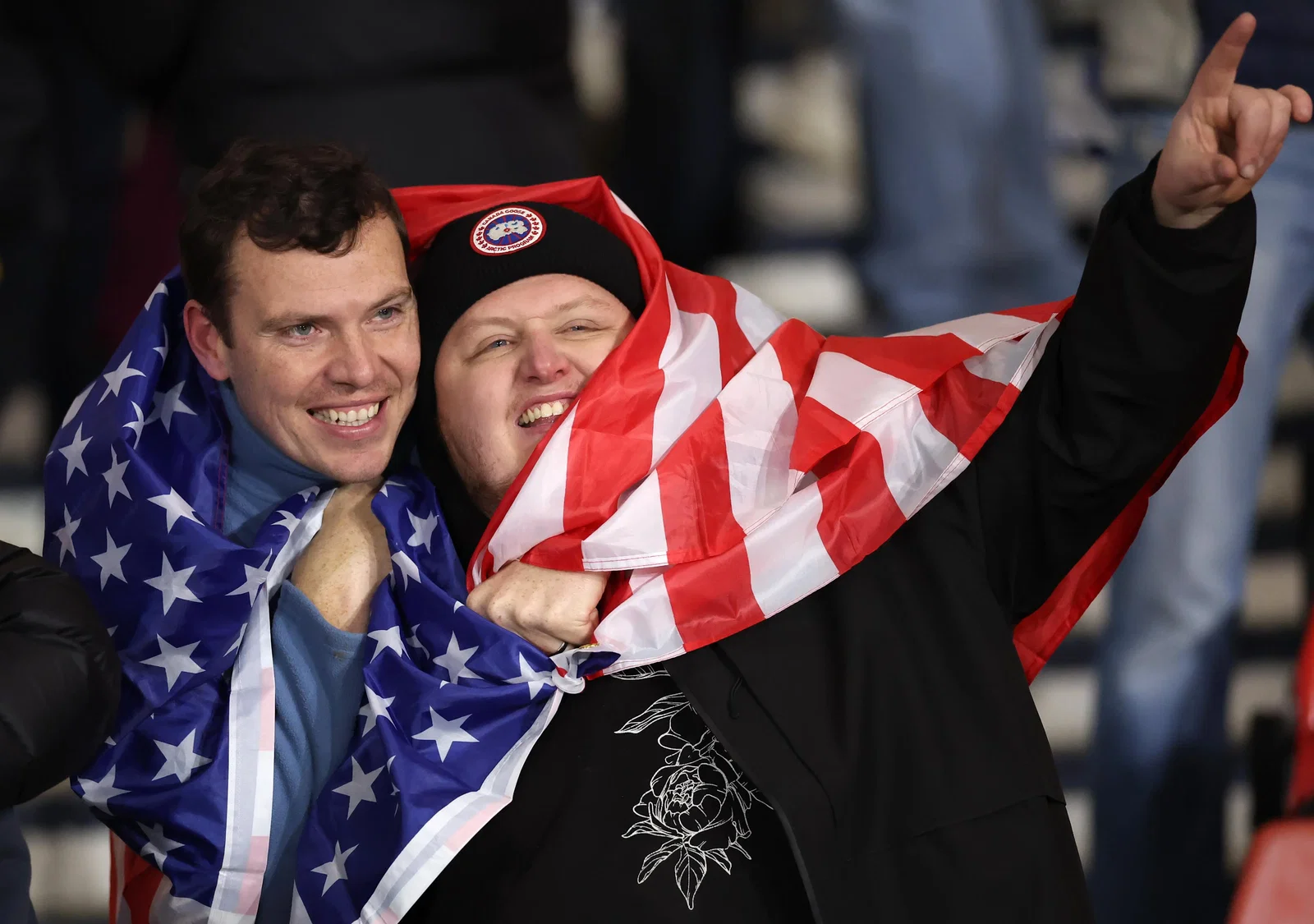
My new favorite show is video after video from World Cup tourists who are in awe of America. The 2026 World Cup has become a global love fest for the US — at a time when the rest of the world has plenty of reasons to dislike us.
A World Cup hosted by the United States under the xenophobic Trump administration had all the makings of a disaster. And President Donald Trump’s policies have made their mark: an Iraqi player was detained at the airport for seven hours, a Somali referee was turned away entirely, and players from the Global South have openly said that their families and supporters have had to stay at home because of the US’s punitive travel policies.
At the same time, World Cup tourists from around the world appear to be delighted with America, with its sheer bigness, its creature comforts, its shiny red fire engines and bright yellow school buses.
“OH WOW this has just changed my entire way of thinking and I won’t ever look back,” posted a Scottish man over a video of a water bottle overflowing with ice cubes pouring down from that exotic machine, the ice maker.
These videos are extremely charming, and a relief for the Americans who are worried about our international reputation. They’re also a reminder that America’s cultural influence runs deep across the globe.
The whole world watches American movies and American TV shows and listens to American music. People recognize yellow school buses from Forrest Gump, red fire engines from Marvel movies, tailgate parties from The Simpsons. For some overseas visitors, coming to the US seems to feel like meeting Mickey Mouse in person.
That’s because of soft power, a diplomatic tool that the US has historically been very good at, says Hendrik W. Ohnesorge, a senior lecturer at the University of Bonn Institute for Political Science in Germany. Soft power describes a nation’s ability to get what it wants from others, not through the coercive power of the military or economic pressure, but through subtler means.
“At the very core of soft power is attraction, the power to attract others to do things you want them to do,” Ohnesorge tells Vox. It’s been a key factor in America’s global success, he adds. “The US usually is one of, if not the, major point of reference, when it comes to historical examinations or examples of how successfully to use soft power.”
It’s not just pop culture that has made the US a soft power force to be reckoned with. The US tech sector developed some of the most important innovations of the past few decades, from the iPhone to mRNA vaccines. Our university system attracts some of the most talented students from every other country in the world (though international student enrollment has dropped since Trump’s immigration policies have gone into effect). In the days before DOGE, US foreign aid saved about 3.3 million lives a year.
If soft power is about attraction, the US has historically had a lot to draw the rest of the world in — at least, it did until Trump began attacking those very assets.
“Some of the basic instruments of US soft power that were quite successful…especially during the Cold War years, were defunded,” Ohnesorge says.
But the kind of soft power on display in foreign tourists’ World Cup videos — from the consumer abundance to the friendly interactions between visitors and Americans — is resilient even to Trump’s xenophobia and isolationism.
“Soft power is a thing that rises from society, and usually it’s strongest when it’s not directed from the top,” says Ohnesorge. “These acts of everyday kindness, openness, and things like that, that are societal or maybe even apolitical. These are the ones that are most successful.”
They are at least the ones that are most fun to watch in your TikTok feed. Have you seen the one of the Japanese guy touring Buc-ees?
Read Constance’s full story here.