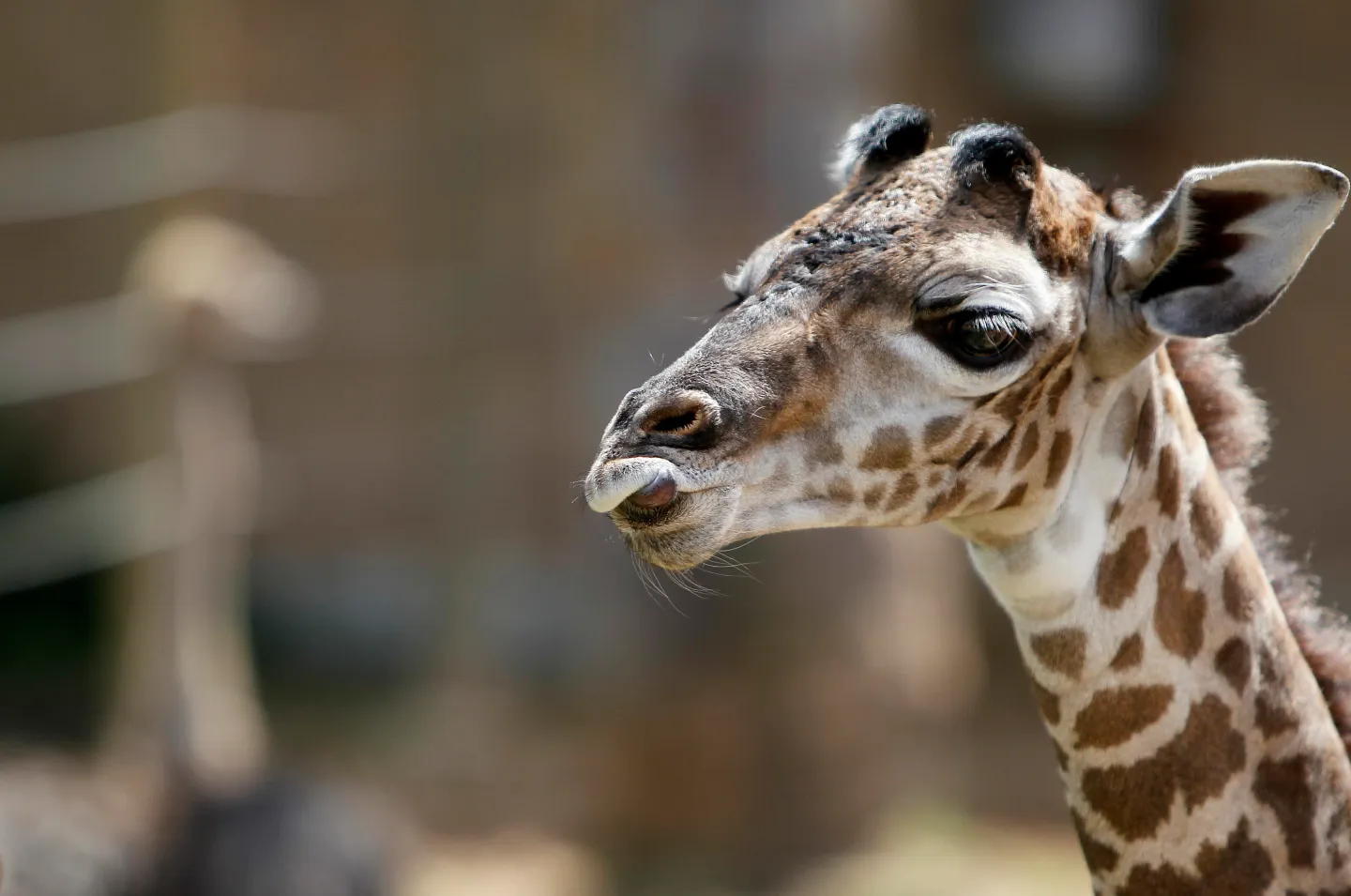
Gracie is a reticulated giraffe — an endangered African species — who otherwise lives at Cedar Hollow Ranch in Leakey, Texas. It isn’t a ranch in the traditional sense, but, rather, an exotic animal breeding operation. Cedar Hollow breeds giraffes, as well as a variety of other ungulates — hooved animals — native to Africa and Asia, like the barasingha (a deer species), bongos (an antelope species), and aoudads (a type of sheep), several of which are endangered, threatened, or vulnerable in the wild.
When I asked Cedar Hollow’s manager Vick Jones why they breed giraffes, he said that they sell them to people who “enjoy having wildlife” (of which there are a huge number in Texas alone. Some 5,000 ranches or large landholders there have exotic animals). They have also sold giraffes to zoos. Jones didn’t say which ones, but there are a number of small exotic zoos in the area that allow visitors to hand-feed giraffes and interact directly with various other wild animals.
In other words, these wild species are captively bred for lives far from their native ecosystems and sold for vast sums of money — upward of hundreds of thousands of dollars — to be kept essentially as wild pets or as entertainment in zoos, which confine animals in enclosures a tiny fraction of their natural range and which are poorly regulated.
But Cedar Hollow’s giraffes may be the relatively lucky ones. Of the ungulates bred there, many are destined for other ranches — not as high-priced pets, but as hunted game. According to a report from Wildlife Partners, a company that works with ranchers on exotic wildlife breeding, Texas has some 500 ranches open to the public to hunt exotic animals — and approximately 2,500 additional private ranches where at least some exotic hunting is done. And all of those animals have to come from somewhere.