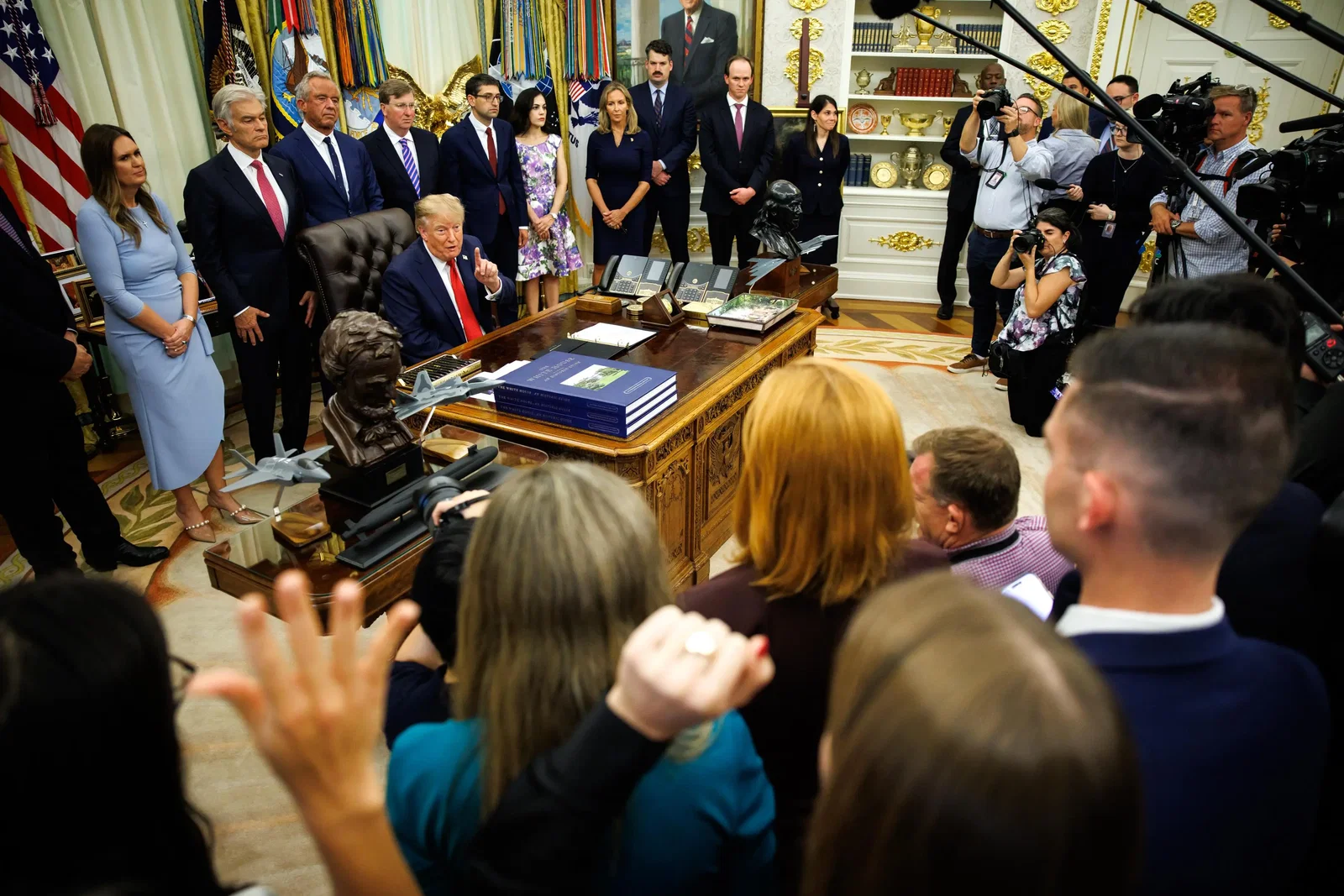
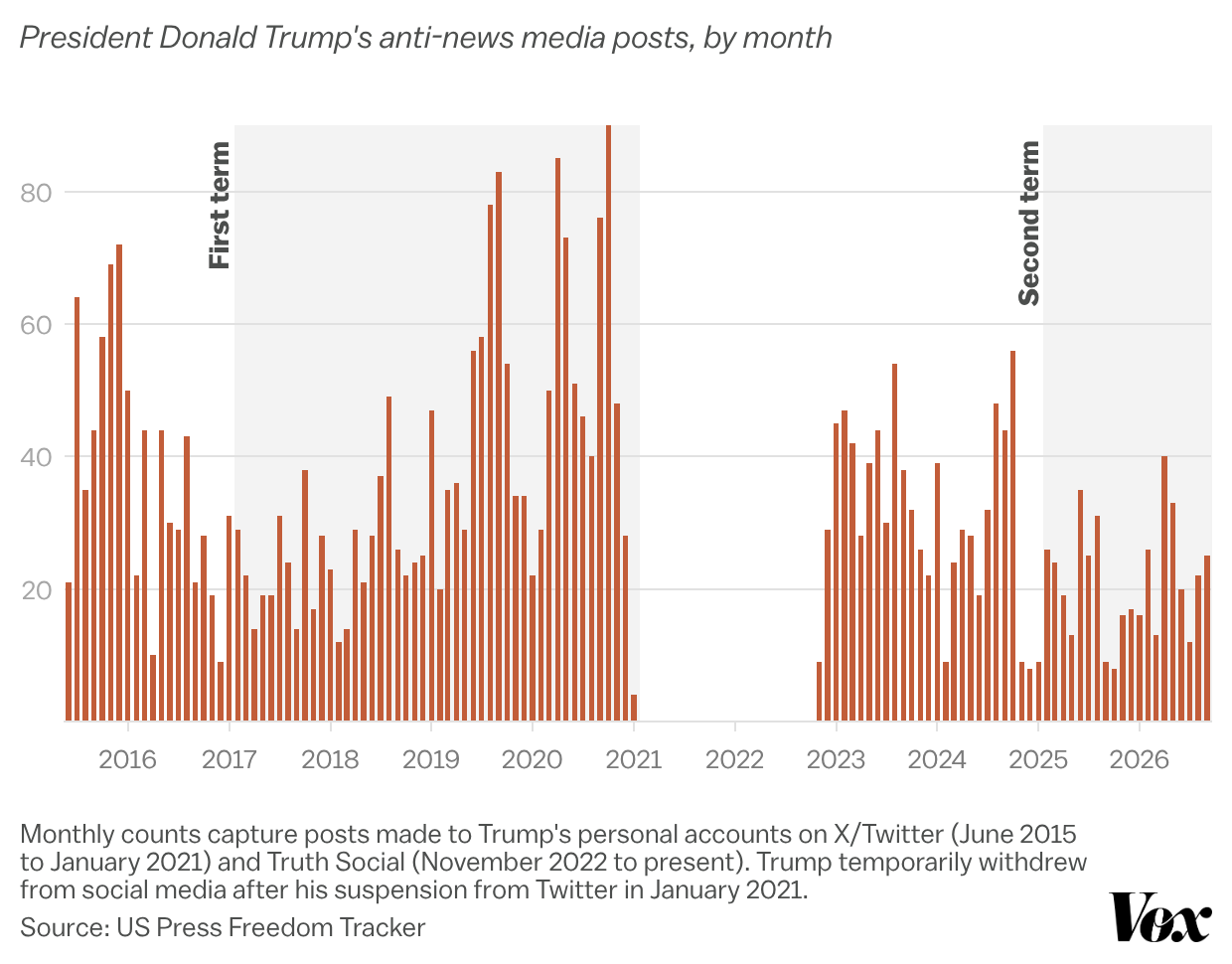
This is all emblematic of how Trump has escalated his attacks on the news media in his second term: not just by insulting and demeaning the press, but also by weaponizing otherwise neutral-seeming rules.
Every administration has policies that regulate who can access the White House grounds and under what conditions, for instance. But in early 2025, the White House took control of the press pool — the rotating group of reporters that frequently travels with the president — and soon sought to exclude disfavored organizations.
More insidiously, Trump has mobilized regulatory agencies like the Federal Communications Commission against his perceived critics, in some cases even threatening to revoke the licenses of local TV stations that air coverage and commentary he disagrees with.
While no licenses have actually been suspended, the FCC has mysteriously pulled some up for unscheduled review. And just the prospect of government retaliation has been enough to force some content off the air: Just two weeks ago, the late-night comedy host Jimmy Kimmel said his show wouldn’t air a scheduled interview with Texas Senate candidate James Talarico because of the FCC’s new scrutiny of political content.
This playbook isn’t a Trump original, as my colleague Zack Beauchamp has explained. In fact, weaponizing broadcast regulations was also a favored technique of former Hungarian Prime Minister (and infamous strongman) Viktor Orbán, who successfully used licensing rules and other bureaucratic technicalities to force independent media outlets into submission.
Likewise, revoking the press credentials of critical reporters has long been a favorite tactic of Russian President Vladimir Putin, Nico Perrino, the executive vice president of the nonprofit civil liberties group Foundation for Individual Rights and Expression, said in a briefing on Wednesday: “These are things that are done by regimes that we do not want to emulate.”
Lest these comparisons get you down, however, recall that neither Hungary nor Russia has all the defenses that the US does. Defenses like, for example, an independent court system.