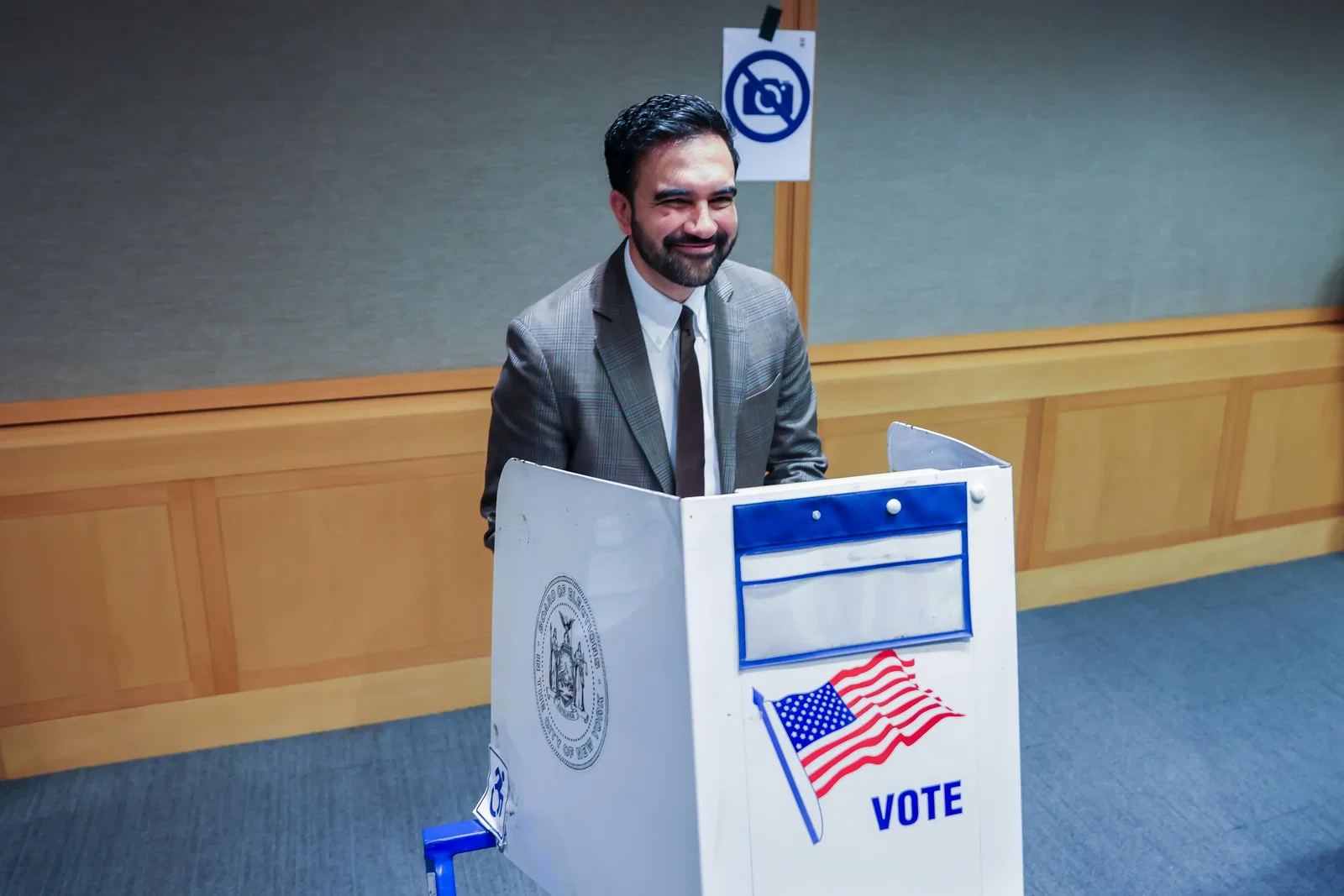
Democratic socialists won big in New York’s primaries Tuesday, as two members of the Democratic Socialists of America defeated the Democratic establishment choices in congressional primaries, and several more triumphed in state legislative primaries.
The victories suggested that DSA member Zohran Mamdani’s election as mayor of New York City last year wasn’t a fluke. Democratic socialism has become a real force to be reckoned with not just in New York — but in several cities around the country.
In Washington, DC, DSA member Janeese Lewis George won a blowout victory in Democrats’ mayoral primary last week, making her all but certain to be the district’s next mayor.
In Seattle, Mayor Katie Wilson, who defeated incumbent mayor Bruce Harrell last year, is a self-identified democratic socialist. And in Los Angeles, city council member Nithya Raman, a DSA member, advanced to this November’s runoff against Mayor Karen Bass.
The DSA has also elected several members of the city councils of New York, Los Angeles, Minneapolis, Chicago, Portland (Oregon), San Antonio, and more. And they’ve elected a handful of state legislators in many states, mostly from urban districts.
But winning beyond deep-blue urban areas — in suburbs, in rural areas, and in statewide contests — is a tougher challenge.
Cities have, of course, long voted overwhelmingly for Democrats. But the rise of the democratic socialists is a more recent phenomenon — occurring gradually over about the past decade, before its explosion last year.
In most cases, the takeover followed a pattern — there was an increasingly sclerotic Democratic establishment that had been in power for a while, and that had gotten out of touch with the concerns of its increasingly left-leaning base.
“The Democratic Party apparatus that has traditionally been responsible for providing goods and services and representation to the people has atrophied,” said Asad Dandia, a public historian from Brooklyn.
As the party machines looked increasingly hollow, the DSA tried to fill the gap with organizing — something they were particularly successful at in New York.
“The NYC DSA is the crown jewel of all the DSA networks around the country,” pollster Adam Carlson told me. “My understanding is a lot of it’s just like hustle — they’re out in the community, they’re talking to people.”
This led to some DSA successes in the late 2010s, such as the election of Rep. Alexandria Ocasio-Cortez (D-NY) to Congress. More recently, a confluence of political developments — including the Israel-Gaza war and the reelection of President Donald Trump — discredited the Democratic establishment in the eyes of many voters. Those voters are also contending with a growing cost-of-living crisis, particularly in big, expensive cities like the ones where the DSA has gained traction.
But winning in other environments will be more of a challenge. Suburbs and rural areas are simply less Democratic than cities. On top of that, suburban and rural Democrats are typically older, less left-leaning, and more likely to own homes, which means that different issues matter to them.
“We talk a lot about housing justice and housing policy, and that is mostly relevant to people who live in places with apartments and lots of landlords,” said DSA national co-chair Megan Romer. “We have to figure out, okay, what policies do we have that can work out here?” She flagged opposition to data centers as one possibility.
The party’s next big test is imminent. Colorado holds its primary elections next Tuesday, and a trio of anti-establishment candidates, including one endorsed by the DSA, are challenging more conventional, old-school Democrats.
Colorado was, until recently, a swing state where Democrats had long taken a pragmatic, middle-of-the-road approach. (“Denver is run by No Kings moms and grandmas,” said Eric Sondermann, an independent political commentator.)
But challengers like Melat Kiros, who’s running for the congressional district that includes most of Denver, are betting that the base has gotten both more progressive and more restless. And in that atmosphere, Kiros said, the DSA has “been critical to the success of our field program.”
Read Andrew’s full stories about the DSA here and about the Colorado primaries here.