Gary Hershorn/Getty Images |
|
|
|
In today’s edition, we run down the biggest headlines of the afternoon, remember when New York always looked this bad, and evade the explosive-diarrhea parasite. (You're welcome for that). Have thoughts or feelings on what you read here? You can reach me directly by email. I’m at [email protected]. |
|
|
|
|
Caitlin Dewey, senior writer |
|
|
|
|
Caitlin Dewey, senior writer
|
|
|
|
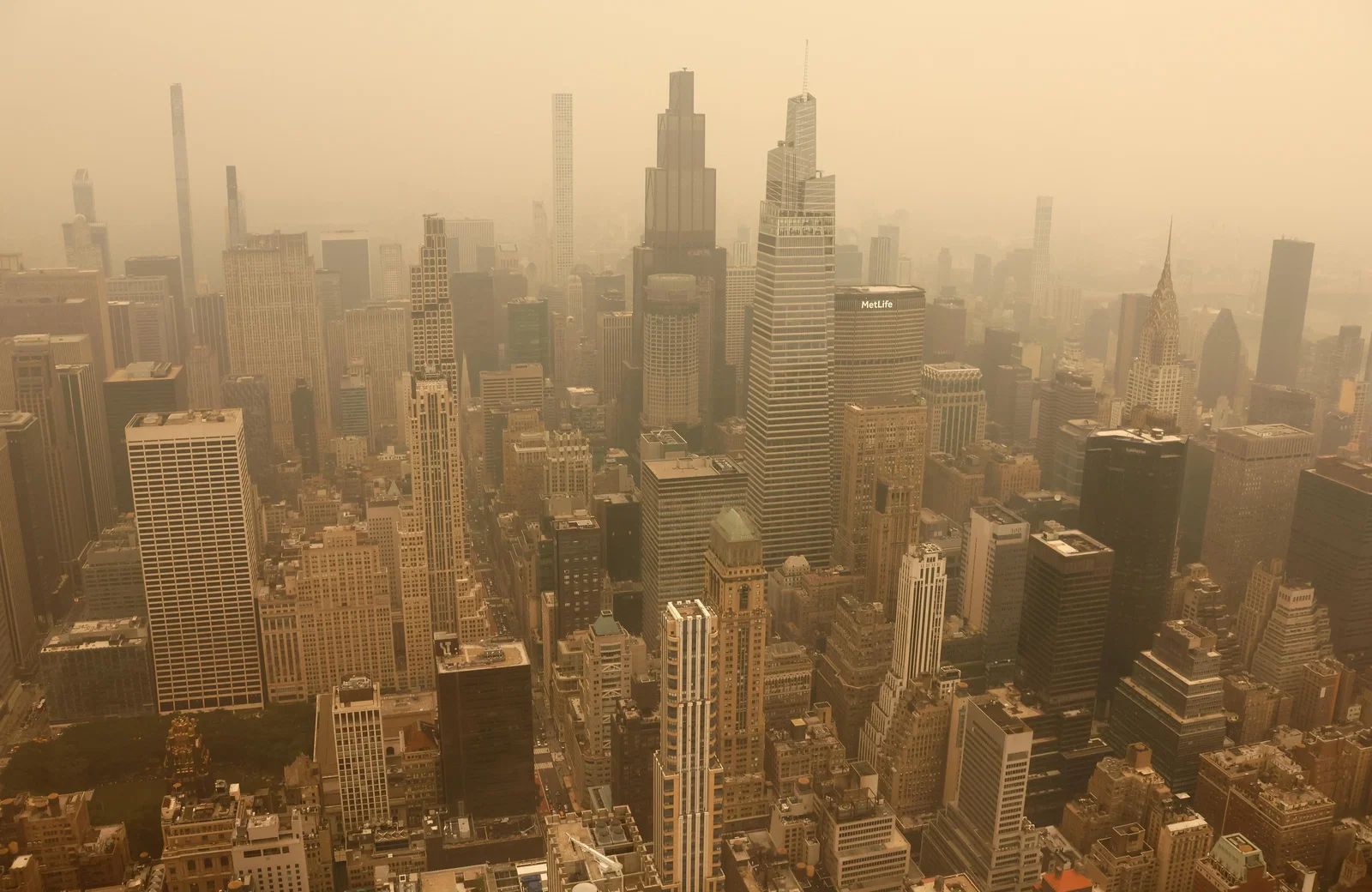
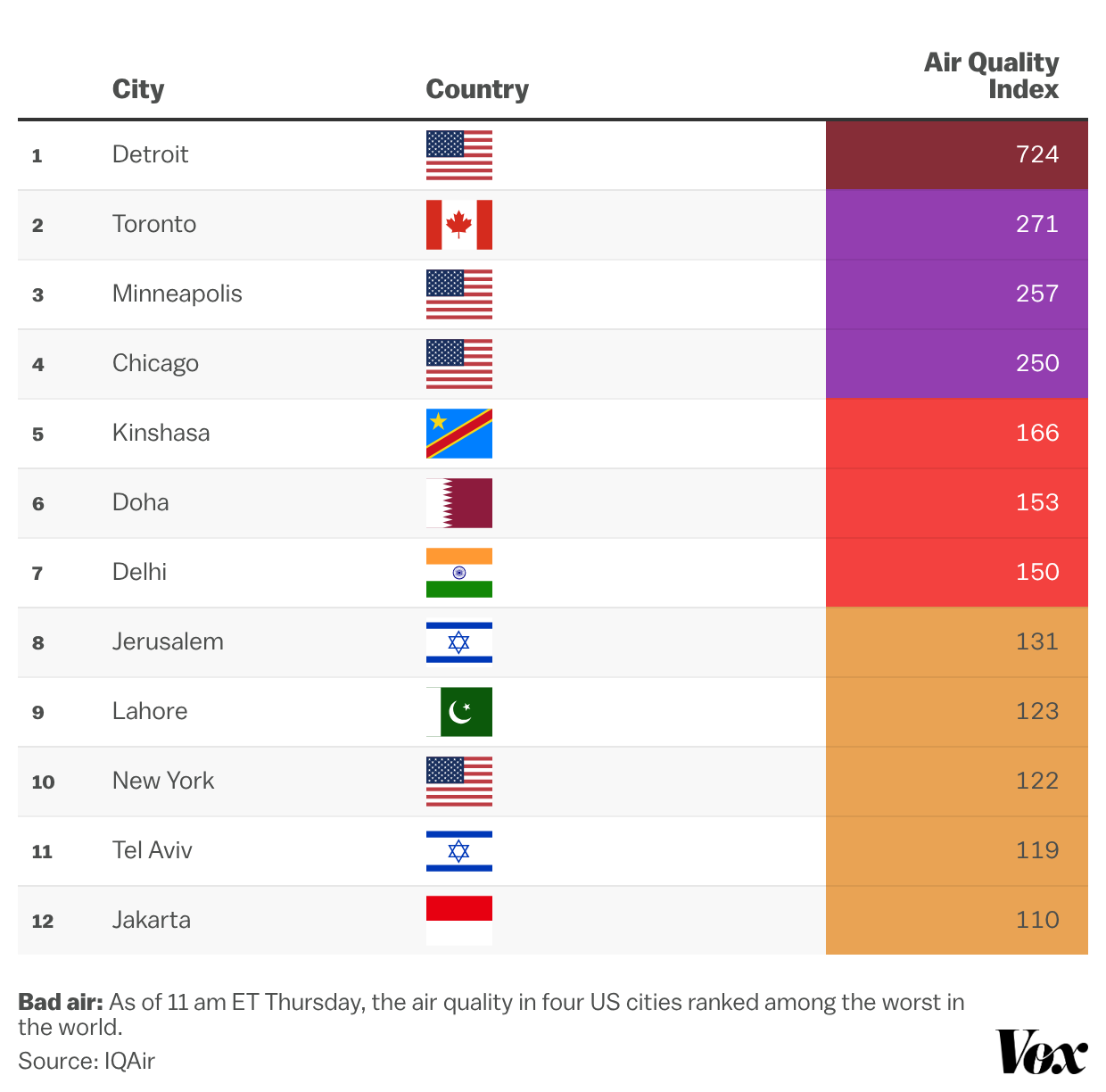
Canadian wildfire smoke is pouring over the US border today, blanketing much of the Northeast and Upper Midwest in fine particulate.
When I went outside to water plants in Buffalo this morning, the air tasted like campfire and glowed with a faint amber haze. My colleague Zack Beauchamp, who lives in Ontario, said “the sky looked genuinely apocalyptic” in Toronto yesterday.
The heavy smoke comes from both the hundreds of wildfires raging across Canada and a meteorological phenomenon known as a “heat dome,” which traps hot, smoky air close to the earth.
Those conditions are expected to linger through Saturday, exposing more than 115 million people to dangerously polluted air. Stay indoors, if possible. (AC and air purifiers can help maintain your inside air quality.) And if you must go outside, wear an N95 mask and avoid strenuous activity.
|
|
|
The pollution success story everyone forgets |
|
|
|
Smoky, polluted summer weeks like this one still feel like outliers on the East Coast. But they were actually pretty common before the passage of the Clean Air Act 63 years ago.
Pollution from cars, factories, and power plants had exploded in the boom years following World War II. Major US cities were routinely blanketed in falling ash, yellow smog, and a toxic “smaze” — that’s “smoke” + “haze” — that, during flare-ups, killed dozens of people.
The Clean Air Act spurred early research into monitoring and control, however, and laid the groundwork for an ambitious federal regulatory system that set limits on polluters. Over the next 50 years, those efforts significantly slashed US air pollution and, according to some estimates, prevented hundreds of thousands of premature deaths. The effort was so successful, in fact, that many Americans no longer remember a time when cities like New York regularly looked like this.
But the news here isn’t all good. After decades of progress, some air pollutants — like the fine particulate matter released by wildfires — have experienced year-to-year increases. And the politics of addressing climate change, which makes wildfires larger and more intense, are far thornier than the politics of cleaning up car tailpipes or smokestacks.
|
|
|
➨ Today is a great day to buy a produce brush. (Online, obviously. Don’t go outside for one!) Cyclosporiasis, the explosive-diarrhea parasite, continues to wreak havoc on America’s bowels. And the best way to reduce your risk is by washing raw fruits, vegetables, and herbs under running water. |
|
|
|
-
Did you know… that “pins and needles” numbness you sometimes feel in your limbs isn’t caused by a lack of blood flow? It’s probably related to nerve compression, and for most of us, it’s pretty normal.
-
Today’s trivia: What’s an animal that can be as narrow as a few millimeters or as wide as 13 feet? (You can find this and other brain puzzles in Vox’s daily crossword. Look for the answer in tomorrow’s edition.)
-
Yesterday’s trivia: Yesterday we asked you to name a famous Indo-Caribbean wrap-style sandwich. That would be the roti, versions of which also exist in many Asian and African cooking traditions.
|
|
|
Today’s edition was produced and edited by me, Caitlin Dewey. Thanks for reading! |
|
|
|
Have thoughts or feelings on what you read here? You can reach me directly by email. I’m at [email protected]. |
|
|
|