After two successive women lost the race for president — and with the GOP increasingly claiming the testosterone-fueled "manosphere" — Democrats are starting to worry the party is a bit too low-T. Even its successful new faces, like Jon Ossoff and James Talarico, might still be too soft. (This might explain why a recent Instagram post from @Democrats showed Talarico gnawing on meat.) Democrats have been racked with anxiety: Where are their masculine candidates? They believe American voters need a manly man, someone who isn’t “smoothgroined,” who can drink beer and watch video games and eat a hamburger and have sex without a condom, who “has the solid physicality of a man who makes his living outdoors,” who will bring young men back into the Democratic fold. They want a bro.
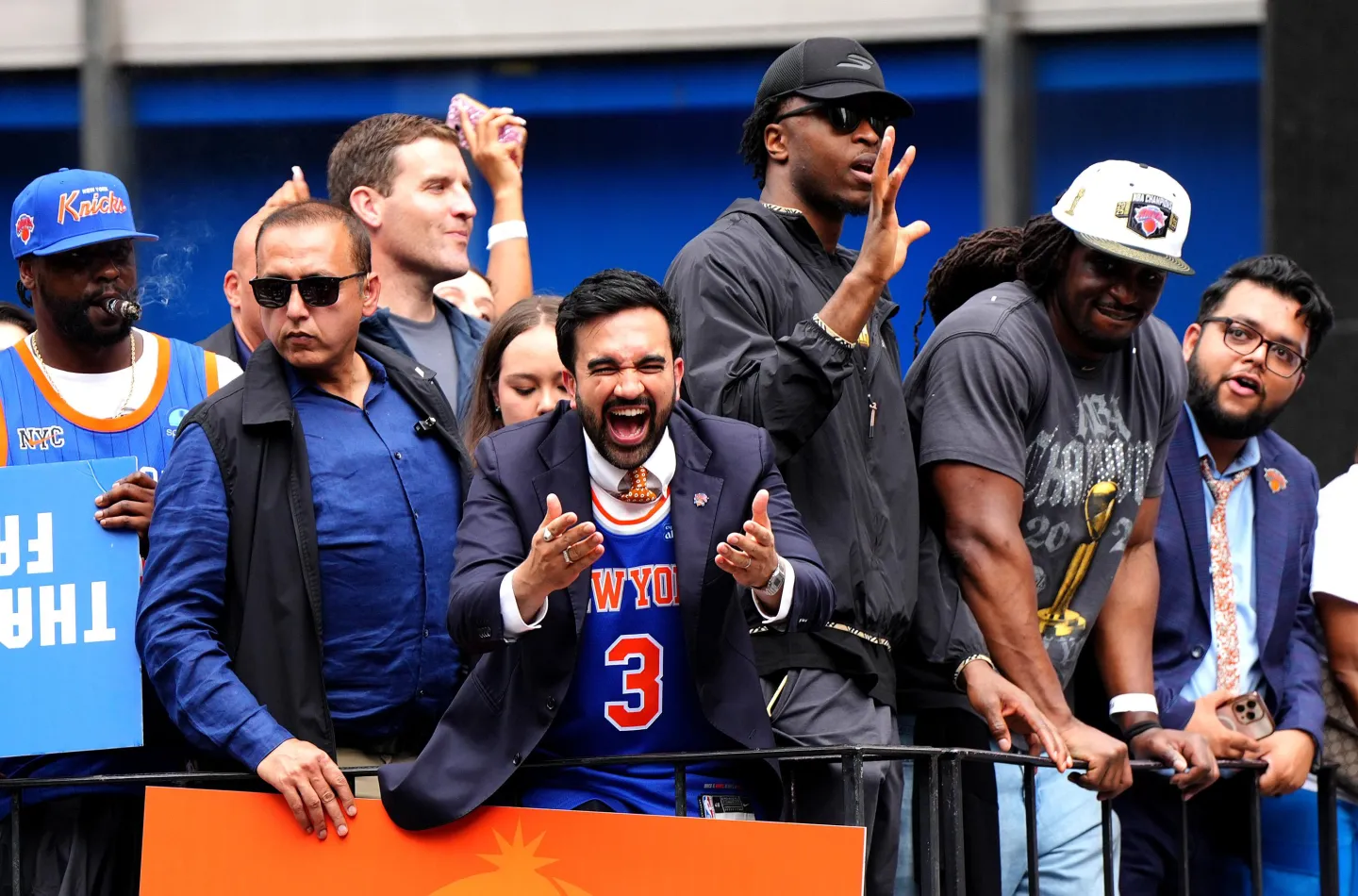
And the newest icon of Democratic power is a Carhartt-wearing, marathon-running, fully bearded dude who loves to chow down. He’s obsessed with the Knicks and recently made a basketball-themed campaign ad. When he was campaigning last year, he toured the edgy “manosphere” podcast world and easily traded riffs about bench pressing and shitposting. Analysts describe his politics using testosterone-forward metaphors like “muscled,” “power broker,” and “kingmaker.”
This is, of course, New York City Mayor Zohran Mamdani — who’s able to go one-on-one with President Donald Trump, wears the hell out of a suit, and channels the populist energy of Bernie-bro politics more effectively than anyone else under 80. “His vision, whether you like it or not, is incredibly bold and in your face,” which is a traditionally masculine attribute, says Pawan Dhingra, a sociologist at Amherst College.
“Zohran’s a good hang,” streaming star and certified bro Hasan Piker said of Mamdani in a 2025 interview with the New York Times. “He’s just a dude, and it’s good to be a dude sometimes.”
So, why isn’t Mamdani the Democrats’ new icon of masculinity?
Instead, the pro-masculinity discussion has mostly held up Graham Platner, the controversial Democratic nominee for Maine’s Senate seat, as the butch future of the party. Ken Klippenstein approvingly described Platner as “tatted up, ex-Marine riff-raff” in contrast to the “asexual, Harvard-educated McKinsey consultant” he feels represents the classic Democratic machine candidate. Sebastian Junger wrote that Platner “doesn’t scan ‘Democrat’” (a good thing, in Junger’s estimation) because he “might be the only Democratic candidate or congressman I wouldn’t want to mess with.” James Carville, who has been vocal in his belief that Democrats’ image is too feminine and naggy, mused that while Platner might be “fucked up” from his time at war, perhaps “we need a combat veteran right on that Senate floor who is fucked up.”
But while Platner hasn’t yet proved he can win in a general election, Mamdani has. What’s more, he’s achieved that misty goal Democrats are always chasing: He’s proved he’s able to connect with men and with Trump voters while also energizing the Democratic base. In the 2025 New York City mayoral election, registration surged, general election turnout hit a 50-year high, and exit polls showed that he picked up a solid half of the male vote — more than any other candidate — as well as 9 percent of 2024 Trump voters. Earlier this week, Mamdani’s get-out-the-vote effort helped push three Democratic Socialists of America allies through their primaries, in a clear demonstration of his political might.
Mamdani and Platner are both highly masculine figures. They both have populist platforms. And they’ve both run as party outsiders (and one of them has won a general election). So why does only one of them keep showing up in think pieces about why Democrats need to embrace and appeal to men?
You can read Constance’s full story on the Vox site here.