The History and Meaning of the Sacred Heart of Jesus
Step into any traditional Catholic church, and your eyes are likely drawn to one of the most beloved and poignant images in all of Christendom: the Sacred Heart of Jesus.

Is this your brand on Milled? Claim it.

Journeys of Faith Newsletter update.
Step into any traditional Catholic church, and your eyes are likely drawn to one of the most beloved and poignant images in all of Christendom: the Sacred Heart of Jesus. Radiant, aflame with love, and encircled by a crown of thorns, the Sacred Heart pulses at the center of Catholic faith and art—a living symbol of Jesus’ immeasurable compassion and divine mercy. For centuries, the Sacred Heart of Jesus has not only graced the walls of churches but has also beat quietly in the hearts of countless faithful, inspiring everything from quiet, whispered prayers to worldwide feast days. Its story is woven deeply through the centuries, intertwining moments of mystical revelation with Church tradition and family faith. It’s an emblem that calls out to the weary and the hopeful alike, inviting each soul to discover the endless tenderness and redeeming love Christ has for humanity. At Journeys of Faith, the Sacred Heart is more than an image—it’s a testament to the transformative power of Divine Love, a love powerfully present in every Eucharistic miracle, every Marian apparition, and every saintly life we share through our apostolate. Join us as we trace the roots and meaning of the Sacred Heart of Jesus, rediscovering this devotion’s historical heartbeat and allowing its message to illuminate our own journeys of faith.
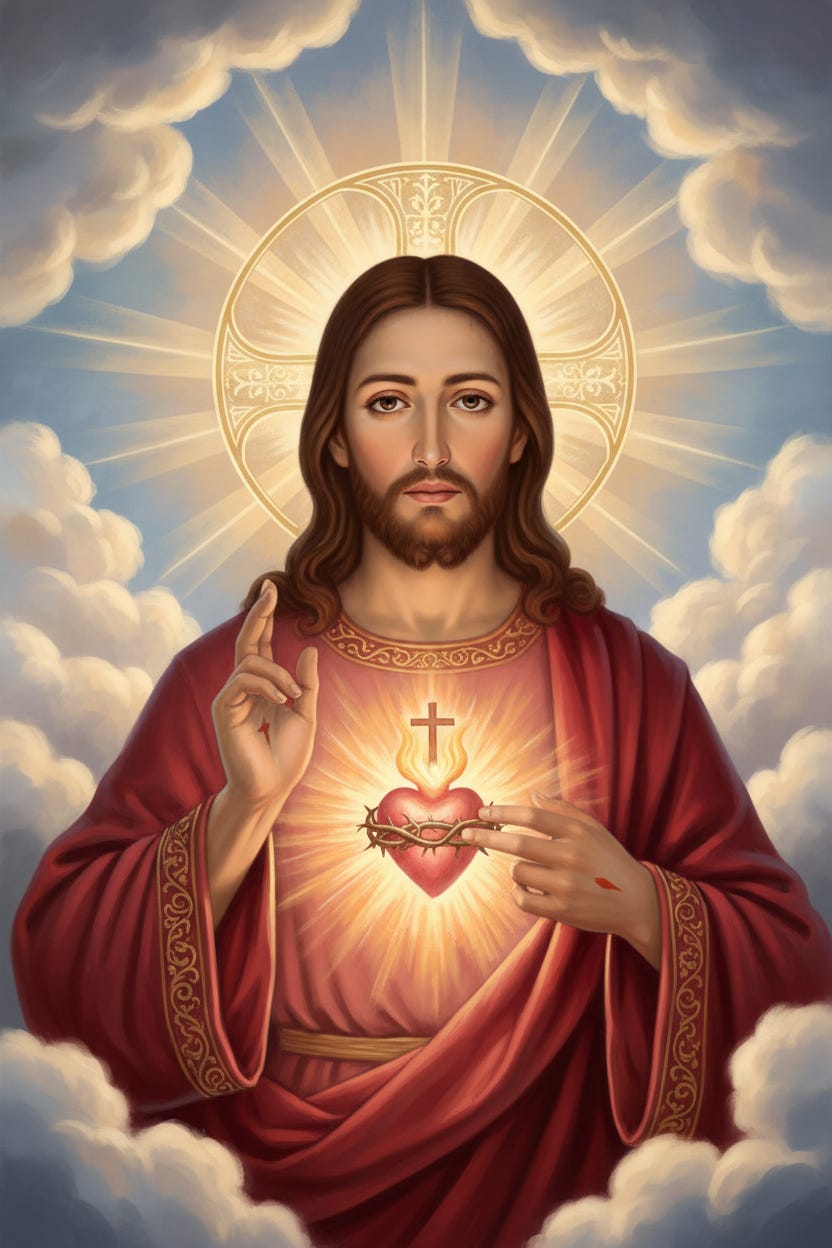
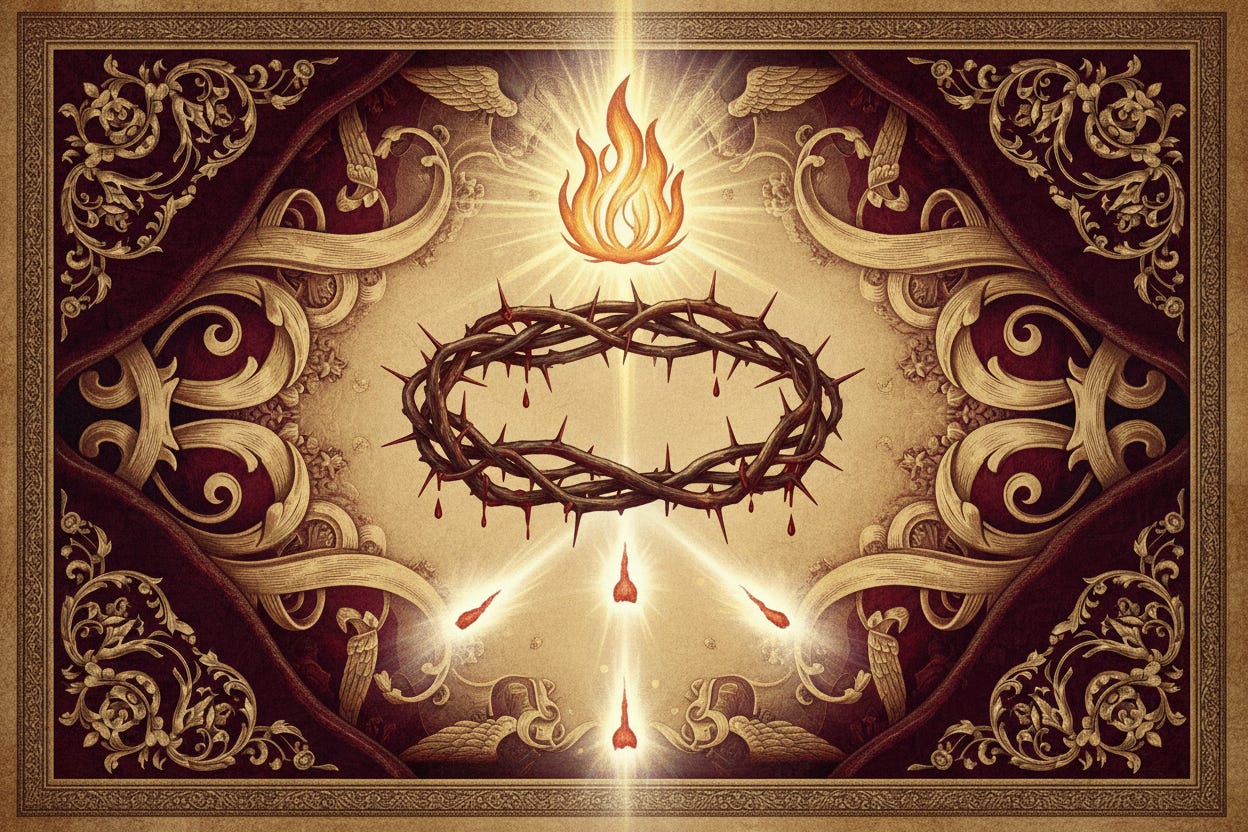
What Is the Sacred Heart of Jesus?The Sacred Heart of Jesus is far more than an image or a symbol—it is the living flame of Christ’s love, revealed to humanity through His divine Heart. Rooted deeply in Scripture and the Church’s tradition, devotion to the Sacred Heart expresses the immense mercy, compassion, and unconditional love that Jesus Christ has for each soul. The image itself—the Heart of Jesus, crowned with thorns, surmounted by a cross, and emitting radiant light—carries layers of meaning. The thorns recall the Passion, representing Christ’s suffering for our sins; the wound from the soldier’s lance, forever open, invites us to shelter ourselves in His mercy. The flames and shining rays emanate outward, a sign of the inexhaustible love Christ holds for all—calling us to come close, to trust, and to allow our own hearts to be transformed. This devotion began to blossom in the early centuries of the Church, as the faithful meditated on the pierced Heart described in John 19:34: “But one of the soldiers pierced His side with a spear, and at once there came out blood and water.” Saints, mystics, and theologians pondered this sign, seeing in it not only Christ’s sacrifice but the wellspring of the Church’s sacramental life: the Blood of the Eucharist and the cleansing water of Baptism. Over time, especially through the revelations to St. Margaret Mary Alacoque in the 17th century, devotion to the Sacred Heart became a beacon for Catholics seeking deeper intimacy with Jesus. His requests—acts of consecration, hours of prayer, and the First Fridays devotion—were not meant to be burdens, but personal invitations to return love for Love and to make reparation for indifference and ingratitude in the world. To gaze upon the Sacred Heart is to witness the mystery of a God who holds nothing back, who aches to be known and loved in return. It is a call to let our own hearts beat in rhythm with His, embracing the boundless, healing warmth found only in Jesus’ Heart. Deepen Your Devotion to the Sacred Heart of Jesus with Journeys of FaithThe love poured out from the Sacred Heart of Jesus has shaped centuries of Catholic spirituality, drawing countless souls closer to the warmth and mercy of Our Lord. At Journeys of Faith, we invite you to continue this time-honored tradition—to nurture your own relationship with the Sacred Heart and bring its blessings into your life and home. We walk with you on this journey, just as Bob and Penny Lord dedicated their ministry to guiding Catholics deeper into the mysteries of Christ’s love. Discover new resources and inspiration to foster that same devotion:
Open your heart—explore our collections and let the Sacred Heart of Jesus shine at the center of your faith journey today.
The Biblical Roots of Devotion to the Sacred HeartThe image of the Sacred Heart of Jesus, radiant and pierced, is more than an artistic expression—it is deeply rooted in Scripture and has blossomed through centuries of prayerful reflection. To understand the devotion’s spiritual power, we must look first to the Gospels, where Christ’s love is poured out not just in word, but in a heart moved with boundless compassion. In St. John’s Gospel, we encounter the most vivid biblical foundation for the Sacred Heart. After the crucifixion, when Jesus had already given up His spirit, a Roman soldier pierced His side with a lance. “At once,” John writes, “there came out blood and water” (John 19:34). This moment is both literal and deeply symbolic: the Heart of Jesus, already broken for humanity’s sins, is opened that grace might flow freely—blood, signifying the Eucharist; water, pointing to baptism. The early Church Fathers saw in this act a wellspring of the Church’s sacramental life and a sign of Christ’s unreserved gift of self. But the tender love signified by the Sacred Heart pulses throughout all of Scripture. Time and again, the Gospels describe Jesus as moved with pity for the crowds (cf. Matthew 9:36, Mark 6:34), His heart aching for those who suffer, sin, or stray. In Luke 15, He tells the parables of the lost sheep and the prodigal son, revealing the ardor with which He pursues the lost and welcomes them home—a love flowing straight from His divine Heart. Even in the Old Testament, the Lord’s call echoes with the language of heart-to-heart communion. “I will give them a heart to know me, that I am the Lord” (Jeremiah 24:7). The prophets speak of God’s yearning for His people, a love so tender and faithful, it foreshadows the revelation of that Heart made flesh in Christ. For centuries, saints, mystics, and simple believers have recognized these scriptural moments as invitations to draw nearer to the very center of Jesus’ love. The devotion to the Sacred Heart, illuminated by these biblical roots, grounds Catholics in the ultimate reality: Christ’s Heart burns for the world, and every beat is a call to deeper trust, conversion, and loving reparation. The Early Church and the Wounded Heart of ChristStep back, for a moment, to Calvary. In the silent darkness after Jesus’ final breath, St. John the Evangelist records a detail that would echo through centuries of Christian devotion: a Roman soldier pierces Christ’s side with a lance, “and at once there came out blood and water” (John 19:34). For the early Christians grappling with mystery and with awe, this moment wasn’t just a medical observation—it was a wellspring of meaning, a window into the Sacred Heart of Jesus. The image of Christ’s open side became, for the Church Fathers, a symbol of God’s abundant love poured out to heal a wounded world. St. Augustine proclaims that from that pierced Heart flow the sacraments—the blood and water, signs of the Eucharist and Baptism—forming and nourishing the Church herself. St. John Chrysostom would meditate on the side of Christ as the “gate of Paradise” made open by the infinite mercy of the Redeemer. In those first centuries, devotion to the Heart of Jesus wasn’t yet manifest in the artistic shape we know today, but it was living and breathing in the prayers and sermons of the faithful. Early martyrs and mystics looked to Christ’s suffering not only as redemption, but as an invitation—a call to enter into His Heart, to let themselves be changed and transformed by His love. In a society where violence and pagan cults reigned, the wounded Heart became a quietly radical sign: here was a God who did not lash out, but instead, bled out love for His enemies. As centuries unfolded, the language of the pierced side—and, gradually, the Heart itself—would anchor Christian imagination. Saints and teachers reminded believers that Christ’s Heart, broken on the Cross, remains forever open for us: a sacred refuge, a spring of hope, and the origin of the Church’s very life.
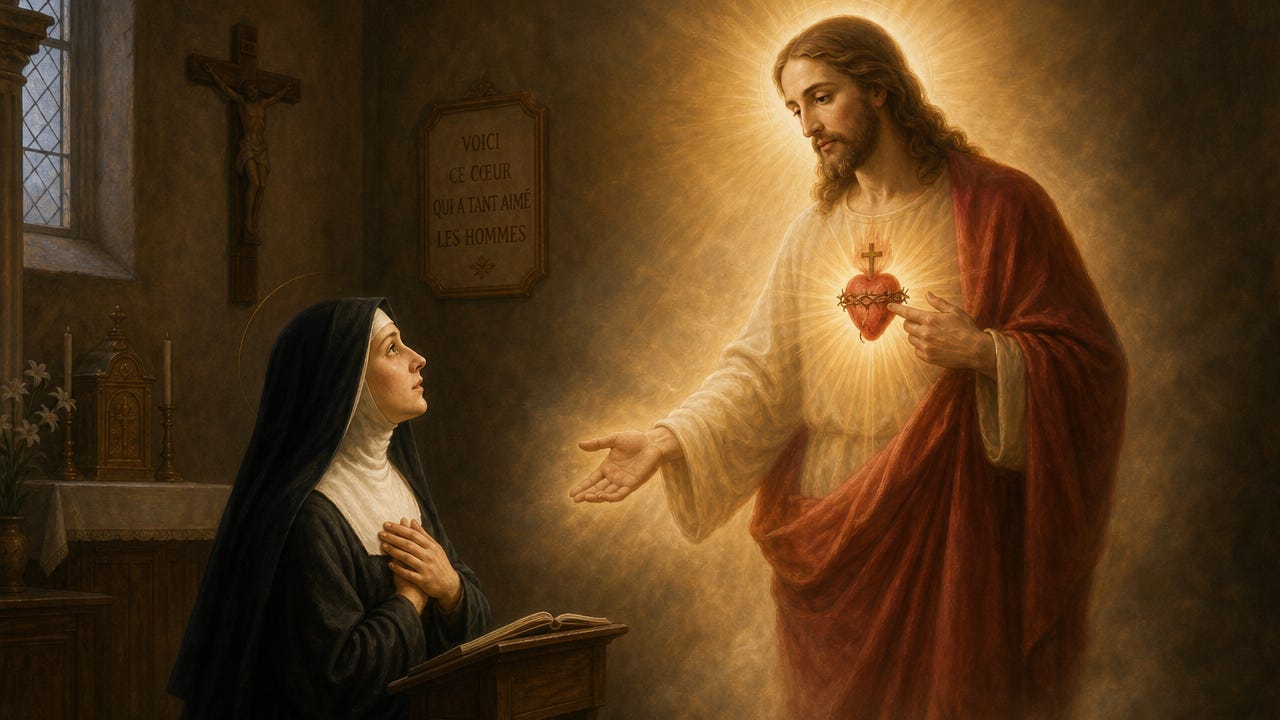
Saint Margaret Mary Alacoque and the Sacred Heart RevelationsIt was in the quiet cloisters of the Visitation convent in Paray-le-Monial, France, that the fires of devotion to the Sacred Heart of Jesus were rekindled for the world. St. Margaret Mary Alacoque, a humble and often ailing nun, received some of the most powerful private revelations in the Church’s history. Through visions given between 1673 and 1675, the Lord Jesus appeared to her—not as a distant figure, but as a loving Savior, His Heart burning with the intensity of divine love and crowned with thorns, a visible sign of pain for a world grown cold. For St. Margaret Mary, these encounters were deeply personal, yet their message was unmistakably universal. Jesus confided to her the fathomless depths of His love, expressing the sorrow of His Heart wounded by neglect and indifference. He pleaded with her for acts of reparation and devotion: “Behold this Heart which has so loved men, that it has spared nothing, even to exhausting and consuming itself, in order to testify its love.” Amid fasting, nightly hours of prayer, and misunderstanding from her own sisters in religion, Margaret Mary pressed on out of obedience and love. The Lord asked her to spread the practice of honoring His Sacred Heart with Eucharistic adoration, frequent Communion, and the institution of the First Fridays devotion. He promised great graces to those who would enthrone His Heart in their homes and consecrate themselves to His love. With steadfast faith, Margaret Mary entrusted her mystical missions to her confessor, St. Claude de la Colombière, who helped discern and spread this extraordinary grace throughout France and, ultimately, the world. Today, the gentle yet heroic figure of St. Margaret Mary stands as a beacon, inviting all souls to draw near to the Sacred Heart—a Heart wounded but always open, always inviting, always loving beyond measure. Through her fidelity, we have inherited this devotion as a living catechism on the mercy and compassion of Christ, one that continues to ignite the hearts of families, parishes, and all who seek to love and console the Heart of Jesus.
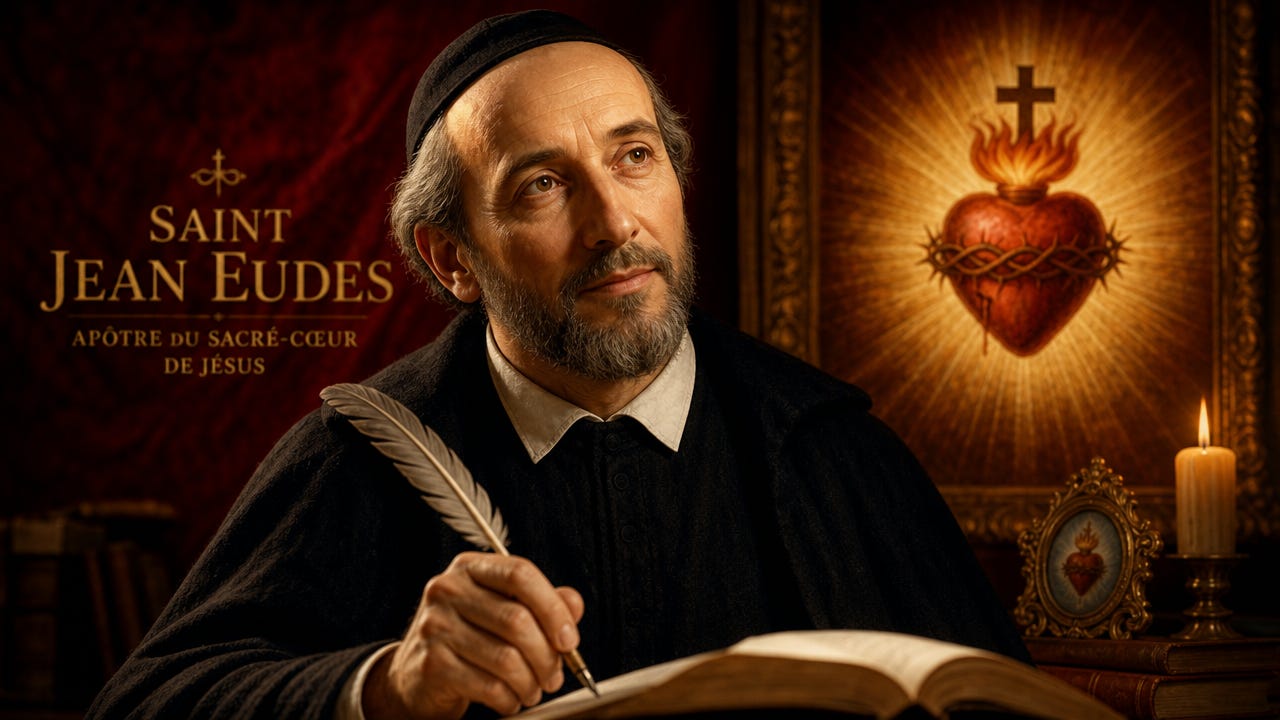
The Role of Saint John Eudes in Promoting the Sacred HeartWhen we delve into the history of the Sacred Heart of Jesus, one name stands out as a beacon of zeal and devotion: St. John Eudes. Living in 17th-century France, St. John Eudes was a priest whose passion for the Heart of Christ can still be felt centuries later. Though the devotion to the Sacred Heart had existed in various forms in earlier centuries—often whispered in the prayers of mystics and cloistered souls—St. John Eudes brought these hidden flames into the open, fanning them into a blaze of public veneration. He saw in the heart of Jesus a wellspring of infinite mercy and a model for Christian love. But St. John Eudes went further: he gave the Church both a language and a structure to honor this mystery. He composed Masses and established feasts dedicated to the Sacred Heart, encouraging priests to celebrate and preach this devotion among the faithful. He also founded the Congregation of Jesus and Mary (the Eudists) and the Sisters of Our Lady of Charity, each with a mission rooted in the love and mercy emanating from Christ’s Heart. St. John Eudes taught that devotion to the Heart of Jesus was not merely a pious sentiment, but an invitation to imitate His virtues. To Eudes, the Sacred Heart represented the very center of Jesus’ life—His burning charity, deep humility, and boundless compassion for sinners. In a world wounded by violence and indifferent hearts, the message was revolutionary: Jesus’ Heart is not distant or abstract, but a living source of hope and transformation for all who turn to Him. Stories abound of how St. John Eudes preached tirelessly, traveling from town to town, stirring up love for the Sacred Heart in battered towns and rural parishes. His sermons were not just eloquent words—they were calls to action, urging his listeners to let their own hearts be shaped in the image of the Savior’s. By the time of his death in 1680, Eudes’ legacy was unmistakable: the Sacred Heart, once confined to the cloister, had become a treasure of the entire Church. His writings and liturgical innovations laid the foundation for the later, widespread popular devotion, especially following the apparitions to St. Margaret Mary Alacoque. St. John Eudes’ enduring conviction remains a guide for all seeking to draw closer to the immeasurable love of Jesus.
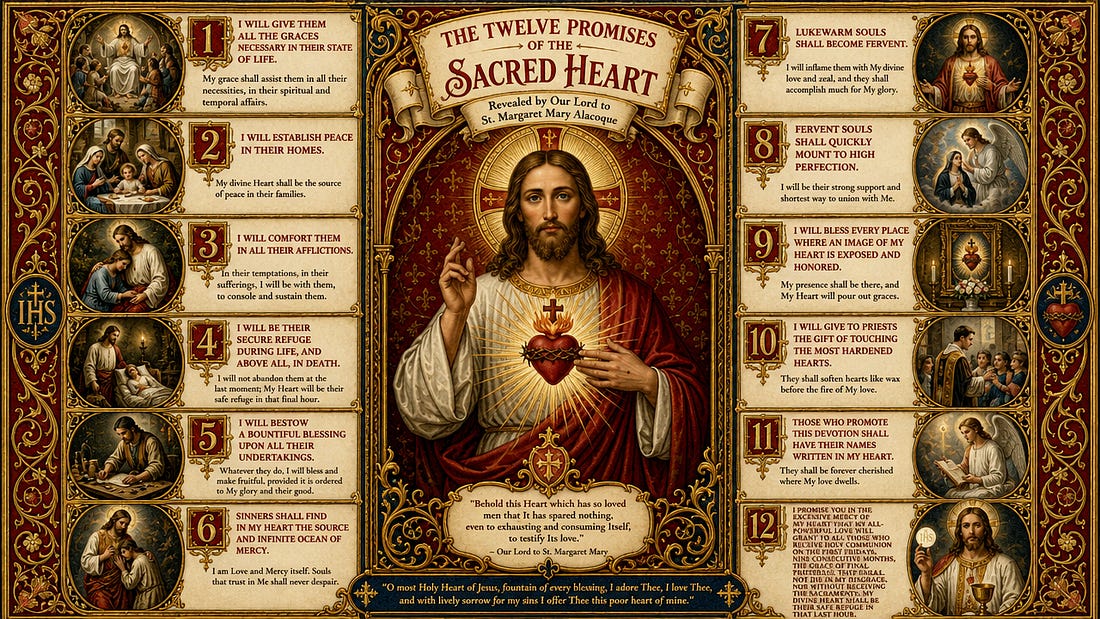
The Twelve Promises of the Sacred Heart ExplainedWhen our Lord Jesus revealed His Sacred Heart to St. Margaret Mary Alacoque in the quiet cloisters of Paray-le-Monial, He spoke words that echoed through time: “Behold this Heart which has loved men so much.” It was more than a revelation; it was an invitation—an open door to inexhaustible love, mercy, and hope. For those devoted to His Sacred Heart, Jesus offered twelve remarkable promises, each a glimpse into the very core of His love. Let’s walk together through each of these 12 promises of the Sacred Heart, as countless saints and faithful souls have done through the centuries:
These promises are not distant fairy tales, but real invitations offered by Jesus to souls eager to love Him in return. Every promise is a story, a living history transcribed by countless lives transformed through devotion to His Sacred Heart. In honoring His Heart, we answer His cry to be loved—discovering in return that this Heart, pierced for us, is the heart of Catholic spiritual life itself. Journeys of Faith has decided not to add any Paywalls and instead place this notice. Journeys of Faith is blessed to provide Catholic media, including podcasts and inspirational content, free of charge across multiple media platforms for viewers and listeners around the world. While access to this content remains free, there are significant and continually increasing costs associated with producing, hosting, and distributing these programs. Your support helps us continue sharing the beauty of the Catholic faith with souls everywhere. We want to reach more souls and you can help us do that by becoming a Mission Angel. The Meaning Behind the Sacred Heart ImageWhen we gaze at a classic image of the Sacred Heart of Jesus—a heart, burning with flames, crowned with thorns and shining with the radiance of divine love—we’re invited into a rich tapestry of Catholic tradition and symbolism. Every detail reveals part of a heavenly story, drawing us not only closer to the Heart of Christ, but deeper into the mystery of His endless mercy. At its center is the heart itself: not just a symbol, but the very core of Jesus’ human and divine love. The heart is ablaze, encircled by fire, representing the passionate, consuming love that Christ has for every soul. It’s a love that burns away sin and offers warmth and light to all who draw near, echoing Christ’s words: “I have come to cast fire upon the earth; and how I wish it were already kindled!” (Luke 12:49). Encircling this Sacred Heart is a crown of thorns, a powerful reminder of Christ’s Passion and the suffering He endured for humanity. The thorns press into His flesh, revealing the pain that accompanies true, sacrificial love. This detail isn’t there to shock or horrify—it’s to remind us that Jesus’ love isn’t distant or effortless. It is a love that costs, that bleeds, and yet triumphs. Often, a cross rises from the Heart, signifying how Christ’s self-offering on Calvary springs from the very depths of His love for us. The wound in the Heart recalls the piercing lance at Golgotha, but more so, it is an open invitation. It’s as if Christ is saying—here is my Heart, pierced for you, always open, always available. Rays of light or drops of blood may stream from the Heart, shining out grace and mercy, reaching even those who feel furthest away. Surrounding all of this is a halo or radiant light, hinting that this is no ordinary heart—it is divine, resplendent in glory, and ever-victorious over sin and death. The Sacred Heart beckons us, just as it did saints like Margaret Mary Alacoque and countless faithful before us, to trust, to draw near, and to surrender ourselves to the infinite love of Jesus. In every church, holy card, or painting, the Sacred Heart is not merely art. It’s a personal invitation—a story in image form—calling each of us to encounter the burning, compassionate, enduring love God holds for all His children.
The Flame, Crown, and Wounds: Symbols of Divine LoveTo gaze upon an image of the Sacred Heart of Jesus is to be drawn into a mysterious conversation between heaven and earth. Every element carved into this image—whether painted on canvas, engraved in a statue, or pressed onto a humble medal—bears centuries of rich meaning. At the very center, we find the heart itself, aglow with a living flame. This fire is no ordinary blaze, but the symbol of Christ’s burning love—a love that took on suffering, hardship, and even death purely for our sake. It is a reminder that divine charity does not stand at a safe distance but draws close, seeking to warm even the coldest hearts. Wreathed around the Sacred Heart is a crown of thorns. Here, Christ’s passion becomes personal. What He underwent on Calvary is not relegated to the past—it encircles His Heart still, a sign of both our sin and His never-failing mercy. The thorns press into the flesh, echoing those cruelly placed on His head before the crucifixion, yet the image never drifts into bleakness. Instead, it transforms suffering into a badge of love stronger than pain. His Heart, pierced and surrounded by thorns, tells us that there is no suffering we carry that He does not already hold close. The Sacred Heart almost always bears a visible wound, sometimes even trickling with blood. This open heart calls to mind the words of John’s Gospel, when the soldier’s lance pierced Jesus’ side, and blood and water flowed out (John 19:34). For generations, Catholics have seen in that wound an invitation—a door thrown open to Divine Mercy. The wound, then, is not simply a remembrance of agony; it is a gateway, an entry point through which grace rushes out to heal wounded souls. Together, the flame, the crown, and the wounds weave a tapestry of love poured out. These symbols invite each of us not merely to stand in awe, but to approach, to trust, and above all, to respond with our own hearts—hearts that, by grace, can be set aflame in return. The Sacred Heart as a Sign of Christ’s Mercy and SacrificeAmid the beautifully woven tapestry of Catholic devotion, the Sacred Heart of Jesus stands out not merely as an image, but as a living symbol of unparalleled mercy and self-giving love. Its story begins with the open side of Christ on the Cross—the moment when His heart, already consumed with love for humanity, was pierced by a lance. From that wounded heart flowed blood and water, signs echoing through centuries: the sacraments, the Church, the boundless grace poured out to redeem the world. The heart is no mere metaphor. In every depiction—from intricate stained glass to humble holy cards—the Sacred Heart still pulses with meaning for those who seek it. Wrapped in thorns, ignited with flames, and shining forth with a cross, it tells a story of suffering freely accepted. Christ’s willingness to bear the burden of our sin is captured not just in His Passion, but in the very way His heart is shown—wounded, aflame, crowned, and triumphant. For the sorrowful, the repentant, and the weary, the Sacred Heart is an invitation: “Come to me, all you who labor and are burdened, and I will give you rest.” The devotion reminds us that, although sin pierced the world and the Savior, His heart still pours out mercy without end. It is in contemplating this heart—so human, so divine—that we are led to the very center of Christ’s mission: love unto the end, and the promise of forgiveness for all who approach Him. Through every age, the Church has held fast to the Sacred Heart as a sign not just of what Christ did, but who He is: the God who suffers with us, who forgives our failures, and who calls each soul to a deeper relationship with His mercy. In prayer before the image, Catholics unite their own wounds—great and small—to His, discovering a refuge that only the love of the Redeemer can provide. How the Church Formally Approved Devotion to the Sacred HeartThe devotion to the Sacred Heart of Jesus is not just a private prayer or a fleeting pious custom—it is a living flame within the heart of the Church herself. But how did this powerful devotion go from quiet, burning love in the hearts of a few to a universal feast enshrined in the Church’s calendar? The answer is a story of persistent faith, mystical visions, holy resistance, and ultimately, the stamp of the Church’s authority. The first great champion of the Sacred Heart devotion was St. Margaret Mary Alacoque, a humble Visitation nun in France in the 17th century. Jesus Himself appeared to her in a series of visions, revealing the burning love of His Heart for humanity and asking her to be the herald of this tender devotion. The message was so striking—and at times so bold in its promises—that some contemporaries met it with skepticism, even suspicion. Yet Margaret Mary persevered, drawing strength from the Heart of Christ even as she faced misunderstanding and trial.
Margaret Mary’s confessor, St. Claude de la Colombière, became a pivotal figure. He not only believed her story but helped her spread devotion to the Sacred Heart to his fellow Jesuits and, through them, beyond the walls of the Visitation convent. Over time, the devotion took root across France, especially in response to the turbulence and uncertainty of the era. Faithful Catholics poured their hearts out to Jesus, hiding their fears and hopes in His wounded Heart. It took more than a century, however, for the Sacred Heart devotion to receive formal approval from the Church. In 1765, the feast and Office of the Sacred Heart were first permitted for certain places by Pope Clement XIII. The devotion continued to spread, nurtured by the zeal of religious congregations and ordinary believers alike. Finally, in 1856, Pope Pius IX extended the Feast of the Sacred Heart to the entire Latin Church, declaring that it should be celebrated every year on the Friday following the octave of Corpus Christi. The papal endorsement didn’t stop at a date on the calendar. Successive popes—especially Pope Leo XIII and Pope Pius XI—emphatically promoted devotion to the Sacred Heart, calling for acts of consecration and reparation. Churches and homes around the world enthroned images of the Sacred Heart, echoing the Lord’s promise to St. Margaret Mary: “I will bless every place where an image of My Heart shall be exposed and honored.” Through visions, struggles, papal decrees, and the lived faith of millions, the Church’s approval revealed that the Sacred Heart of Jesus was not just an image, but an invitation—a call to trust unreservedly in the love that forever flows from His pierced side. Conclusion: Embracing the Sacred Heart—A Timeless InvitationThe story of the Sacred Heart of Jesus is not just a tale from the history books—it’s a living call, echoing through the centuries, inviting each of us into the burning love of Christ. In revealing His Heart, Jesus offers humanity the ultimate sign of compassion and mercy, a place where suffering, hope, and redemption meet. Saints, visionaries, popes, and everyday faithful have responded to this invitation with devotion, trust, and transformation, allowing the Sacred Heart to beat at the center of their lives. At Journeys of Faith, the legacy of Bob and Penny Lord reminds us that devotion is never just ritual. It’s a personal encounter—a pilgrimage of the soul—where history, tradition, and miracles point us back to Jesus truly present in the Eucharist and in each act of love. As we meditate on the Sacred Heart of Jesus, may we receive the courage to say “yes” to His unfailing love, to offer reparation for the wounds of the world, and to lead others into the heart of Christ. Let the fire that blazed in saints and mystics kindle anew in us today, uniting us in the universal call to holiness. You're currently a free subscriber to Journeys of Faith Newsletter. For the full experience, upgrade your subscription.
|