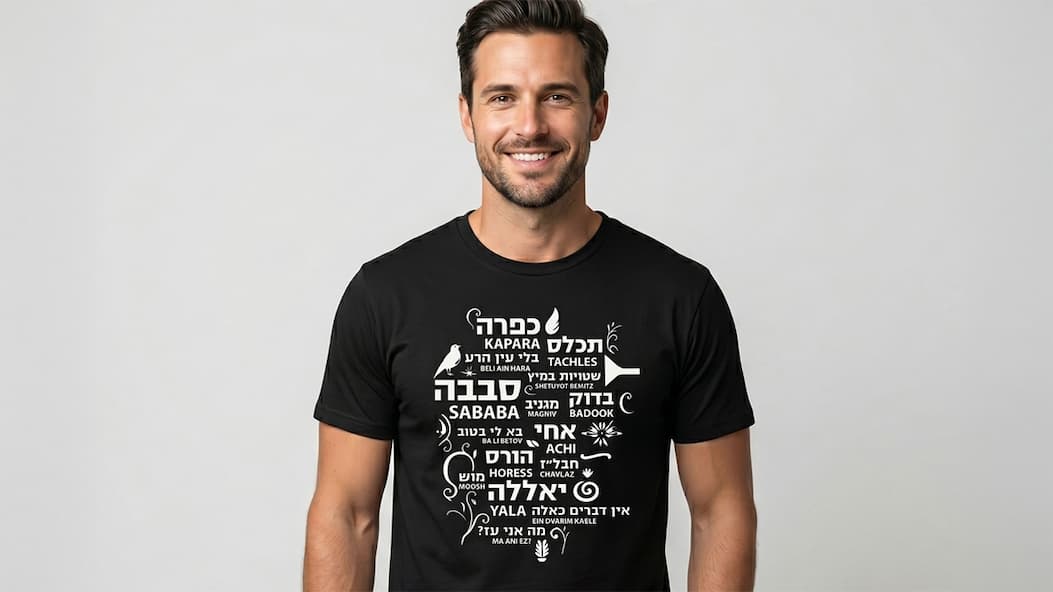
Sunburn fades. Saying “stam” in every conversation does not. Hebrew slang has a funny way of sneaking into your vocabulary. Maybe it starts innocently with a casual “sababa” after two weeks in Tel Aviv. Then suddenly you’re saying “yalla” in traffic, throwing out an impatient “nu?” when something takes too long, and describing your family WhatsApp group as a complete “balagan”.
|
|
The Israeli Slang Starter Pack
Sababa: Cool, great, or alright. The ultimate go-to word for showing agreement or enthusiasm.
Yalla: Let’s go! Borrowed from Arabic, it’s used constantly to rush friends or get things moving.
Achi: My brother or bro. Used as a friendly, disarming term for almost anyone you’re talking to. By calling someone achi, you’re basically saying, “We’re on the same team.”
Stam: Kidding or “just saying.” It can also mean “whatever” or “for no particular reason.”
Balagan: Chaos or a messy situation. Adopted from Russian, heavily carried by Yiddish and Polish speakers. Anything from a chaotic traffic jam to a messy room.
Khalas: Enough! Or “Done”. From Arabic, used to shut down an argument or finish a task.
Eyzeh Basa: Bummer! Used to express disappointment. The Arabic root historically refers to misfortune or hardship.
Walla: Wow, really?! An incredibly versatile word from Arabic, originally meaning “by God.” Depending on the tone, it can express surprise, disbelief, excitement, or confirmation.
Chai B'Seret: Literally “living in a movie.” Used to describe someone who is being wildly unrealistic or overly dramatic.
|
|
Yiddish on Aliyah
Frayer: A sucker or pushover. In modern Israel, avoiding being a frayer is a core cultural principle. It describes someone who blindly follows rules, gets stuck paying too much, or doesn't stand their ground when being cheated. The Jewish mafia in Odessa used the Yiddish frayer to describe anyone who was “free,” meaning outside the criminal underworld.
Shvitzer: A show-off or braggart. Literally translates to "sweater" (someone who sweats), meaning they are trying way too hard to impress.
Shluker: Derived from the Yiddish shluk, meaning a sip or gulp, a shluker is a hydration pack – the backpack water bladder with a long drinking tube used by hikers, soldiers, and cyclists. The Academy of the Hebrew Language tried replacing it with the biblical term chemet, but if you walk into a shop in Israel asking for a chemet, good luck with that.
|
|
All the Way into Grammar
Shpritz: A squirt, spray, or splash of liquid. When making a salad, you might ask for a "shpritz shel limon" (a squeeze of lemon). Usually, slang words remain separate from formal Hebrew grammar. However, shpritz was so heavily adopted by Israelis that the language forced it into a four-letter Hebrew root, as in the verb lehashpritz.
Achla: "Great" or "awesome". You can use it on its own ("Achla!") or before a noun, like achla gever, meaning a great guy. The Arabic root means "sweetest." What makes achla completely unique in Hebrew is that it brought its native Arabic word order along with it. In Hebrew, adjectives normally come after the noun. For example, a good movie is seret tov. In Arabic, the superlative acḥla comes before the noun. So when Israelis adopted achla, they unconsciously adopted the Arabic word order as well. That is why everyone says “achla gever”, overriding standard Hebrew word order.
|
|
|
|
|