In their annual Future of Wellness Trends Report, The Global Wellness Summit predicted that in 2026, there would be a widespread rejection of what they’re dubbing the over-optimisation of wellbeing.
As wellness trend reporter Jessica Smith writes, we’re increasingly exhausted by how both measurable and performative modern wellbeing has become.
"What’s emerging now is not a rejection of science, but a recalibration: a shift toward regulation over results, sensation over scores, and wellbeing measured by how fully alive we feel.”
It’s a movement that feels similar to ‘going analogue.’ In response to a tracking-driven wellness climate, we’re craving a shift toward alternative practices that tap our intuitive inner compass over relying on devices to tell us how ‘well’ we are.
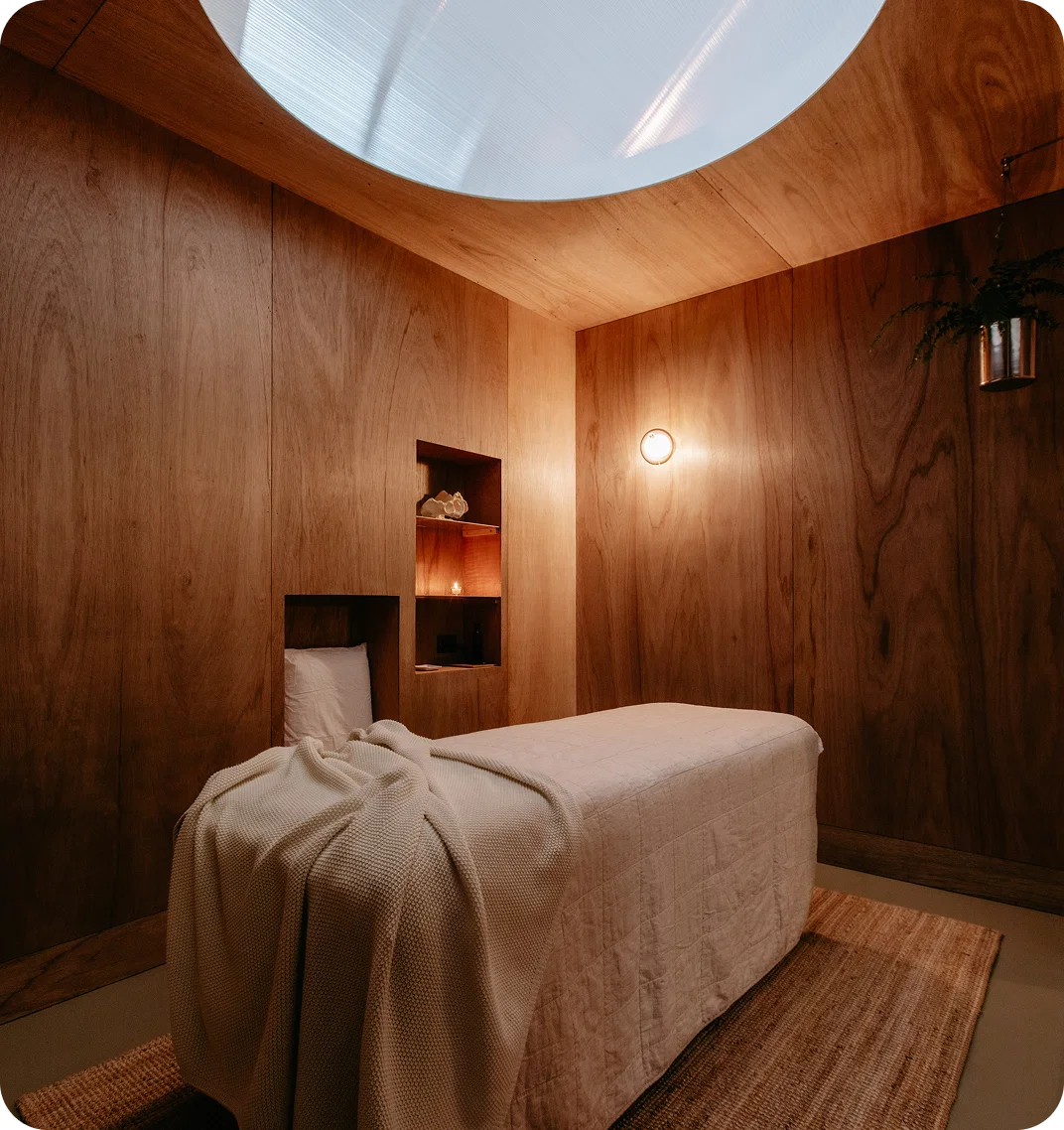
One of those practices is bodywork. A (pretty blissful) array of treatments that hinge on bringing intentional awareness back to the mind, emotions, and body’s inherent interconnectedness.
Put simply, it’s a massage. But maybe not as you know it.
Instead of relegating massage to a gift voucher, or last-resort to ease those uncomfortable knots, bodywork reframes massage as an essential pillar of holistic wellbeing that goes far beyond the physical.
Georgia Jane, Founder of Bodyworks, says integrating bodywork massage as routine stalwart can have profound benefits to our overall health.
“We don’t think twice about regularly seeing the Osteo or Physio, going to the gym or yoga, but massage is something people wait to be gifted a voucher for once a year, or treat themselves to when their body is really screaming at them.”
She explains that when stress or overwhelm are not able to move freely, they can become held in the body, manifesting as discomfort, chronic tension or pain. And when we’re overloaded with tension, things get stuck and stored.
“Wellbeing is about flow,” says Georgia. “Tension, whether it is physical, mental or emotional, restricts flow and impacts our body’s ability to do its natural processes.”
“Bodywork can help excavate and move that ‘stuff’ we don’t want to hold onto.”
Bodywork has also shown to be particularly transformative for women experiencing chronic pelvic health concerns like endometriosis, vaginismus or menstrual pain.
A study published in the National Library of Medicine researching the effects of massage therapy on dysmenorrhea (painful periods) caused by endometriosis, found that out of a data set of 23 females, 95.7% reported that massage significantly reduced their pain, both immediately and 6 weeks after their massage.
In processing and moving that ‘stuck’ tension through massage, surprising emotions might arise during bodywork. Different from your run-of-the-mill massage, vocalising — whether that be a grunt, a moan, a laugh or cry — is encouraged. It’s all part of the release process that allows that stored energy to flow.
Similar to mindful movement, journaling or meditation, bodywork gently eases you back home into the body; allowing you to find a natural state of regulation through the practice. It teaches us that the body is inextricably connected to our inner world. Bodywork can guide us if we listen to its cues.
As self-tracking continues to advance in complexity and popularity, the endless metrics with which we can measure wellness can sometimes feel more overwhelming than helpful.
We’re not saying to ditch the Apple Watch. But if you’re battling with tracking-fatigue, maybe opting for holistic practices that create space to connect back with how you’re really feeling, help turn down the noise. Think: more intuition, less analytics. Curious about bodywork? Here’s an abdominal release bodywork exercise where all you’ll need is a bolster or a soft Pilates ball. Otherwise, if you’re Melbourne-based, you can book in for the full experience with a professional at Bodyworks, here.