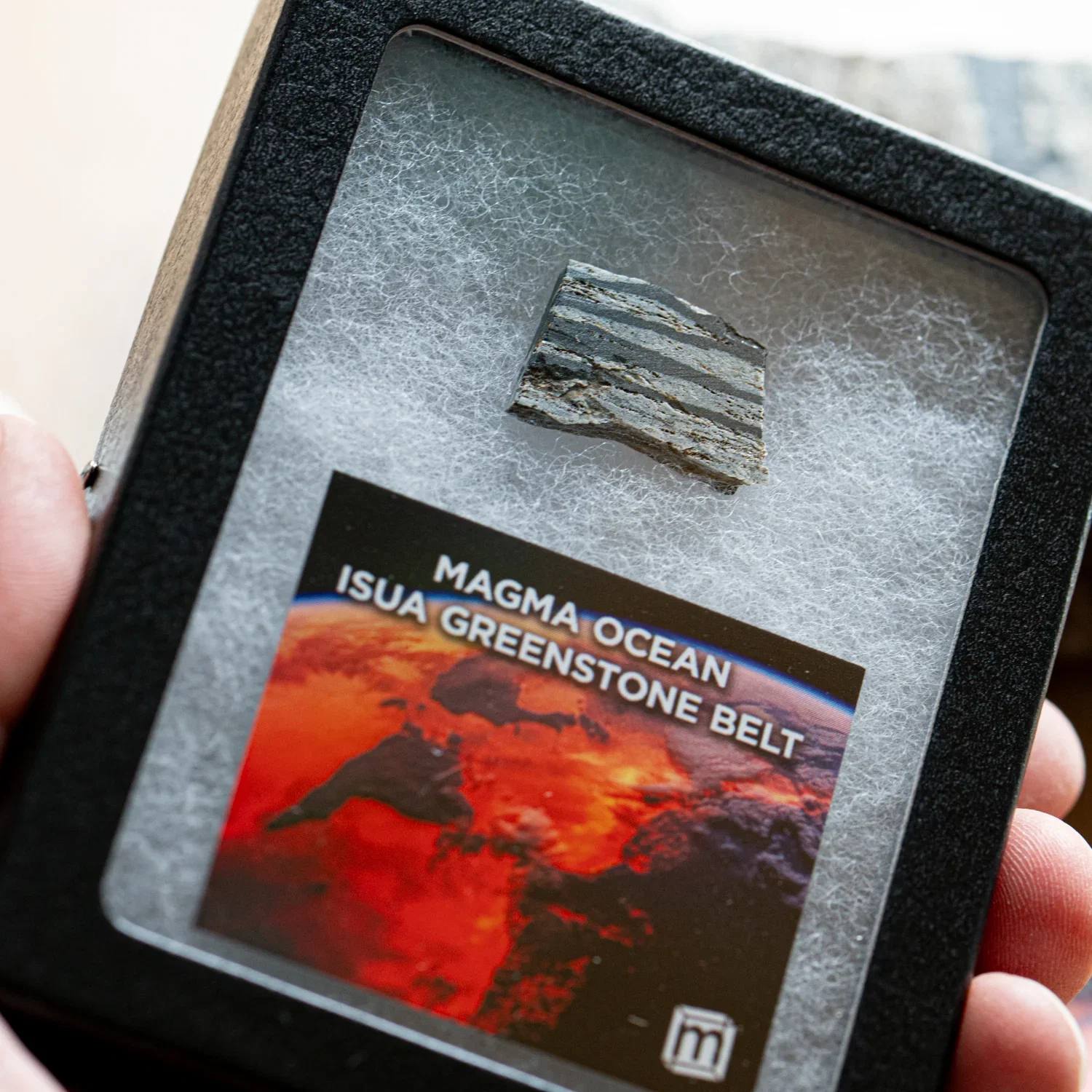
Named for the fiery lord of the ancient Greek underworld, the Hadean Eon (4.5-3.95 Ga) was a time when the Earth's surface was subject to widespread volcanism and continuous collisions with asteroids in the chaotic early solar system.
It would seem an inhospitable place for water, let alone life. Yet our scientific understanding has changed quite a bit since the Hadean was first described in 1972.
We've learned that Earth must have possessed a significant amount of water during its early formation, and even though the heat was intense, the atmospheric pressure of carbon dioxide kept water on the surface from boiling off.
We also know that plate tectonics, the grinding of the crust, began during this time. Together, these forces helped scrub the atmosphere of carbon dioxide and other greenhouse gases, leading to cooler surface temperatures and conditions favorable for life.
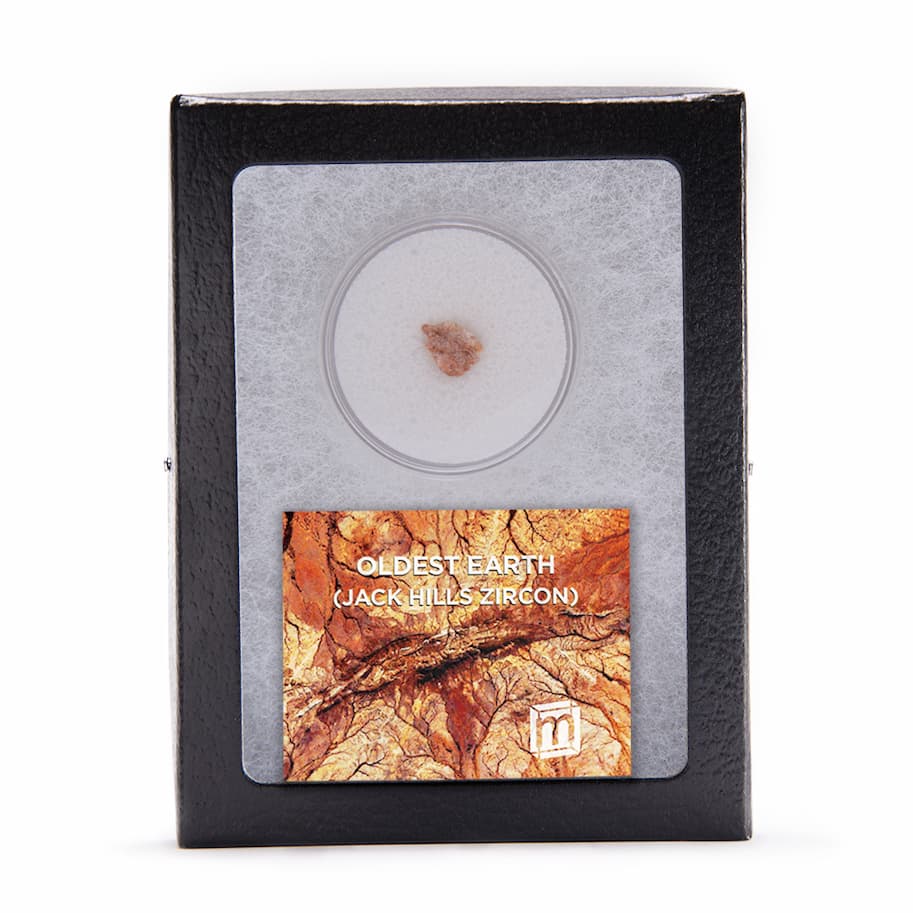
This history has been revealed by studying the chemical makeup of small crystals called zircons. Zircons are quite common in the crust of Earth. They are shed through the process of erosion once igneous rocks reach the surface, at which point the zircons are incorporated into new sedimentary layers.
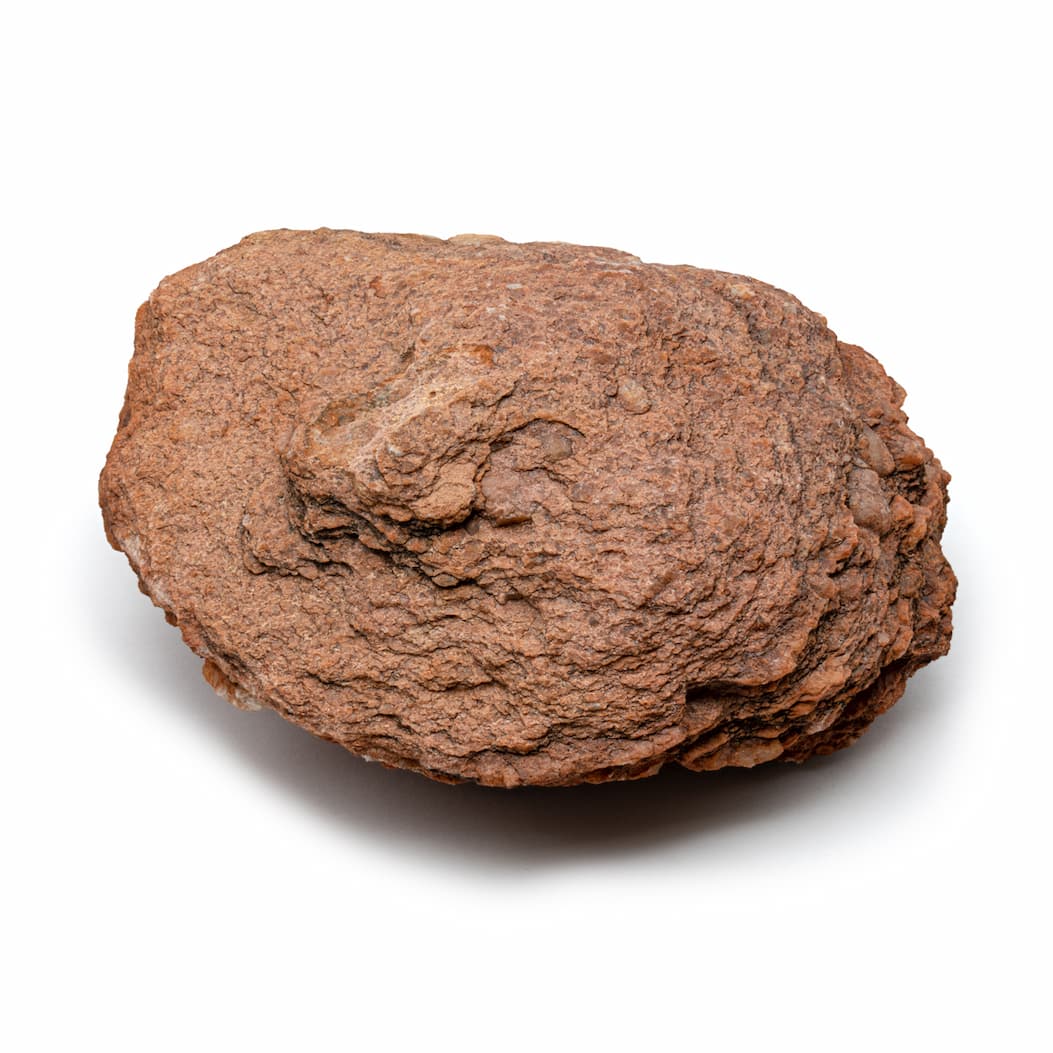
In Australia, the rough, sedimentary layers of the Jack Hills formation are 3.3 billion years old, but they also contain much older zircons across a range of time from 3.6 to nearly 4.4 billion years old.
This specimen is a fragment of the Jack Hills formation in Australia, where the oldest Zircon crystals on Earth are found.
Please Note: These specimens were collected in accordance with Australia's cultural heritage and mining laws. That said, this site is now permanently closed to new mining and no further exports are expected. As such, it is likely these specimens are the only pieces we will ever see outside of Australia or available to the general public.