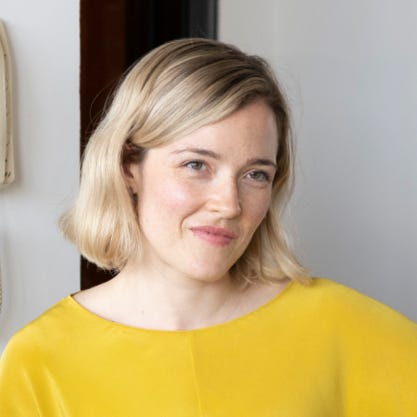
Gwen Whiting Doesn’t Want to Scale: The Founder who is rewriting the rules of growing her business
After a reported 9-figure exit to Unilever and public implosion of her brand, Gwen Whiting is back with a new laundry detergent company. Her goal this time? To keep the business intentionally small.

Is this your brand on Milled? Claim it.

Gwen Whiting Doesn’t Want to Scale: The Founder who is rewriting the rules of growing her businessAfter a reported 9-figure exit to Unilever and public implosion of her brand, Gwen Whiting is back with a new laundry detergent company. Her goal this time? To keep the business intentionally small.
If you’re a founder — or really, any working professional building something new — the stories you hear probably celebrate a version of success that reads like a fairy tale: You build something, you scale it, you sell it, and that transaction validates every sleepless night. You live happily ever after.
Gwen Whiting has lived that version, and for the past few years, has been vocal about sharing what post happily-ever-after really looks like. Whiting founded The Laundress in 2004, and bootstrapped the brand for the next sixteen years; its phenomenal growth created the category of premium eco-friendly laundry products. When Unilever showed up at the door of her SoHo NYC boutique with a reported nine-figure offer, she believed she was sending the business she worked so hard for onto its next chapter, and the deal was celebrated as an unqualified success story. What followed instead was the hardest chapter of her professional life. Seven years later, she is back in the founder’s seat at The Fill Club, building an intentionally small, community-first operation. In doing so, she’s found something she hadn’t expected: a clearer definition of what success actually means to her. M.M.LaFleur’s Founder and CEO Sarah LaFleur sat down with Gwen recently at our New York offices to talk about quiet commerce, the founder playbook she has never been able to follow, and what it actually feels like to start from scratch on her own terms. This conversation has been edited for clarity. You started your career as an apparel designer. How did you get from Ralph Lauren’s home division to the idea for The Laundress?I studied apparel design at Cornell, but I was interested in trying everything – I studied shoemaking on study-abroad in London, and had internships at Tatler, Elle Magazine, and Ralph Lauren. After graduation, I accepted a full time role at Ralph Lauren in scarves and prints, which was the absolute wrong job for me, but I wanted to get my foot in the door and keep learning. It also paid more than the offer I had at Harper’s Bazaar, where I would have made less than $20,000 annually and still have been expected to wear Manolo Blahniks. I had to pay my rent and eat. I eventually ended up in Home at Ralph Lauren, which I loved because I got to keep using my textile skills but learn interior design, too. And that's where I had the idea for The Laundress. The first person I shared it with was my boss, driving around in a town car doing our errands (it was a different era!) You bootstrapped the whole thing — no outside investment. How did that actually look?A $100,000 SBA loan got us started, which ran out very quickly, because it’s an inventory business. Then the best option, ironically, was credit cards. By 2008, I had a quarter million dollars of credit card debt. My co-founder and I had an envelope called “the graveyard” – that’s where we just put all the maxed-out credit cards. Then 2008 happened, and they cut off the credit, which forced us to a proper bank. It worked out because we were profitable; we just needed the consolidation. I launched the business at the Javits Center in New York in 2004, and within a year went international at Maison & Object in Paris. When the financial crisis hit, we were able to float because even though all of our U.S. boutique businesses were struggling and closing, Europe and Asia were unaffected. Did you always intend to sell?I have to paint a picture of 2004 for you: Amazon was still selling books and Whole Foods had one store in Texas. No one had a website. When I wrote the business plan, my understanding was that if you started something premium and independent, [you] got acquired within two to five years. That’s just what happened with all the niche brands at the time: Bumble and Bumble. Bliss Spa. Hard Candy, Stila. They were all acquired, every single one of them. I thought, that’s just how it works. Then 2008 happened and that ship sailed – no deals were happening. And anyway, I never wanted to take money from anyone because of the people I knew who took funding in their journey; many of the founders were fired or kicked out. I was like, “I’ve got the iron suit on here.” But when Unilever arrived years later, you were optimistic about what it would mean for the brand.I thought my brand outgrew me and this was like sending her to college. I truly believe[d] that they were going to take [The Laundress] to the next level: everyone was going to be able to experience it. I spent the two years after the acquisition holding the roof on as the business was completely mismanaged by the all-male leadership who was brought into run the brand. They made incompetent decisions that cheapened the brand reputation, all while my all-female team and I watched powerlessly.
I’m a fighter, and I knew I had to stay to protect my brand, my team, and my overseas business partners. I was able to get the first two men they brought in fired within the year, which was something that could have only happened while I was on the inside. But the whole team was just demoralized. There is a specific profile of a founder who looks like this: they want to build a business, they come up with an idea, they get the money, and they’re out. It’s very transactional. That wasn’t me. I built a brand with trusting customers and it was so personal. I was selling products that people had in their homes and which were a part of their care routines. Overall, I was not emotionally prepared for the consequences of the transaction. So why on earth did you decide to launch another laundry detergent business, after all that?First, because Unilever had very publicly imploded The Laundress, my work was gone. I had literally solved people’s problems and took a mental load off their life for a collective twenty years. I thought, Am I just going to leave everyone now? That wasn’t okay. When I launched The Fill Club a little less than two years ago, my vision was crystal clear: a small community that is supported by excellent products. I’m experimenting with something I’m calling “quiet commerce,” that I think of as the antithesis of the overwhelm of junk and the pressure to be pushing sales all the time. I have a small, committed group of members whom I am personally in touch with twice a month, and there’s real value in both the product and community experience that is worth coming back for. It’s like the general store where you had a tab. Before I was ready to launch The Fill Club publicly, though, I just wanted to be able to tell my story, and nobody would listen unless there was the what’s-next. What is she doing now? What’s the next business? If I had no “next thing,” I was just sour grapes, and a lot of journalists were like “She got a big check, what do I care?” It was so representative of our collective obsession with what success at work supposedly looks like, and that’s not my story. But I literally had to launch a new brand for people to listen to my story. When you were explicit about keeping The Fill Club small, another founder in your world pushed back – hard.She told me I wasn’t serious because I wouldn’t scale by playing the social media game. The clenching line was, “Clearly, you’re not serious about this business, so you should just quit now.” But I was very clear on my intention: I wanted a small brand, a community. Something private. I think I personally offended her with that, but I was also like, I don’t need to prove myself to you. People will say, “Oh, good luck trying to stay small. Of course it’s going to be so successful.” I was like, “No, I’m actually going to be pretty successful keeping it small.” I don’t want to do Amazon. I don’t want to do a department store. I don’t want to be [an] influencer. I don’t want to be on TikTok. You were one of the first founders to reframe the conversation on entrepreneurial success; you retained control of the business through exit, but you didn’t find “happily ever after” on the other side. What is your True North Now?I’ve heard a lot of founders tell me that they only felt like they had a win or a milestone if they raised money and they had a number to associate with their value. I do feel like we’ve gotten away from that a bit, and I hope my story has helped accelerate that.
If you look at my life, I travel all the time. I do great things. But there was an incredible fulfillment gap after the exit and before The Fill Club really got started. I’m not denying the power of financial freedom, and I spent many years biting my nails to pay rent. But I’m a creative collaborator at heart, and I’m energized by other people. It’s exciting to build a team differently this time, with amazing people who love to come to work, make great things, and bring joy to the lives of the customers we serve. That’s the win, and that’s why I’m back doing this. We recently published an interview with an M.M. customer who spent 20 years in corporate America. Now she is building a business grounded in using your intuition to make decisions. I’m wondering: What do you do to listen to your intuition?I’ve always been [guided by] my intuition. Always. If I listened to anyone, I never would’ve made detergent. Everyone thought I was insane. They were like, “What are you talking about?” Now they’re like, “What are you doing?” but in a different way [laughs]. I just spoke at Cornell about how life is not linear. Everything is a journey. If I had truly listened to anybody, I would never have anything that I have now.
Thanks for reading The M Dash by M.M.LaFleur. Subscribe for free to receive career advice, styling tips, and more. From May 20th through 22nd, all M Dash readers are eligible to redeem a free basic complimentary membership to The Fill Club.
Missed the signup window? You can still get a 45 day free trial with The Fill Club’s introductory membership offer here. In case you missed it:
|