Why Marisa Renee Lee Wants You to Practice Hope like a Discipline
The author of Waiting for Dawn on navigating uncertainty with grace.

Is this your brand on Milled? Claim it.

Why Marisa Renee Lee Wants You to Practice Hope like a DisciplineThe author of Waiting for Dawn on navigating uncertainty with grace.
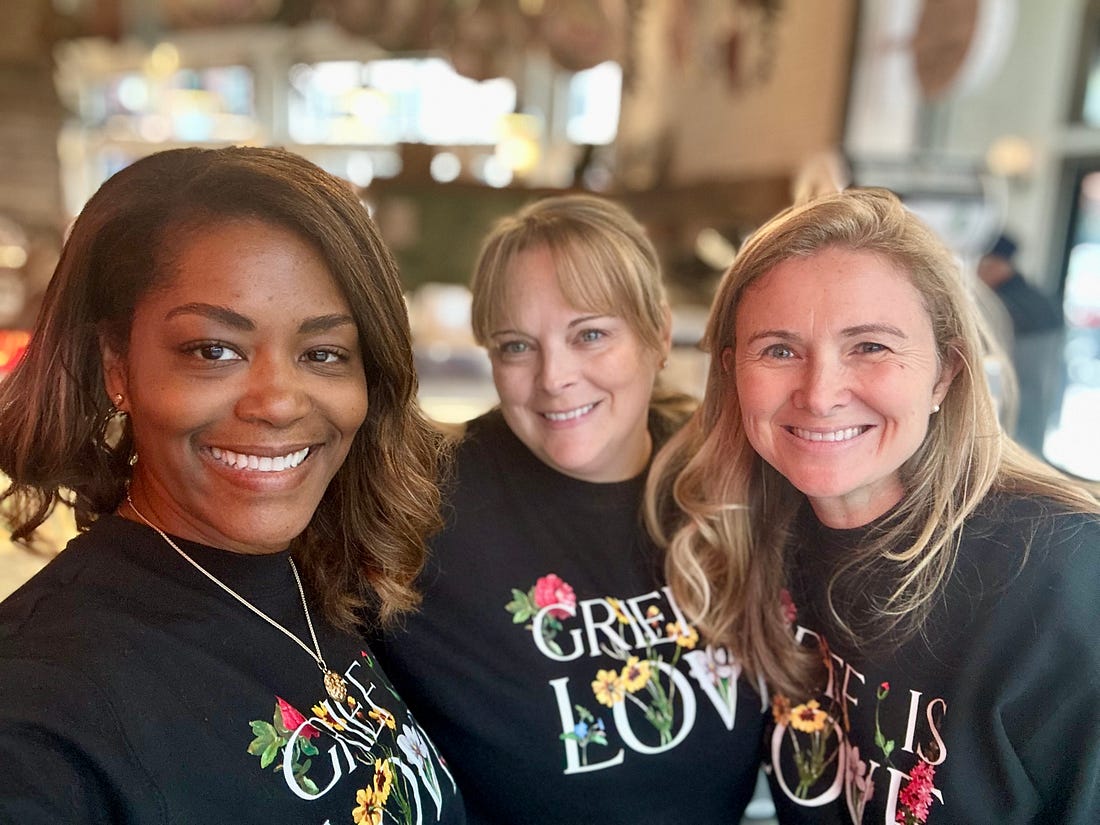
Marisa Renee Lee is no stranger to wading into topics that many of us would rather leave in the shadows. Starting with her bestselling first book, Grief is Love, Marisa, who previously served as a deputy director in the Obama White House and is currently the CEO of Beacon Advisors, drew on her own profound experiences with loss to make the case that grief is not something to move past, but something to move through with intention. The book has become a resource for tens of thousands of readers.
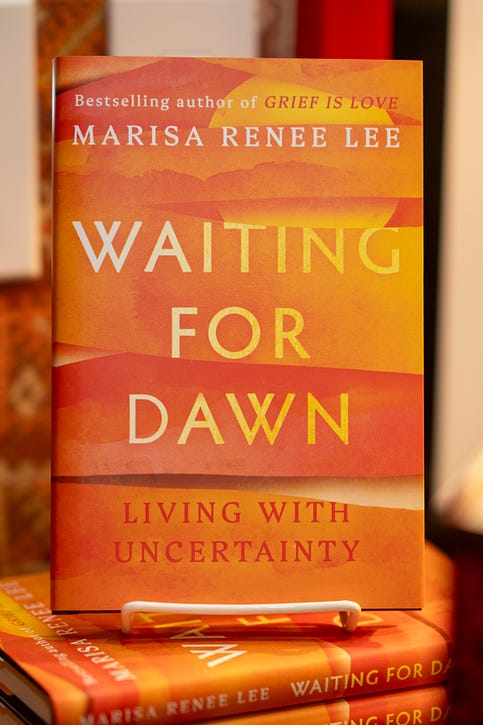
Marisa’s highly anticipated second book, Waiting for Dawn, plumbs the depths of a topic just as universal: uncertainty. A deeply personal account that evolved from her own experience with long COVID, it is a research-backed, compassionate guide for anyone trying to find their footing when the ground keeps shifting: which is to say, all of us. Below, Marisa offers a peek inside the book’s pages: why there’s no formula for getting through hard seasons, what ambition feels like when it no longer equals self-sacrifice, and why committing to the cultivation of real hope, not just optimism, is worth your time. Your first book was about grief. This one is about uncertainty. For the reader meeting you for the first time today: take us to the moment you knew this book had to exist. This is not the book that I was supposed to be writing. The original pitch that I gave to my publisher as part of a contract deal was a book about how you can show up for yourself when you are supporting someone who’s navigating something hard, like supporting a spouse through an illness or helping a sick family member with a transition to assisted living. Then I got sick in early 2024. I had some adverse side effects to the COVID booster in January, and then in April of that year, I got actual COVID for the very first time, which turned into long COVID, the impacts of which I’m still navigating. That summer my editor said to me, “When you have the energy, I want you to write about what it feels like to be sick.” Within a couple of days, I had 10,000 words. I realized these words could be organized into chapters, and that they weren’t just about illness: they were about navigating uncertainty. Uncertainty is universal, whether we’re talking about this moment that we’re living in our country and in the world, or you’re personally going through divorce, dealing with a challenge with your child, or you’re navigating a job loss. Uncertainty is something that we are all going to have to face at some point.
A lot of our readers aren’t chronically ill, but they recognize the feeling when life is “fundamentally altered without your consent,” as you put it. This book is positioned as a guide, not a formula. Can you share a little more about why you chose to write it this way? In the book I define uncertainty as the persistent feeling of stress or overwhelm related to the unknown. The whole premise of uncertainty is that we don’t know how long it’s going to go on for, and we don’t know exactly how it’s going to end. I don’t think everyone necessarily needs or wants the exact same things when they are navigating a difficulty, so it’s not helpful to present a clear formula of do this, then that, and you’ll feel better. Life is just so much more nuanced than that. It also felt important to share my own story as an entry point for exploring what research tells us can be helpful when you are in a season of uncertainty. In this book, I share more about my long COVID experience, becoming a caregiver at 13 when my mom first got sick, navigating infertility, pregnancy loss and adoption, supporting my husband when his mother was sick, and going through a significant family tragedy in 2023 when one of my cousins went missing and was later found murdered.
At the end of the day, the goal is really to live with uncertainty as well as you possibly can. That just isn’t something that has a precise formula. I wish it did. I would love for someone to show up at my house and tell me: do these three things and this period of uncertainty caused by illness will be over. That’s just not how life works. Like so many of our M Dash readers, your career is built on high achievement, and you’re still publishing books, doing keynotes, running Beacon Advisors, and raising a son. Ambition clearly didn’t disappear as a result of the period you’re going through. But what is it pointed at now that it wasn’t pointed at three years ago? I am still a deeply ambitious and competitive person -- I don’t think anything will take that away from me. The big difference for me now is that I will no longer sacrifice my physical or mental health on the altar of achievement. When you are type A eldest daughter, first generation, Ivy League graduate, working in the White House and on Wall Street, you get very good at putting aside your needs, whether they’re emotional needs, physical health needs, or mental health needs, in pursuit of a goal or in service of a larger vision, like when I was working in the White House. I refuse to do that anymore. I’ve come to realize that when you are not well, there is little else that matters as much as getting better. I just want to be more respectful of my body and my mind.
You’ve also said you only work with values-aligned clients now. I know many of our readers have also experienced a values-recalibration in the last few years that has impacted their relationship to work (for better or worse). What kind of work do you say no to now that you would have said yes to in 2023? What was it like redrawing those boundary lines? By the early fall of 2024, I realized I needed to operate differently if I was going to get better. I can no longer work with clients of any kind, even if they’re doing good work in the world, if they embody a culture of chaos and disorganization where requests are very last minute and the expectation is to drop everything around you to attend to their needs, no matter what. After working in the White House, I know most work environments don’t actually require that level of intensity and go, go, go energy. I can’t do back-to-back calls and quick turnarounds. I need time to plan my work so that I can align it with my energy and how my body is feeling on a particular day. I also can’t do late nights -- if you send me an email at nine o’clock, there’s a good chance I’m already in bed. Redrawing those boundaries was hard, and it has cost me. One of my clients decided to part ways and that was a tough experience, but I have no regrets. I’m still highly capable and I’m able to add value. But I have to do it on my terms now. Thanks for reading The M Dash by M.M.LaFleur. Subscribe for styling advice, career guidance, and more. You write about asking for and accepting help, and also the social rejection you experienced during your sickest period. What does good support actually look like? Here’s the way that I always encourage folks to think about offering good support. First, just be physically present for someone if they are well enough for you to do that. Second, consider practical ways that you can help someone who’s in the middle of some sort of period of hardship, grief, or uncertainty. Can you take their kid to soccer practice? Can you drop off groceries or a meal? Can you walk their dog or send a house cleaner? Research shows us that when people are going through these types of experiences, their executive functioning capabilities are actually reduced; we can see it on brain scans. So anything practical that you can do to support them makes a tremendous difference.
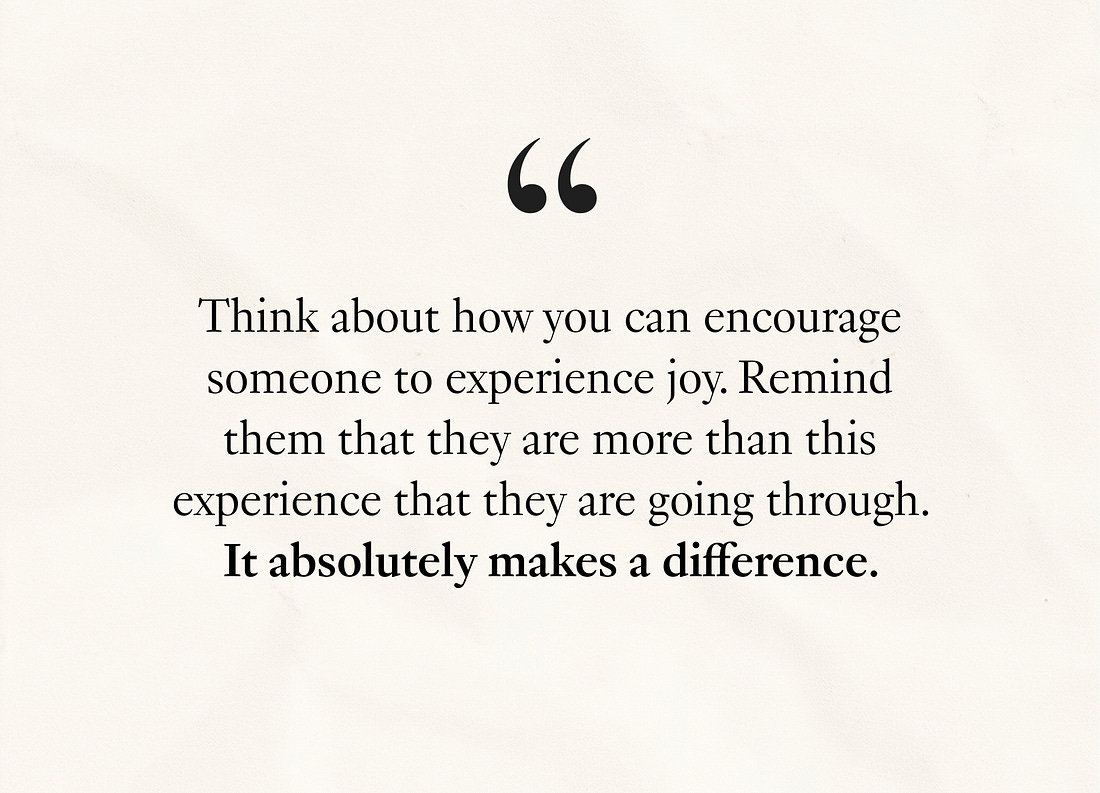
The last piece of advice I give was particularly important to me when I was experiencing long COVID. My friends couldn’t visit me, and I also couldn’t call them because it would make it hard for me to breathe. Think about how you can encourage someone to experience joy, whether it’s by sending a funny meme, a nice card, a book in the mail, or some small gift. Remind them that they are more than this experience that they are going through. It absolutely makes a difference. Has the idea of “good support” also changed how you think about supporting others and asking for support professionally? My childhood best friend is mostly a stay-at-home mom. When she saw that I was struggling with my work, she just started volunteering her support without my asking, and that support evolved into her becoming my operations manager during a period of real illness and pain. I don’t think I would’ve thought to ask for that help if she hadn’t stepped in. Now that I see how helpful that experience was, and if you are in a period of uncertainty, it’s okay to ask people whom you trust in your professional life for help. See if they might be willing to barter a bit – maybe there’s a project they can help take on, and in the future, you’ll be the one helping them. At some point they will be in a season of their own.
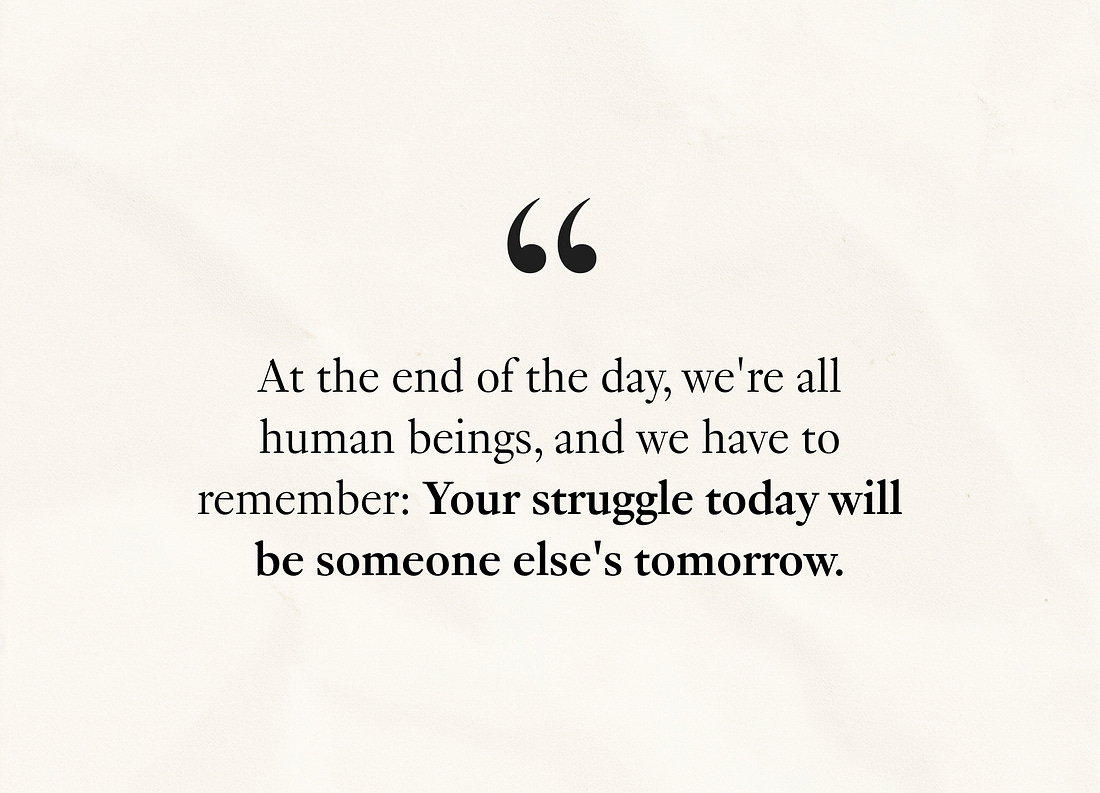
I also think it’s incredibly important to be honest about where you are and what is happening with you because often, when we really tell the truth, that’s when other people find ways to support us. As an example, I was supposed to travel for an event for a client, and I realized I was just too sick to fly; it was not going to be possible. I put together a really thoughtful email acknowledging that: I know this is disappointing (and I am personally disappointed), but if I get on this airplane, I’m going to make myself feel worse. The client not only met me with compassion and grace, but she went a step further and she told me, “You have been struggling for too long and trying really hard to do this work. Take care of yourself: I want to give you some paid time off.” Her kindness blew my mind, and as a result, I was able to take five weeks off last summer, which was hugely helpful in my overall recovery. I think sometimes we are afraid to tell the truth, especially in professional settings, because of the expectations laid out via capitalism where we are all means of production and when your productivity is reduced, you feel a reduction in your overall worth. It’s scary to share with professional contacts, colleagues and bosses when life is not okay, and unfortunately, not everyone is going to meet you with that kind of compassion and kindness. But I think more often than not, we might be surprised at the response we receive. At the end of the day, we’re all human beings, and we have to remember: Your struggle today will be someone else’s tomorrow.
What did you used to wear when you wanted to feel powerful? What do you wear now? I have an M.M.LaFleur dress from one of your earliest collections that I wore a lot in my White House days with the Obama administration. I loved this dress, but I don’t really wear dresses anymore, partially because I often have to be in compression stockings or tights as a part of my health condition, so I gave the dress to a dear friend who is a TV anchor! It fits her personality and her work life. One of my new favorites is the Foster Pant – they’re super slim black dress pants in a really comfortable fabric. I love them. At this point in my life and career and given what I am navigating with my health, I just want to be comfortable and feel good in my body. I think that’s why I like those particular pants so much.
You’ve said that this book is “well-timed for America in 2026.” I think you’re right, and that so many women are just exhausted by a world that won’t stop shifting under them. If a reader picks up your book at her own lowest point tonight, what should she know before she even opens it? First and foremost, this book sits on a foundation of hope. I think there is a lot that we have gotten wrong about hope, which we confuse with optimism. They are not the same thing. If you want to navigate a period of challenge or uncertainty well, you need a commitment to hope. I view hope as a discipline that is coupled with action, and everything I lay out in the book around hope is supported by research coming from both cognitive behavioral therapy as well as acceptance and commitment therapy. (All of the citations can be found in the back of the book if anyone is interested in nerding out further like I did!).
When you commit to a belief that your future has the potential to be better than your present, that belief creates space for you to take the actions that actually create your future state. I want people to believe that whatever is hard about life today has the ability to improve, but then you have to take steps to make it happen. I had to step away from work. I had to set boundaries with clients, which absolutely had financial implications. I had to do a lot of research and figure out where I could get the best medical care, as well as the treatments that I should try. I didn’t go from barely being able to walk around my house two years ago to being able to do this interview, go on morning TV, finish the book and so on, without a lot of hope, and a lot of work.
Waiting for Dawn: Living with Uncertainty, is available wherever books are sold. Learn more and pick up a copy by visiting your local bookseller, Bookshop.org, or Amazon.
|