15-minute reaction turns old clothes into useful molecules
What matters in science |

Is this your brand on Milled? Claim it.
|
|||||
|
|||||
|
Hello Nature readers, |
|||||
|
|||||
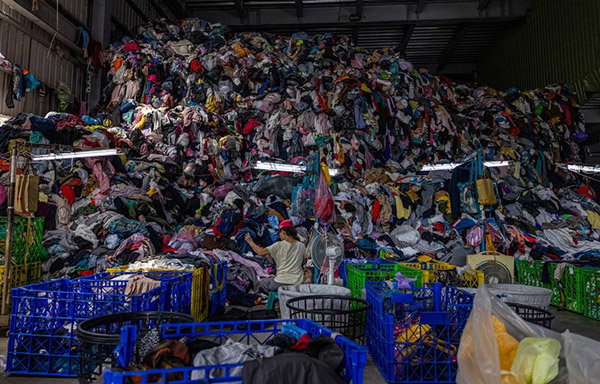
| Less than 1% of old clothes are recycled — they usually end up incinerated or dumped into landfill. (Annabelle Chih/Getty) | |||||
15-minute process recycles old clothesA chemical-processing technique breaks down polyester fabrics into reusable molecules in only 15 minutes. It can even tackle mixed materials such as polycotton, breaking down the polyester and leaving the cotton to be recovered. The researchers estimate that a refined version of the process could recycle 88% of clothing worldwide. “We have a simple process that we can scale to treat large quantities of clothing,” says chemical engineer and study co-author Dionisios Vlachos. “We are very optimistic that this can actually be taken to the real world.” Nature | 4 min readReference: Science Advances paper |
|||||
Relief and uncertainty for science in FranceScientists in France who spoke to Nature have expressed relief that the right-wing party National Rally was defeated in yesterday’s parliamentary elections. But the absence of a clear winner presents uncertainty for scientists, and many do not believe that the new government will make a positive difference to research and higher education. “Science and education were absent from the European and French parliamentary election campaigns, and budget constraints mean that research will not be a priority,” says paediatric immunologist and French Academy of Sciences president Alain Fischer. Nature | 5 min read |
|||||
COVID tsar appointed UK science ministerThe new UK government’s science minister has been named as clinical researcher Patrick Vallance, who gained a high profile for his sober TV appearances as the government’s chief scientific adviser during the COVID pandemic. Vallance is not a Member of Parliament and has no ministerial experience. But his hiring is “a reassuring signal to the wider research community, that they’ve actually got somebody who understands what they do”, says Jill Rutter, a former civil servant and researcher at the Institute for Government, a think tank in London. Nature | 5 min read |
|||||
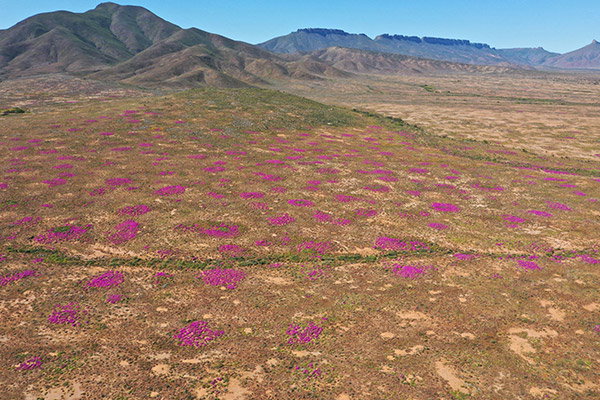
Oldest known ‘living’ termite moundsSouthern harvester termites (Microhodotermes viator) have been living their best lives in mounds along the Buffels River in South Africa since woolly mammoths roamed the Earth. Using radiocarbon dating, researchers estimate the mounds to be 34,000 years old — making them the oldest known inhabited mounds by some thirty thousand years. “We knew they were old, but not that old,” says soil scientist Michele Francis. Associated Press | 2 min readReference: Science of The Total Environment paper |
|||||
|
|||||
| Purple flowers indicate the presence of termite mounds, which are richer in nutrients than the surrounding soil. Analysis of the mounds revealed their age and that they act as long-lasting carbon reservoirs. (Jannick Niewoudt; Alastair Potts) | |||||
|
|||||
Endangered-species researchers find hopeEndangered-species biologists face tough challenges, from the psychological weight of studying a disappearing species to the bureaucratic hurdle of getting the animal listed as endangered in the first place. Humour, collaborations and connecting with local communities helps them to cope. And occasionally, a small miracle — such as when ecologist Luis Coloma saw evidence of an iconic Ecuadorian jambato toad (Atelopus ignescens) that was thought to be extinct. “I couldn’t believe it. I lost the faith that I would see these frogs again,” he says. “It was a dream.” Nature | 11 min read |
|||||
‘A fabulously engaging evening of theatre’When he was a junior researcher, climate scientist Peter Stott was present at the climate summit where the landmark Kyoto Protocol was agreed. A new stage play based on the event “feels as relevant today as the summit did in 1997”, he writes. “The denouement was as thrilling in Kyoto the play as it was in Kyoto the city.” Nature | 6 min read |
|||||
How to make sure your CV gets seenIn the latest Nature Careers advice column, a biology postdoc who wants to break into industry keeps receiving impersonal, early-stage rejections even for jobs they were well suited for. An industry scientist, a career development leader and a sales specialist have tips on how to stop your application disappearing into a black hole. Nature | 7 min readDo you have a work dilemma you’d like some help with? E-mail [email protected] |
|||||
UK blood inquiry: time for justiceOn 29 May, Stuart Cantrill (the editorial director of the physics and chemistry Nature journals) was present when the final report of the United Kingdom’s Infected Blood Inquiry was delivered. The report’s damning verdict: a litany of failures in the country’s National Health Service, more than 30,000 people infected with HIV and hepatitis from blood and blood products, and successive governments who failed to respond adequately to the unfolding scandal. “Of course, many died long before the inquiry was even set up, including my dad,” writes Cantrill. “The devastation wrought on my family cannot be undone, but if lessons are actually learned and real change implemented in patient safety culture, that will at least bring some comfort.” Nature Reviews Gastroenterology & Hepatology | 5 min readReference: Infected Blood Inquiry report |
|||||
|
|||||
|
|||||
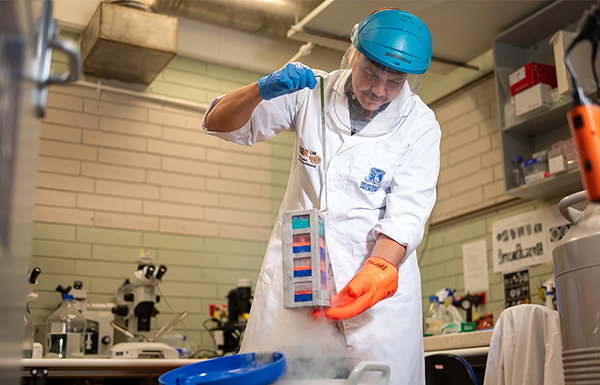
| In this photo, epigeneticist Andrew Pask is checking his team’s store of stem cells of the fat-tailed dunnart (Sminthopsis crassicaudata), a mouse-like marsupial that is the closest living relative of the thylacine, or Tasmanian tiger (Thylacinus cynocephalus). “Our main project is to bring back the thylacine,” says Pask. To achieve it, the team is trying to produce a complete genome for the species and developing cloning and in vitro fertilization for marsupials. “People say we are playing God with our work. But we played God when we wiped out the thylacine. My research is looking at ways to heal lost biodiversity.” (Nature | 3 min read) (Dave Tacon for Nature) | |||||
Quote of the day“It’s not just a list of facts — nobody wants to read that. If you want people to listen to you talk about science, you have to create a compelling story.”Astrobiologist and science-fiction writer Seven Rasmussen wrote about the increasing frequency of climate disasters in a story framed by a hurricane's destruction of her father's house. (Nature | 6 min read) |
|||||
|
|
|||||
|
|||||
|
|
|||||
|
Want more? Update your preferences to sign up to our other free Nature Briefing newsletters:
|
|||||
Access Nature and 54 other Nature journals
Nature+ is our most affordable 30-day subscription, giving you online access to a wide range of specialist Nature Portfolio journals, including Nature. |
|||||
|
|||||
|
You received this newsletter because you subscribed with the email address: - Please add [email protected] to your address book. Enjoying this newsletter? You can use this form to recommend it to a friend or colleague — thank you! Had enough? To unsubscribe from this Briefing, but keep receiving your other Nature Briefing newsletters, please update your subscription preferences. To stop all Nature Briefing emails forever, click here to remove your personal data from our system. Fancy a bit of a read? View our privacy policy. Forwarded by a friend? Get the Briefing straight to your inbox: subscribe for free. Want to master time management, protect your mental health and brush up on your skills? Sign up for our free short e-mail series for working scientists, Back to the lab. Get more from Nature: Register for free on nature.com to sign up for other newsletters specific to your field and email alerts from Nature Portfolio journals. Would you like to read the Briefing in other languages? 关注Nature Portfolio官方微信订阅号,每周二为您推送Nature Briefing精选中文内容——自然每周简报。
Nature Portfolio | The Springer Nature Campus, 4 Crinan Street, London, N1 9XW, United Kingdom Nature Portfolio, part of Springer Nature. |