A stunningly detailed map of the Universe and the month’s best science images
What matters in science |

Is this your brand on Milled? Claim it.
|
||||||
|
||||||
|
Hello Nature readers, |
||||||
|
||||||
| (Claire Lamman/DESI collaboration) | ||||||
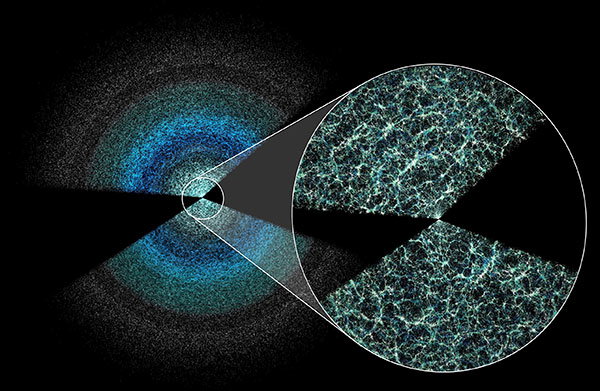
The month’s best science imagesLast month, a cosmology project completed its initial five-year mission to create the most detailed 3D map of the Universe so far. The Dark Energy Spectroscopic Survey (DESI), based at the Kitt Peak National Observatory near Tucson, Arizona, has measured the precise distances of 47 million galaxies and quasars. Pictured is a thin slice of the map, with the Milky Way at its centre; the inset shows how galaxies form a web of clusters and filaments under the pull of gravity. DESI’s preliminary results hinted that the leading model of cosmic expansion could be wrong. |
||||||
Dark proteins come into the light‘Dark’ portions of the genome, which weren’t thought to hold instructions for making working proteins, have mostly been excluded from research. Now thousands of the proteins encoded by these genes have an official, new name — peptideins — that marks their inclusion in major gene and protein databases used by the life-sciences community. Dark proteins tend to be very short in amino acid length and lack evolutionary relatives in other organisms, which is part of the reason they have been omitted. But some have been implicated in diseases including childhood cancers, as well as in basic cellular functions. “This is a major breakthrough,” says bioinformatician Christoph Dietrich. “These microproteins have the potential to really open up a new wave of research.” Nature | 7 min readReference: Nature paper |
||||||
| ||||||
|
||||||
|
||||||
Microbes eat pollution — if we let themA growing community of synthetic biologists using biotechnology-led solutions — mostly microorganisms containing DNA tailored for a specific function — to tackle pollution ranging from microplastics and industrial waste to soils laced with heavy metals or explosive residues. But the field is held back by concerns around releasing genetically modified organisms into the environment, and the fact that current incentives make polluting profitable while cleaning up costs money. Nature | 15 min readThis article is part of Nature Spotlight: Synthetic biology |
||||||
|
||||||
|
||||||
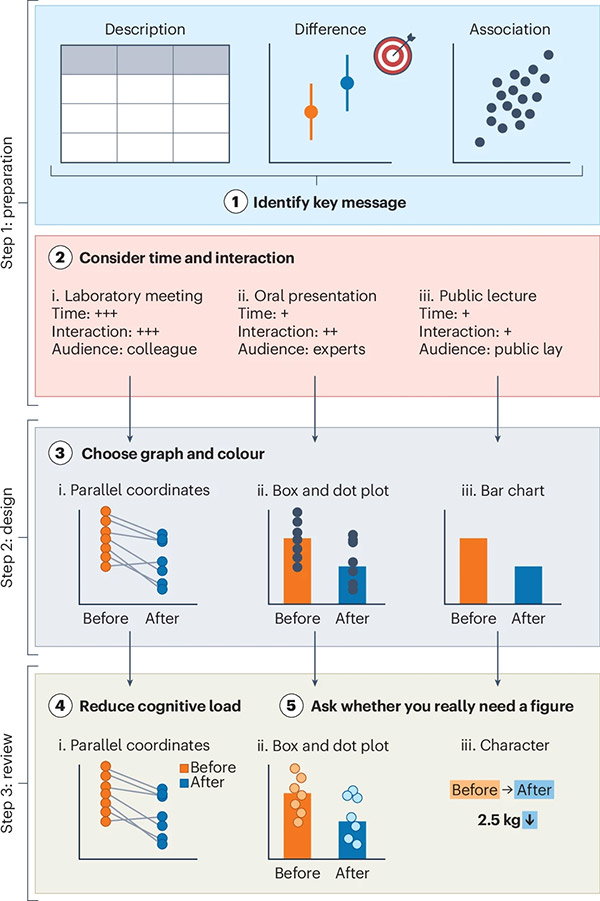
| “Much existing guidance on data visualization has contributed to improving technical aspects,” argues epidemiologist Ryosuke Fujii (藤井亮輔). “But they often overlook a broader question: how figures function within the communication process.” Fujii outlines a practical strategy for creating figures that communicate clearly across audiences and scientific contexts. (Nature Human Behaviour | 13 min read) (Ryosuke Fujii 藤井亮輔/Nature Human Behaviour) | ||||||
Quote of the day“I used to work on a genealogy show for the BBC that traced people’s fascinating family stories, and so to discover that there’s such an interesting tale in my own family’s past feels very exciting.”Journalist Rich Preston provided a DNA sample to help put a name to the remains of his direct ancestor, John Bridgens — one of four sailors just identified who were on John Franklin’s doomed expedition to find the Northwest Passage. (North Shore News | 5 min read) |
||||||
|
|
||||||
|
||||||
|
|
||||||
Free newsletters from NatureWant more? Update your preferences to sign up to our other Nature Briefing newsletters:
|
||||||
|
||||||
|
You received this newsletter because you subscribed with the email address: - Please add [email protected] to your address book. Enjoying this newsletter? You can use this form to recommend it to a friend or colleague — thank you! Had enough? To unsubscribe from this Briefing, but keep receiving your other Nature Briefing newsletters, please update your subscription preferences. To stop all Nature Briefing emails forever, click here to remove your personal data from our system. Fancy a bit of a read? View our privacy policy. Forwarded by a friend? Get the Briefing straight to your inbox: subscribe for free. Want to master time management, protect your mental health and brush up on your skills? Sign up for our free short e-mail series for working scientists, Back to the lab. Get more from Nature: Register for free on nature.com to sign up for other newsletters specific to your field and email alerts from Nature Portfolio journals. Would you like to read the Briefing in other languages? 关注Nature Portfolio官方微信订阅号,每周二为您推送Nature Briefing精选中文内容——自然每周简报。
Nature Portfolio | The Springer Nature Campus, 4 Crinan Street, London, N1 9XW, United Kingdom Nature Portfolio, part of Springer Nature. |