AI agents sniff out decades-old errors in scientific literature
What matters in science |

Is this your brand on Milled? Claim it.
|
||
|
||
|
Hello Nature readers, |
||
|
||
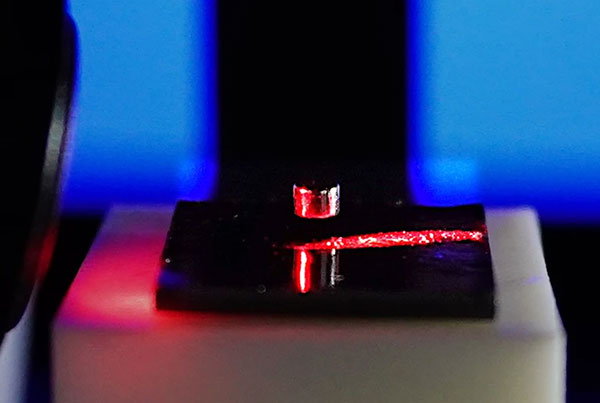
| The new device uses a tiny magnet inside a vacuum chamber that is about the size of a Tupperware box. (Wei Ji, Peking University) | ||
Magnetic-field sensor detects brain activityA new magnetometer — a device used to measure magnetic fields — is sensitive enough to detect the faint signals of the brain’s electrical activity. The technique uses laser beams to track the motions of a tiny levitating magnet suspended in a vacuum chamber. This method is simpler than existing approaches, which require temperatures close to absolute zero or near-perfect shielding from external magnetic interference. The device could be used to detect magnetic fields produced by the brain or heart, and similar levitation techniques could be applied to search for dark matter, researchers say. Nature | 4 min readReference: Science paper |
||
AI spots decades-old scientific errorsScientists using artificial-intelligence agents to audit the scientific literature have uncovered decades-old errors, from typos to incorrect values in the boiling-point measurements of molecules. The advantage of using AI to fact-check is the speed at which it can scan scientific databases and literature compared with humans, says computer scientist James Zou. But others argue that AI is still prone to mistakes, and its use should be focused on identifying ‘objective’ errors, such as those in calculations, and not assessing how data are interpreted or the novelty of the research. Nature | 5 min read |
||
|
||
Mutations linked to myriad health benefitsA mutation in a specific gene called FNIP1 is linked to a host of health benefits such as decreased levels of belly fat and blood sugar and a reduced risk of conditions including type 2 diabetes and heart disease. The gene plays a part in cellular metabolism and in how cells detect and respond to certain nutrients. The mutations appear to be rare, but the findings reveal a possible target for drugs that could one day reproduce some of the mutations’ protective effects against cardiometabolic diseases. Nature | 5 min readReference: Nature paper |
||
|
||
|
||
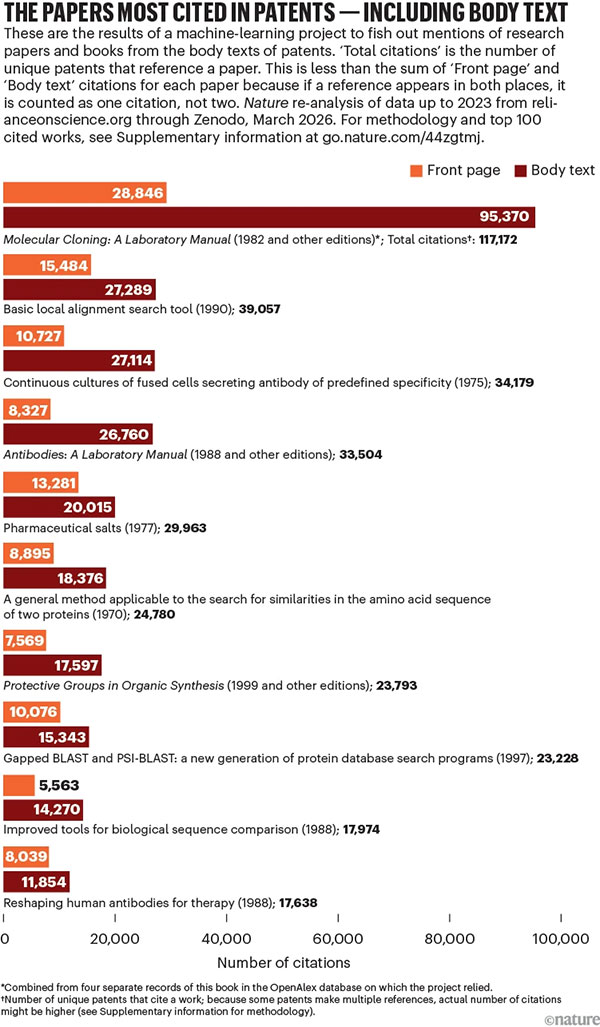
| The citations included in patents — documents filed to gain legal protection for potentially money-making inventions — can provide a glimpse of how academic research flows into commercial innovation. Although many papers have obvious importance, some studies in this list are rarely mentioned in academic journals, and even their authors don’t know why they are cited in so many patents. Nonetheless, the analysis does reveal insights about the influence of academia on industry: not least, that the majority of papers most cited in patents are the product of publicly funded research. (Nature | 15 min read) (Source: Nature analysis/relianceonscience.org) | ||
|
||
Universities must address AI cheatingAfter suspecting that his students cheated on an at-home mid-term exam, economist Robert Serrano held the course’s final examination in person — the class’s average score plummeted. The shock “was not that cheating seems to have occurred on the take-home exam, but how prevalent it appeared to be”, he writes. Universities should establish dedicated committees to ensure academic integrity is upheld, and work as a collective to establish best practices for the appropriate use of AI, to ensure that such tools don’t undermine learning, he argues. Nature | 5 min read |
||
How Gen Z scientists stay motivatedGeopolitical unrest, rising costs of living, research funding cuts and a widespread sense of decreasing trust in science can make research an uncertain career path for people in Generation Z — those born after 1997. But there are ways to stay motivated and cultivate resilience, four early-career researchers tell Nature. One is to find a research environment that suits your needs, and a support network for the difficult times. Another is to advocate for change from within. “We, as scientists, must support each other and not give up on our careers,” says mycologist Jefferson Reis. “Staying in science is itself a form of resistance.” Nature | 11 min read |
||
Quote of the day“It makes you feel very special, but also very small because you are this little mote in the universe.”Later this week, a NASA mission will take off to observe the upcoming solar eclipse from above the clouds over Iceland. The data the flight will collect will be invaluable, but there’s also magic in simply witnessing the event, says solar physicist Amir Caspi, principal investigator of the mission. (The Guardian | 5 min read) |
||
|
|
||
|
||
|
|
||
Free newsletters from NatureWant more? Update your preferences to sign up to our other Nature Briefing newsletters:
|
||
|
||
|
You received this newsletter because you subscribed with the email address: - Please add [email protected] to your address book. Had enough? To unsubscribe from this Briefing, but keep receiving your other Nature Briefing newsletters, please update your subscription preferences. To stop all Nature Briefing e-mails forever, click here to remove your personal data from our system. Fancy a bit of a read? View our privacy policy. Forwarded by a friend? Get the Briefing straight to your inbox: subscribe for free. Get more from Nature: Register for free on nature.com to sign up for other newsletters specific to your field and e-mail alerts from Nature Portfolio journals. Would you like to read the Briefing in other languages? 关注Nature Portfolio官方微信订阅号,每周二为您推送Nature Briefing精选中文内容——自然每周简报。
Nature Portfolio | The Springer Nature Campus, 4 Crinan Street, London, N1 9XW, United Kingdom Nature Portfolio, part of Springer Nature. |