AlphaFold3 is now open source
What matters in science |

Is this your brand on Milled? Claim it.
|
|||||
|
|||||
|
Hello Nature readers, |
|||||
|
|||||
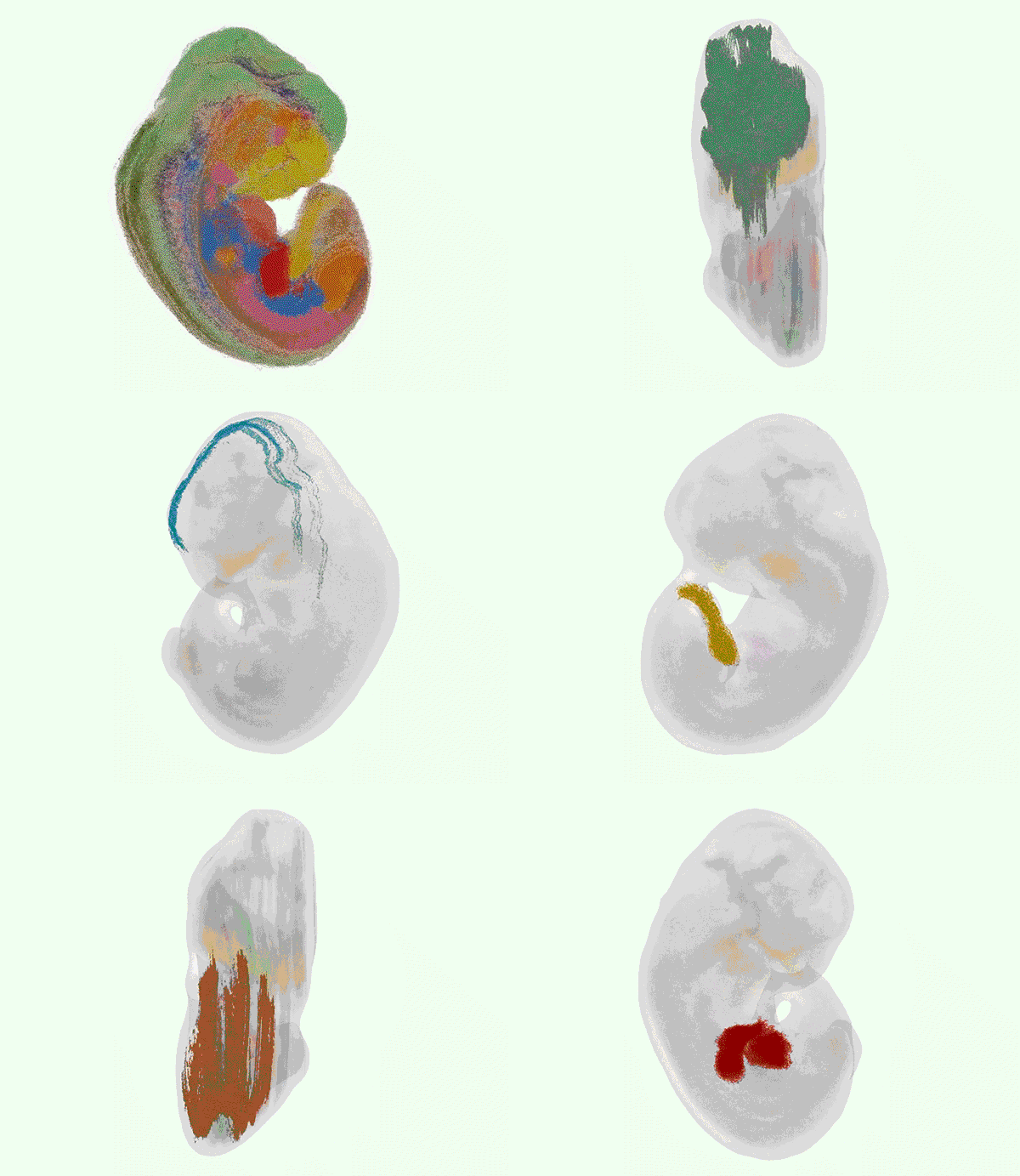
| The team recorded the behaviour of a total of 7.8 million cells in a mouse embryo at 9.5 and 11.5 days after fertilization — a time when most mouse organs are forming. (X. Qiu et al./Cell) | |||||
8-million-cell ‘hologram’ of a mouse embryoResearchers have created the most detailed 3D cellular map yet of a mouse embryo, visualizing close to eight million cells. The map shows how cells interact and migrate in an embryo less than two weeks after conception, revealing the structures of every major organ developing in the embryo, from the brain to the heart and the spinal cord. Such maps could be created for any species, including human embryos, and could help researchers to identify causes of congenital diseases. Nature | 3 min readReference: Cell paper |
|||||
AlphaFold3 is now open sourceThe code underlying the Nobel-prize-winning tool for modelling protein structures is open at last. Scientists can now download the software code for AlphaFold3 and use the artificial intelligence tool for non-commercial applications. The initial publication, six months ago, of AlphaFold3 without its code drew criticisms from scientists, who said the move undermined reproducibility. AlphaFold3 is capable of modelling proteins in concert with other molecules. Nature | 4 min read |
|||||
To biomarker test, or not to biomarker test?Efforts to adopt blood tests and brain scans to diagnose Alzheimer’s disease has fuelled controversy among scientists. Advocates of the tests say that biomarkers can indicate Alzheimer’s at an early stage, when any treatments that are developed to reverse the disease are more likely to be effective. Critics worry that these tests might cause unnecessary anxiety. “There’s a risk of misunderstanding and distress that individuals who are asymptomatic will have if we tell them they have Alzheimer’s, whereas nothing will happen in their lifetime in a majority of cases,” says neurologist Nicolas Villain. Nature | 5 min readReference: JAMA Neurology paper |
|||||
| |||||
|
|||||
|
|||||
In pursuit of bionic limbs that workDesigning bionic prosthetics that fully restore the function of lost limbs hinges on accurately replicating somatosensation — the collection of senses that interpret touch, temperature, pain and body position. Neuroengineer Giacomo Valle has been tweaking electrical impulses that cause feelings of texture and pressure, and others have created warm and cool sensations in “phantom” hands. Engineer Hugh Herr, however, argues that the sense of embodiment — users feeling like the prosthetic is a part of their body, not just an artificial attachment — is most important. Nature | 12 min read |
|||||
Why our message to ET had no womenThe heavily pixellated male figure that featured in a 1974 broadcast to the stars from the Arecibo Observatory might seem a sexist choice, but historian Rebecca Charbonneau argues that it deserves a more subtle interpretation. “The messages that humanity sends to extraterrestrial intelligences are not just scientific artefacts, but also works of art that reveal much about the people who created them,” she writes. “They serve as a cosmic mirror, reflecting both our aspirations for universality and the limitations of our perspective.” Nature | 10 min read |
|||||
|
|||||
|
|||||
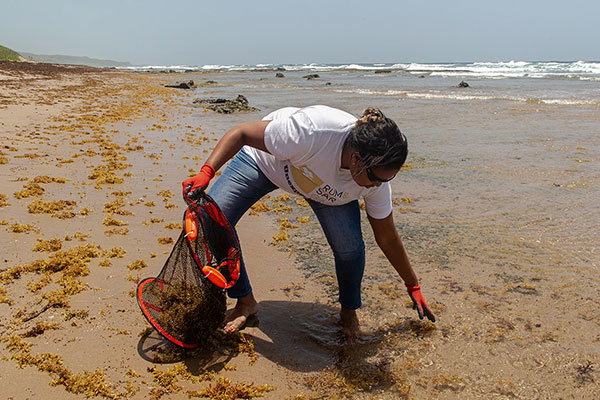
| Mechanical engineer Legena Henry co-founded a Barbadian company that makes renewable biofuels from rum-distillery waste water and sargassum, a seaweed that washes up on the beaches. She estimates that converting around 75% of the vehicles on the island nation to run on this biofuel could halve the cost of fuel for Barbadians and slash carbon emissions. “All the islands in this region of the Caribbean have a sargassum problem and a rum wastewater problem — and ultimately a climate-change problem,” she says. “This solution is a win–win–win.” (Nature | 3 min read) (Micah B Rubin for Nature) | |||||
Quote of the day“It’s amazing that scientists are looking back at the data we collected in 1986 and finding new results.”Planetary scientist Linda Spilker worked on NASA’s Voyager programme when Voyager 2 sent back data from Uranus, showing that it had an unusually distorted magnetic field. New analysis of the almost 40-year old data hints that the moons of Uranus could have the necessary conditions to support life, and that the initial fly-by caught the planet on an off day. (BBC | 5 min read) |
|||||
|
|
|||||
|
|||||
|
|
|||||
Free newsletters from NatureWant more? Update your preferences to sign up to our other Nature Briefing newsletters:
|
|||||
Access Nature and 54 other Nature journals
Nature+ is our most affordable 30-day subscription, giving you online access to a wide range of specialist Nature Portfolio journals, including Nature. |
|||||
|
|||||
|
You received this newsletter because you subscribed with the email address: - Please add [email protected] to your address book. Enjoying this newsletter? You can use this form to recommend it to a friend or colleague — thank you! Had enough? To unsubscribe from this Briefing, but keep receiving your other Nature Briefing newsletters, please update your subscription preferences. To stop all Nature Briefing emails forever, click here to remove your personal data from our system. Fancy a bit of a read? View our privacy policy. Forwarded by a friend? Get the Briefing straight to your inbox: subscribe for free. Want to master time management, protect your mental health and brush up on your skills? Sign up for our free short e-mail series for working scientists, Back to the lab. Get more from Nature: Register for free on nature.com to sign up for other newsletters specific to your field and email alerts from Nature Portfolio journals. Would you like to read the Briefing in other languages? 关注Nature Portfolio官方微信订阅号,每周二为您推送Nature Briefing精选中文内容——自然每周简报。
Nature Portfolio | The Springer Nature Campus, 4 Crinan Street, London, N1 9XW, United Kingdom Nature Portfolio, part of Springer Nature. |