Baby T. Rex were tiny but deadly
What matters in science |

Is this your brand on Milled? Claim it.
|
|||||
|
|||||
|
Hello Nature readers, |
|||||
|
|||||
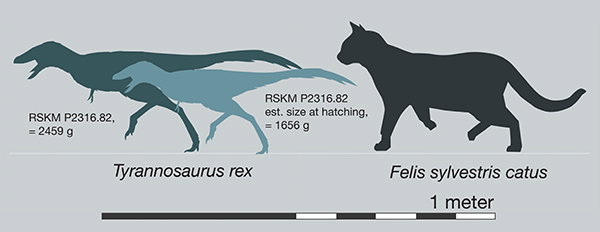
| Researchers compared bones from a T. rex hatchling to birds and other dinosaurs to estimate that it would have been about the size of a small house cat. (Nicholas R. Longrich et al./Biology) | |||||
Do not try to pet that baby T. rex“Tyrannosaurus were unsafe at any size,” says anatomist Eric Snively, a member of a team who analysed the teeth and foot bones of young dinosaurs to understand their behaviour soon after hatching. “Babies were quickly out of the nest and killing the heck out of things.” Tyrannosaurus rex fossils reveal that tiny hatchlings “were smashing into the bones of their food, just like giant adults”, says Snively. Discover | 6 min readReference: Biology paper |
|||||
Genetic clues to personality disorder originsResearchers have identified 11 locations in the human genome, and nine functional genes in or near these areas, that seem to be linked to borderline personality disorder (BPD) — the first evidence of genetic risk factors associated with the condition. The findings come from the largest genome-wide association study of BPD so far, including data from more than 12,000 people with the condition. The study is “an extraordinary step up from where we’ve been previously, with virtually no research being conducted on the condition at scale,” says psychiatrist Andrew McIntosh. Nature | 5 min readReference: Nature Genetics paper |
|||||
Chinese AI model could rival US mainstaysLast week, Beijing-based Moonshot AI unveiled ‘Kimi K3’, a large language model that the company says can handle large swathes of text, and match or outperform US models on tasks such as coding. The open-weight model has generated a buzz among some researchers that use AI models, partly because it’s well-tuned for running AI agents, a capability that made its predecessor Kimi K2.5 so popular in China. But K3 might not be made widely available internationally, partly because of Chinese policies that could limit the use of its domestic AI models overseas. Nature | 6 min read |
|||||
|
|||||
A fresh look at cancer’s co-conspiratorAn influx of studies is shedding new light on cachexia, a syndrome that causes muscle wasting and reduced appetite and affects up to 80% of people with cancer. The research has repositioned the condition as a whole-body syndrome of metabolism gone haywire, with psychological symptoms as well as physical, and has unearthed clues as to how the brain orchestrates it. And a handful of companies, including pharma giant Pfizer, are testing medicines for cachexia, raising hope that a treatment might be on the horizon. Nature | 11 min read |
|||||
How to manage the risk of deep-water gasUntil world economies make the essential transition to low-carbon forms of energy, natural gas will be crucial, argues Yuxin Zhao, who is a scientist affiliated with one of China’s state petroleum companies. He explores how the gas resources that lie beneath fragile, remote deep-sea ecosystems can be best exploited. “The answer is balance — for which access is a privilege earned with proof of responsibility,” he writes, pointing to China’s ocean-governance approach as an example of how to “turn ecological restrictions into requirements for development”. Nature | 15 min read |
|||||
Teens’ bad decisions are not all irrationalBlaming teenagers’ undeveloped brains when they don’t choose the ‘sensible’ path — by retaliating against an insult in a school corridor, for example — does them a disservice, argues evolutionary criminologist Evelyn Svingen. “Teenagers do weigh up what they are doing. The costs that weigh most heavily on them are social, and adults consistently underestimate how heavy they are,” she writes. “The teenager who hits back in the corridor is running on an ancient programme.” She offers advice on how schools and parents can “create an environment where the rewarding thing to do and the sensible thing to do point in the same direction”. The Conversation | 6 min read |
|||||
|
|||||
|
|||||
|
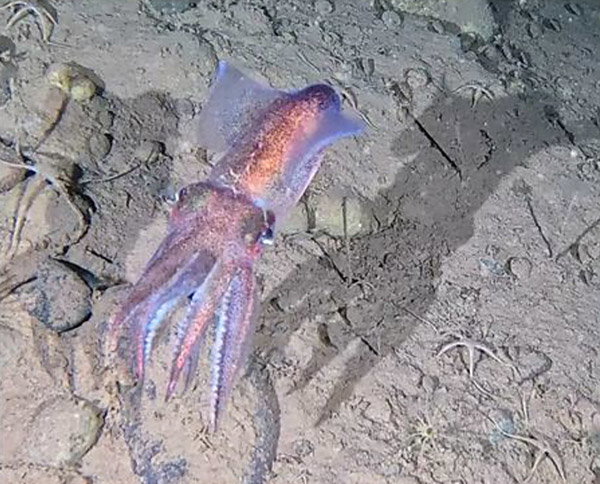
Scientists spotted this Arctic bobtail squid (Rossia moelleri) chilling on the seafloor just off the coast of eastern Greenland. Using a remotely operated vehicle, the team captured the cephalopod — around 10 centimetres in length — tending to a mass of eggs in – 1.6 °C waters, highlighting “the resilience of marine life in one of Earth’s most extreme environments”, say polar biologist and study co-author Paige Maroni. (Scientific American | 3 min read) Reference: Polar Biology paper (Paige J. Maroni et al./Polar Biology (CC BY 4.0)) |
|||||
Quote of the day“This early experiment taught me that sampling by mouth is not a good analytical approach and earned me a short stay in the local hospital.”Chemist Isiah M. Warner jokes that his first scientific experiment, at the age of two, involved drinking kerosene. Despite growing up attending racially segregated, under-resourced schools in Louisiana, and never having even heard of a PhD until he was an undergraduate, great mentors helped him launch a storied career. (Nature Reviews Chemistry | 10 min read) |
|||||
|
|
|||||
|
|||||
|
|
|||||
Free newsletters from NatureWant more? Update your preferences to sign up to our other Nature Briefing newsletters:
|
|||||
|
|||||
|
You received this newsletter because you subscribed with the email address: - Please add [email protected] to your address book. Enjoying this newsletter? You can use this form to recommend it to a friend or colleague — thank you! Had enough? To unsubscribe from this Briefing, but keep receiving your other Nature Briefing newsletters, please update your subscription preferences. To stop all Nature Briefing emails forever, click here to remove your personal data from our system. Fancy a bit of a read? View our privacy policy. Forwarded by a friend? Get the Briefing straight to your inbox: subscribe for free. Want to master time management, protect your mental health and brush up on your skills? Sign up for our free short e-mail series for working scientists, Back to the lab. Get more from Nature: Register for free on nature.com to sign up for other newsletters specific to your field and email alerts from Nature Portfolio journals. Would you like to read the Briefing in other languages? 关注Nature Portfolio官方微信订阅号,每周二为您推送Nature Briefing精选中文内容——自然每周简报。
Nature Portfolio | The Springer Nature Campus, 4 Crinan Street, London, N1 9XW, United Kingdom Nature Portfolio, part of Springer Nature. |