Beyond Omicron: whats next for COVIDs viral evolution
What matters in science |

Is this your brand on Milled? Claim it.
|
|||||
|
|||||
|
Hello Nature readers, |
|||||
|
|||||
| (NASA/JPL-Caltech) | |||||
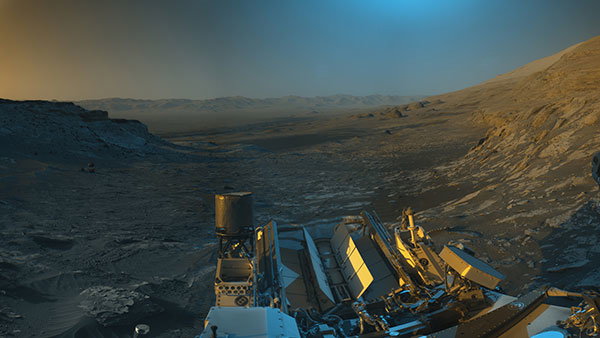
The month’s best science imagesNASA’s Curiosity rover used its navigation cameras to capture this panoramic view of Mars’s surface at different times of day. Engineers combined photos from the morning and afternoon on Mars. They then added colours in an artistic re-creation that includes images from the morning scene in blue, the afternoon scene in orange and a combination of both in green. |
|||||
|
|
|||||
n-dimensional image tool powers up PythonA free, open-source and extensible image viewer for arbitrarily complex (‘n-dimensional’) data fills a gap in the Python scientific ecosystem. napari — whose name refers to a Pacific island village midway between the developers’ bases in San Francisco and Melbourne — features a simple graphical interface with a built-in Python console. Early adopters are using it to streamline everything from visualizing atmospheric jet streams to identifying cells in tissue. Nature | 4 min read |
|||||
| |||||
|
|||||
|
|||||
Build solar-energy systems to lastSolar energy is being adopted the world over — but the technologies being installed today might not last, warn four solar-energy scientists and engineers. Today’s sophisticated systems have little room for error, and they face increasingly extreme weather whipped up by climate change. The authors lay out a plan — including quality control, standards and testing — that could save billions of dollars and assure decades of affordable clean electricity to come. Nature | 7 min read |
|||||
|
|
|||||
DNA sleuths send Pearl Harbor boys homeThe remains of hundreds of sailors who died at Pearl Harbor 80 years ago have been returned to their communities thanks to a groundbreaking scientific effort. The unidentified bodies of almost 400 men who perished inside the USS Oklahoma had been interred in mass graves in Hawaii. Identifying them was fiendishly difficult: most were about the same age and height, and many came from similar genetic backgrounds, often sharing mitochondrial DNA from distant maternal ancestors. There were also six sets of siblings and a set of twins. Yet scientists were able to identify over 90% of the men — in one case, returning the remains of three brothers to their only surviving brother. Politico | 13 min read |
|||||
|
|||||
|
|||||
|
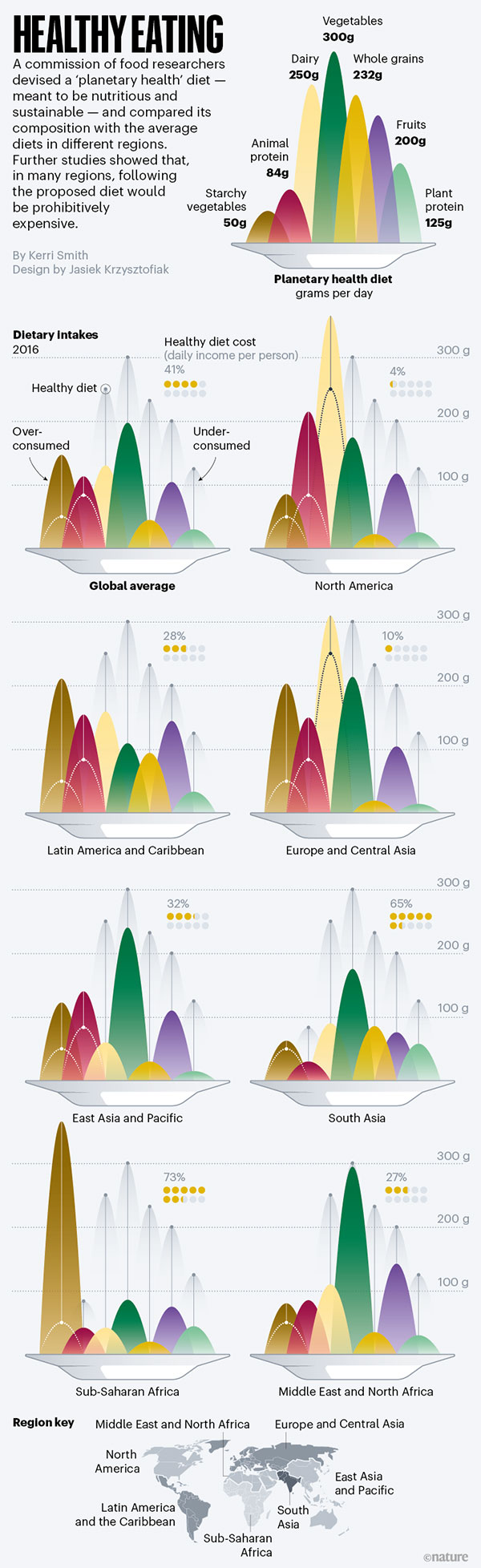
As the world population continues to rise, researchers are grappling with the question of what we should eat to stay healthy and save the planet. A 2019 report from a consortium of nutritionists, ecologists and other experts recommended that people adopt a ‘flexitarian’ diet by eating plants on most days and occasionally a small amount of meat or fish. The commission estimates that this diet would save the lives of about 11 million people every year, but others question whether it is practical, affordable and nutritious enough. Scientists are now trying to test environmentally sustainable diets in local contexts, without compromising nutrition or damaging livelihoods. (Nature | 11 min read) See more of the week’s key infographics, selected by Nature’s news and art teams. |
|||||
Quote of the day“The #1 thing that would safeguard us from unsafe uses of AI is curbing the power of the companies who develop it and increasing the power of those who speak up against the harms of AI and these companies’ practices.”Labour protections and antitrust measures are the most effective way to create a layer of checks and balances on the “whim-driven decisions” of tech billionaires, argues artificial intelligence (AI) researcher Timnit Gebru, the former co-lead of Google’s Ethical AI team. (The Guardian | 5 min read) |
|||||
|
|
|||||
|
|||||
|
|
|||||
|
|||||
|
You received this newsletter because you subscribed with the email address: - Please add [email protected] to your address book. Enjoying this newsletter? You can use this form to recommend it to a friend or colleague — thank you! Want to switch to the weekly edition or change your email address? Update your preferences. Had enough? Unsubscribe from the Nature Briefing. Fancy a bit of a read? View our privacy policy. Forwarded by a friend? Get the Briefing straight to your inbox: subscribe for free. Want to master time management, protect your mental health and brush up on your skills? Sign up for our free short e-mail series for working scientists, Back to the lab. Get more from Nature: Register for free on nature.com to sign up for other newsletters specific to your field and email alerts from Nature Research journals. Would you like to read the Briefing in other languages? 关注Nature Portfolio官方微信订阅号,每周二为您推送Nature Briefing精选中文内容——自然每周简报。
Nature | The Springer Nature Campus, 4 Crinan Street, London, N1 9XW, United Kingdom Nature Research, part of Springer Nature. |