Bizarre bird could reshape the standard tree of life
What matters in science |

Is this your brand on Milled? Claim it.
|
|||||
|
|||||
|
Hello Nature readers, |
|||||
|
|||||
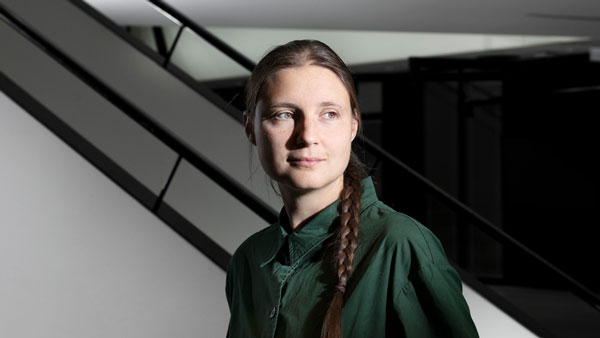
| Number theorist Maryna Viazovska was awarded the Fields Medal for her work on sphere packing. (Credit: EPFL/Fred Merz) | |||||
‘Mathematics is an unknown land’On 5 July, Maryna Viazovska became the second woman in history to earn one of the top prizes in mathematics: the Fields Medal. Viazovska says her chosen problem — how to pack spheres in the most efficient way in a space with eight dimensions — attracted her because it has a simple formulation that can nevertheless be difficult to solve. “You have to chase low-hanging fruit — and some of our low-hanging fruits are still pretty high!” she says. “In mathematics, when we think of open problems, we don’t think in terms of months and years to solve them — often, we think in terms of decades and centuries.” The Ukrainian was an apolitical choice as winner — she was picked for the prize before the Russian invasion of Ukraine began — but she hopes that “maybe this news made somebody’s day better”. Nature | 5 min read |
|||||
Trial puts CRISPR ‘cousin’ to the testA clinical trial that recently treated its first participant will test whether base editing — a genome-editing method related to the CRISPR–Cas9 system — can safely be used to make precise, single-letter changes to a DNA sequence. The approach, developed by US biotechnology company Verve Therapeutics, aims to treat a condition that causes dangerously high cholesterol. Base editing doesn’t break both strands of DNA, as CRISPR–Cas9 does, which lowers the chances of introducing unwanted genetic changes. Another base-editing trial, slated to treat its first participant later this year, will attempt to treat sickle-cell disease. Nature | 5 min read |
|||||
What is the UK’s funding ‘Plan B’?After six years of fraught negotiations, UK researchers are looking increasingly likely to lose access to the huge pot of European Union research funding known as Horizon Europe. The UK government says it has a back-up financing plan for researchers — called Plan B. But the government itself is in turmoil after the administration of Prime Minister Boris Johnson imploded and he was forced to resign. Catch up on everything we know about the nail-biting funding omnishambles. Nature | 6 min read |
|||||
Bizarre bird challenges ‘tree-thinking’Hoatzins (Opisthocomus hoazin) present an evolutionary enigma — one analysis of their DNA suggests that the birds’ closest relatives are cranes and shorebirds, and another found that they are closely related to a group that includes tiny, hovering birds, such as hummingbirds. The riddle is forcing biologists to consider whether to rethink the shape of the standard ‘tree of life’ for modern birds. “Frankly, there is no one in the world who knows what hoatzins are,” says museum curator Joel Cracraft. The New Yorker | 15 min read |
|||||
|
|||||
Colin Blakemore: an advocate for opennessAs head of the UK Medical Research Council, which directs medical research in the United Kingdom, neuroscientist Colin Blakemore was a champion for the importance of science in society. He was a fearless advocate for open dialogue about science, even when — as in the notable case of animal research — it put him in the crosshairs of violent extremists. His research into the visual systems of cats provided evidence of neural plasticity and led to refinements in the use of eyepatches to prevent vision problems in children. Blakemore died in June, aged 78. Nature | 5 min read |
|||||
How to gamify your teachingLeadership researcher Mai Trinh uses ‘gamification’ to help students to master their fears of her accelerated introductory statistics course. She explains how she incorporates badges, leaderboards, quests, ‘bosses’, rewards and silly avatars using low-tech tools such as PowerPoint. Nature | 6 min read |
|||||
Africa: don’t let privacy slip awayClosed-circuit television (CCTV) cameras and spyware are proliferating in Africa without checks and balances, writes Bulelani Jili, an African studies and cybersecurity researcher. Only around half of African countries have laws on data protection, and they are often outdated. A complex web of local and global factors is at play. The region has established problems at the intersections of inequality, crime, governance, race, corruption and policing, says Jili. And there is a hodgepodge of non-African players, including widespread Chinese state investment. Focusing on Kenya and Ethiopia, Jili outlines how the continent can institute the robust checks and balances necessary to reduce the negative consequences of surveillance technologies. Nature | 12 min read |
|||||
|
|||||
|
|||||
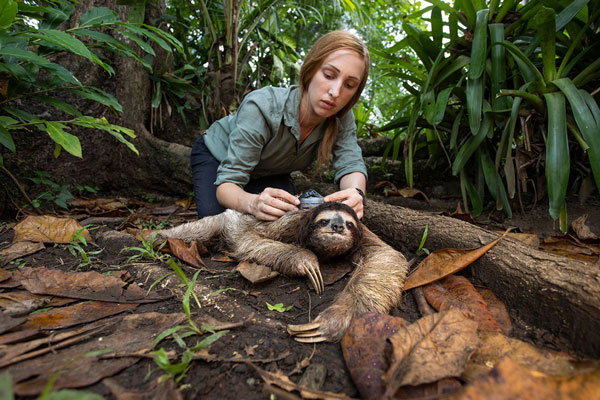
| Zoologist and conservationist Rebecca Cliffe is equipping the world’s slowest mammal with data-logging backpacks to better understand sloths’ behaviour. Here she is pictured with Baguette, a brown-throated three-fingered sloth (Bradypus variegatus). “I adore sloths, but I also envy them,” says Cliffe. “They’re a powerful symbol of the slowness that our society needs more of. They don’t let anything stress them out unless it’s really important — they just get on with life.” (Nature | 3 min read) (Credit: Suzi Eszterhas/Minden Pictures) | |||||
Quote of the day“The bottom line is that every decision — from local government upwards — needs to be made in light of building resilience to climate breakdown as well as slashing emissions.”The United Kingdom is totally unprepared for a near future in which extreme heat, on par with the unprecedented temperatures happening today, is commonplace, argues climate scientist and activist Bill McGuire. (The Guardian | 2 min read) |
|||||
|
|
|||||
|
|||||
|
|
|||||
|
|||||
|
You received this newsletter because you subscribed with the email address: - Please add [email protected] to your address book. Enjoying this newsletter? You can use this form to recommend it to a friend or colleague — thank you! Want to switch to the weekly edition or change your email address? Update your preferences. Had enough? Unsubscribe from the Nature Briefing. Fancy a bit of a read? View our privacy policy. Forwarded by a friend? Get the Briefing straight to your inbox: subscribe for free. Want to master time management, protect your mental health and brush up on your skills? Sign up for our free short e-mail series for working scientists, Back to the lab. Get more from Nature: Register for free on nature.com to sign up for other newsletters specific to your field and email alerts from Nature Research journals. Would you like to read the Briefing in other languages? 关注Nature Portfolio官方微信订阅号,每周二为您推送Nature Briefing精选中文内容——自然每周简报。
Nature | The Springer Nature Campus, 4 Crinan Street, London, N1 9XW, United Kingdom Nature Research, part of Springer Nature. |