Bizarre CRISPR enzyme shreds DNA inside cancer cells
What matters in cancer research |

Is this your brand on Milled? Claim it.
|
||
|
||
|
Hello Nature readers, |
||
|
||
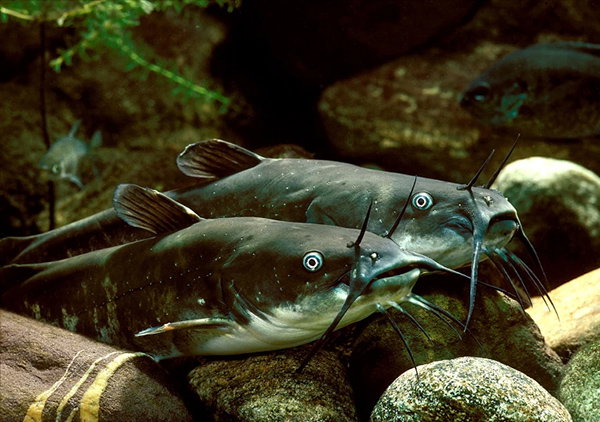
| Contagious cancers are only known to occur in the brown bullhead catfish (Ameiurus nebulosus), dogs, Tasmanian devils (Sarcophilus harrisii) and bivalves. (Phil Degginger/Alamy) | ||
Catfish catch cancer from one anotherThe mystery disease that’s been plaguing the brown bullhead catfish (Ameiurus nebulosus) in a lake straddling the Canada–US border has been identified as a type of transmissible cancer — a phenomenon rarely seen in the animal kingdom. Surveys have suggested that the disease, a type of melanoma that manifests as inky black skin lesions, affects around one-third of the lake’s catfish population. But it appears in both young and old individuals, suggesting that it might not cause a rapid death. Nature | 5 min readReference: Nature paper (22 July) |
||
Bizarre CRISPR enzyme shreds cancer DNAA peculiar type of CRISPR enzyme that slashes DNA into pieces has been used to control cancer in mice. The enzyme, called Cas12a2, can be engineered to recognize a particular RNA sequence. When it finds its target, the enzyme goes wild, indiscriminately cutting up DNA. Two separate research teams have used the CRISPR enzyme to target RNA made by cancer cells with mutated TP53 or KRAS genes. The treatment killed a proportion of lab-grown cancer cells and shrank tumours in mice. “There’s obviously still room to improve it,” says cancer geneticist Rene Bernards. “There is a lot of promise.” Nature | 5 min readReference: Nature paper 1 (8 June) & paper 2 (6 May) |
||
AI-generated doctors mislead on TikTokArtificial-intelligence-generated videos of fake doctors sharing misinformation about cancer have been viewed millions of times on the social media platform TikTok. Some videos state that sleeping next to a phone, microwaving food in plastic and using deodorants could cause cancer — claims that aren’t backed by evidence. Other videos promoted non-existent or ineffective remedies. “Platforms like TikTok must do more to stop the rise of dangerous fake medical advice … otherwise, it is the public who could be paying the price with their health and perhaps even their lives,” says physician Emma Runswick, the council deputy chair at the British Medical Association. The Guardian | 4 min read |
||
Vaccine might intercept pancreatic cancerA vaccine that targets six KRAS mutations might stop pancreatic cancer before it fully develops. In a first-in-human study, 20 people with a genetic predisposition to pancreatic cancer and an abnormality in their pancreas were given the vaccine. None of the trial participants developed pancreatic cancer over a median of 17 months and the vaccine triggered a significant KRAS-specific immune response in 18 of them. Around 10% of people who develop pancreatic cancer have a genetic predisposition to the disease and might benefit from interception. Healio | 16 min readReference: Cancer Discovery paper (16 July) |
||
Creatine charges up the immune systemSupplementation with creatine — an amino acid derivative used by muscles to generate energy — can enhance the activation of immune cells called dendritic cells and suppress melanoma growth in mice. “What this study shows is that creatine doesn't just help the T cells fighting cancer – it also energizes the entire infrastructure that supports and guides them,” says immunologist and study co-author Lili Yang. “That makes creatine a promising supplement to holistically support the immune response that modern immunotherapies depend on.” It is too soon, however, to base dietary or medical advice on the conclusions, the authors say. ScienceAlert | 4 min readReference: iScience paper (17 April) |
||
In the news
|
||
|
||
How genetics set the stage for cancerWhether mice respond to environmental exposures by developing mutations and cancers strongly depends on their genetic makeup at birth. Researchers bred four strains of mice with different levels of genetic susceptibility to liver cancer and then exposed them to the same carcinogen. The rate and progression of liver cancer was strongly influenced by the animals’ genetic background. The research might help explain why some people develop cancer when exposed to carcinogens such as cigarette smoke while others don’t. Reference: Nature paper (22 July)Go deeper with this Research Briefing written by the authors (6 min read) |
||
|
||
The cancer-Alzheimer’s paradoxThe curious inverse correlation between cancer and Alzheimer’s disease provides a world of opportunity to find novel targets for both diseases, argues aging researcher Rebekah Feng, who lost her husband to glioblastoma at 46. Despite many shared risk factors, the likelihood of cancer in those with Alzheimer’s disease is halved and the risk of Alzheimer’s in those with cancer drops by 25-35%. Feng argues that this paradoxical relationship could be used to foster “transformative innovation”, which “ is not merely an aspiration but an urgent necessity”. NPJ Aging | 17 min read |
||
TriNetX data is being misusedInexperienced researchers seem to be using an easy-to-access health dataset called TriNetX and large language models to churn out low-quality research papers, say scientists. The studies often fail to account for major sources of bias, which can make treatments such as cancer therapies look more effective than they really are. “My biggest concern is that doctors in 10 years’ time want to look into a particular concept and they go into the literature and everything is just associated with everything,” says neuroscientist Joshua Wang. Science | 7 min read |
||
|
||
|
||
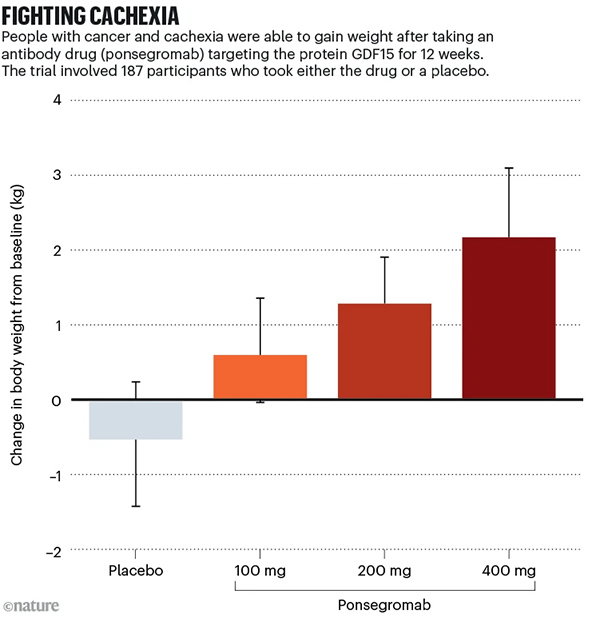
| The stress hormone GDF15 is thought to contribute to a muscle-wasting condition called cachexia in cancer patients. The molecule triggers a signalling pathway in the brain that reduces appetite and creates a feeling of being full. In a trial of 187 people with cancer and cachexia, antibodies that targeted and blocked GDF15 helped people gain weight while those given a placebo lost weight. (Nature | 13 min read) (Source: Groarke, J. D. et al./N. Engl. J. Med.) | ||
Quote of the week"I never imagined I'd have to sell my home simply to keep fighting for my life."After conventional treatments failed, Jo Fuller sold her house to pay for hyperthermia treatment, an experimental therapy for glioblastoma that isn’t offered by the UK’s National Health Service. (BBC | 6 min read) |
||
|
|
||
|
||
|
|
||
Free newsletters from NatureWant more? Update your preferences to sign up to our other Nature Briefing newsletters:
|
||
|
||
|
You received this newsletter because you subscribed with the email address: - Please add [email protected] to your address book. Had enough? To unsubscribe from this Briefing, but keep receiving your other Nature Briefing newsletters, please update your subscription preferences. To stop all Nature Briefing e-mails forever, click here to remove your personal data from our system. Fancy a bit of a read? View our privacy policy. Forwarded by a friend? Get the Briefing straight to your inbox: subscribe for free. Get more from Nature: Register for free on nature.com to sign up for other newsletters specific to your field and e-mail alerts from Nature Portfolio journals. Nature Portfolio | The Springer Nature Campus, 4 Crinan Street, London, N1 9XW, United Kingdom Nature Portfolio, part of Springer Nature. |