Cancer’s unique glow could give it away
What matters in cancer research |

Is this your brand on Milled? Claim it.
|
||
|
||
|
Hello Nature readers, |
||
|
||
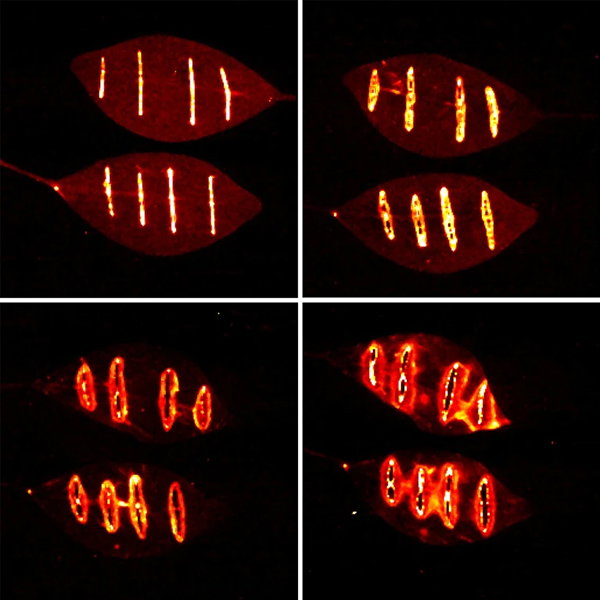
| Cutting a leaf causes a metabolic stress response that produces biophotons. (Vishnu Seshan/University of Calgary) | ||
Cancer’s unique glow could give it awayA faint glow that is emitted by all forms of life could help us identify cancerous cells. Living cells produce a small number of light particles as a byproduct of the chemical reactions happening inside mitochondria. Injuries and cancers can cause these biophoton emissions to shift, and studies show that glioblastoma, melanoma and healthy cells all have different light signatures. Researchers are now investigating whether photon counts on skin can distinguish between cancerous and benign moles. But medical biophysicist Brian Wilson doubts that this will be a diagnostic tool in the future. “The signal is just far too weak,” he says. Nature | 16 min readReference: Entropy paper (17 January) & Cancers paper (2020) |
||
Ovarian cancer often starts elsewhereMedical associations in the United States and Europe are pushing for people to be offered fallopian-tube removal at the same time as other abdominal surgeries. The procedure can protect against ovarian cancer (a disease that is otherwise very difficult to detect early) and does not affect the functioning of the ovaries. Two decades of research have shown that ovarian cancer usually emerges in the fallopian tubes and that removing them can stop the cancer in its tracks. However, the history of forced sterilisations in marginalised groups has made healthcare professionals wary about promoting the procedure. The New York Times | 9 min read |
||
|
||
Breast cancer drug offered for freePharmaceutical company AstraZeneca has offered to supply the breast cancer and endometriosis drug Zoladex for free in Australia indefinitely to people who have no suitable alternative treatments. The move could be so that the company doesn’t have to face the potential international-benchmarking consequences of accepting Australia’s low price, says pharmaceutical commentator Paul Cross. AstraZeneca initially said it would have to withdraw the drug from Australia because the price set by the government’s Pharmaceutical Benefits Scheme was too low but reversed the decision after facing a backlash from patients. Ella Somerville Glover, a 35-year-old mother based in Sydney has been taking Zoladex since 2020 to keep her breast cancer under control. She says she has considered having her ovaries removed if Zoladex became unavailable. ABC News (Australia) | 9 min read |
||
Engineered natural killer cell trial launchesTracy Tomlinson, a 58-year-old woman who has been living with advanced ovarian cancer for five years, has become the first person in the world to receive a new off-the-shelf immune-cell therapy as part of a clinical trial. The therapy, called ZI-MA4-1, involves taking natural killer cells from a donor and engineering them to express specific T-cell receptors that recognise the cancer protein Mage-A4. BBC | 5 min read |
||
Donor T cells produced from stem cellsThere’s a particular subtype of immune cell called a gamma-delta T cell that only makes up a small fraction of the overall immune cells in the bloodstream but has special properties that make it ideal for use in off-the-shelf engineered T cell therapies where donor cells are used to fight cancer instead of a person’s own cells. In a small preclinical study, researchers have discovered how to create large amounts of these precious gamma-delta T cells using stem cells. These gamma-delta T cells were edited to fight cancer and shrunk colorectal tumours in mice by up to 88% compared to controls. Genetic Engineering & Biotechnology News | 5 min readReference: Stem Cell Reports paper (23 July) |
||
Melanoma drug closer to approvalAn expert panel convened by the US Food and Drug Administration (FDA) has voted 10-3 in favour of RP1, an engineered viral immunotherapy for advanced melanoma. The FDA tends to follow the panel’s advice. This is the third time the manufacturer, Replimune, has attempted to gain FDA approval for its treatment. STAT | 1 min read |
||
|
||
Immune-cell clumps boost cancer therapyAround a third of people with kidney cancer have a subtype that contains clumps of immune cells called tertiary lymphoid structures. This group is more likely to respond to immunotherapy but it hasn’t been clear why. A study now shows that tertiary lymphoid structures are reservoirs for a special type of cancer-fighting T cell that can keep replicating, and this T-cell type is known to boost the efficacy of immune checkpoint inhibitors. Reference: Nature paper (22 July) |
||
Which therapies damage DNA in kids?Platinum-based therapies, such as cisplatin, carboplatin, and oxaliplatin, cause the most DNA damage to children with cancer out of all the therapies that researchers explored in a recent study. Drugs containing platinum had more than double the number of mutational signatures, according to a whole-genome sequencing analysis of more than 500 children with cancer. The study “will hopefully help to inform treatment plans and monitoring of secondary malignancies in childhood cancer,” writes Nature deputy editor Victoria Aranda. Reference: Nature paper (22 July)Go deeper with this Clinical Briefing written by the authors (5 min read) |
||
|
||
AI can supersize or miniaturise proteinsScientists can shrink proteins by more than 50% or enlarge them while preserving their shape and function using an artificial-intelligence tool called Raygun. Supersized variants of the epidermal growth factor bind more strongly to its receptor, a common target for cancer therapies. “Sometimes a smaller protein can do things or fit into places where a larger protein cannot,” says computational biologist and study co-author Rohit Singh. Nature | 4 min readReference: Nature paper (29 July) |
||
|
||
Quote of the week“Sure, you can make a better mousetrap, but at the end of the day, the innovation is what’s really exciting.”There’s been an explosion in the number of bispecific antibodies being researched and approved, but it’s a little disappointing that so many companies are focusing on two proteins — PD-1 and VEGF — as targets when there are so many other options out there, says Jamie Spangler, a bioengineer at Johns Hopkins University. (Nature | 5 min read) |
||
|
|
||
|
||
|
|
||
Free newsletters from NatureWant more? Update your preferences to sign up to our other Nature Briefing newsletters:
|
||
|
||
|
You received this newsletter because you subscribed with the email address: - Please add [email protected] to your address book. Had enough? To unsubscribe from this Briefing, but keep receiving your other Nature Briefing newsletters, please update your subscription preferences. To stop all Nature Briefing e-mails forever, click here to remove your personal data from our system. Fancy a bit of a read? View our privacy policy. Forwarded by a friend? Get the Briefing straight to your inbox: subscribe for free. Get more from Nature: Register for free on nature.com to sign up for other newsletters specific to your field and e-mail alerts from Nature Portfolio journals. Nature Portfolio | The Springer Nature Campus, 4 Crinan Street, London, N1 9XW, United Kingdom Nature Portfolio, part of Springer Nature. |