Cannibal cane toads are now their own worst enemy
What matters in science |

Is this your brand on Milled? Claim it.
|
||||||||
|
||||||||
|
Hello Nature readers, |
||||||||
|
||||||||
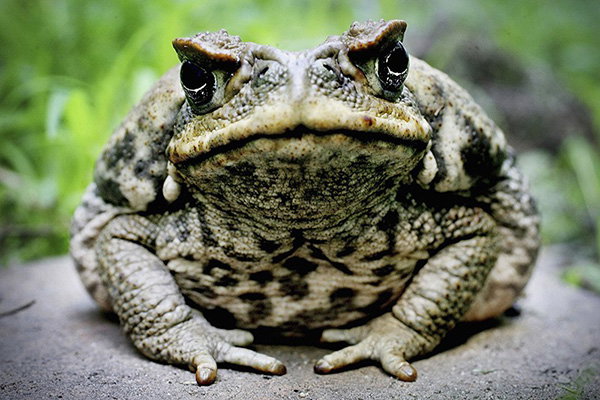
| Rampant cane toads have turned cannibal in Australia. (Ian Waldie/Getty) | ||||||||
Cannibal cane toads’ rapid evolutionInvasive cane toads (Rhinella marina) in Australia have evolved a taste for their fellows, with tadpoles commonly devouring swathes of hatchlings. The behaviour evolved at a breakneck pace: in their native range in South America, the toads are far less cannibalistic, and they were introduced to Australia less than a hundred years ago. In 1935, farmers introduced the first 100 cane toads, and there are now well over 200 million of them — creating unusual competitive pressure from their own species. “These toads have gotten to the point where their own worst enemy is themselves,” says invasive-species biologist Jayna DeVore. Nature | 5 min read |
||||||||
|
|
||||||||
Fossil DNA hints at mysterious ToaleansThe 7,000-year-old skeleton of a teenage hunter-gatherer from Sulawesi in Indonesia might be the first remains found from a mysterious, ancient culture known as the Toaleans. Sulawesi has some of the world’s oldest cave art, but ancient human remains have been scarce on the island. The largely complete fossil of a roughly 18-year-old Stone Age woman was found in 2015, buried in the fetal position in a limestone cave. DNA extracted from the skull suggests that she shared ancestry with New Guineans and Aboriginal Australians, as well with the extinct Denisovan species of ancient human. The Toalean people, known only from scant archaeological evidence, such as distinctively notched stone tools, were thought to have lived in Sulawesi at around the same time. Nature | 7 min readReference: Nature paper |
||||||||
|
|
||||||||
Climate change and Europe’s deadly floodsLast month’s extreme rainfall in Germany and Belgium was made more likely by climate change, according to a modelling study by an international team of meteorologists. The deadly rains and subsequent flooding in the European region were between 1.2 and 9 times more likely to happen today than in pre-industrial times, and were 3–19% more intense, owing to climate change, the researchers found. Nature | 3 min readReference: World Weather Attribution report |
||||||||
|
||||||||
|
||||||||
|
||||||||
|
||||||||
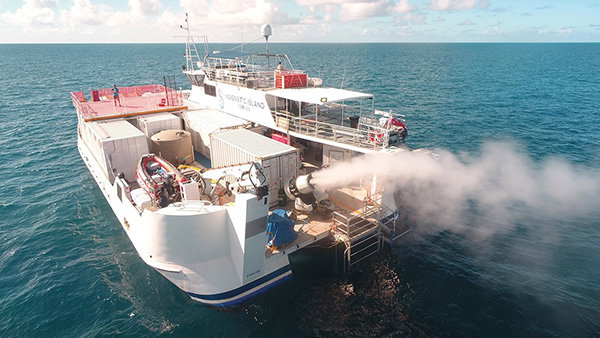
| A repurposed ferry boat sports a mobile science laboratory and a turbine that generates plumes of seawater droplets. (Brendan Kelaher/SCU) | ||||||||
Cloud-brightening test at Great Barrier ReefIn the world’s first field trials of marine cloud brightening, scientists have demonstrated a system designed to artificially brighten clouds to protect Australia’s Great Barrier Reef. On the back of a repurposed ferry boat, 320 nozzles spewed a mist of nano-sized salty droplets. In theory, the spray will be incorporated into low-lying clouds and make them reflect more sunlight, which would provide a bit of cooling shade for the coral colonies below. Field tests in March and last year gave researchers the chance to see the nozzles at work and observe how the mist behaved in the real world. If the project comes to fruition, it would require a vast array of misting stations to significantly affect the clouds over the huge reef — and would only buy time for more fundamental efforts to address climate change. Nature | 11 min read |
||||||||
|
|
||||||||
Holmes haunts female-led science start-upsFemale entrepreneurs launching hard-science start-ups say they are living in the shadow of failed blood-testing company Theranos and its disgraced founder Elizabeth Holmes. They talk of being constantly compared with Holmes and fending off questions about how their company will avoid a similar downfall — questions that most male founders don’t face. “There was already a higher bar before Theranos because we don’t fit the pattern,” says Falon Fatemi, who co-founded artificial-intelligence and media-distribution companies. “This just makes it that much harder.” The New York Times | 7 min read (intermittent paywall) |
||||||||
|
||||||||
Africa’s mountain forests sock away carbonThe high-altitude forests that gird Africa are unsung carbon sinks. The inaccessibility of African montane forests has hindered efforts to quantify the carbon stored by these ecosystems. Now, a survey of mature mountainside forest plots in 12 African countries fills this knowledge gap, and highlights the need to preserve such forests. “Anyone who has conducted field inventories in tropical mountains knows that measuring and identifying 72,336 trees, often just a few steps away from the void, is an amazing feat,” writes tropical ecologist Nicolas Barbier in his analysis of the research. Nature | 6 min readReference: Nature paper |
||||||||
|
|
||||||||
|
||||||||
|
|
||||||||
|
||||||||
|
You received this newsletter because you subscribed with the email address: - Please add [email protected] to your address book. Enjoying this newsletter? You can use this form to recommend it to a friend or colleague — thank you! Want to switch to the weekly edition or change your email address? Update your preferences. Had enough? Unsubscribe from the Nature Briefing. Fancy a bit of a read? View our privacy policy. Forwarded by a friend? Get the Briefing straight to your inbox: subscribe for free. Want to master time management, protect your mental health and brush up on your skills? Sign up for our free short e-mail series for working scientists, Back to the lab. Would you like to read the Briefing in Arabic? Sign up for the weekly round-up e-mail, curated and translated by the editors of Nature Arabic Edition. Nature | The Springer Nature Campus, 4 Crinan Street, London, N1 9XW, United Kingdom Nature Research, part of Springer Nature. |