China’s Mars rover finds hints of catastrophic floods
What matters in science |

Is this your brand on Milled? Claim it.
|
|||||
|
|||||
|
Hello Nature readers, |
|||||
|
|||||
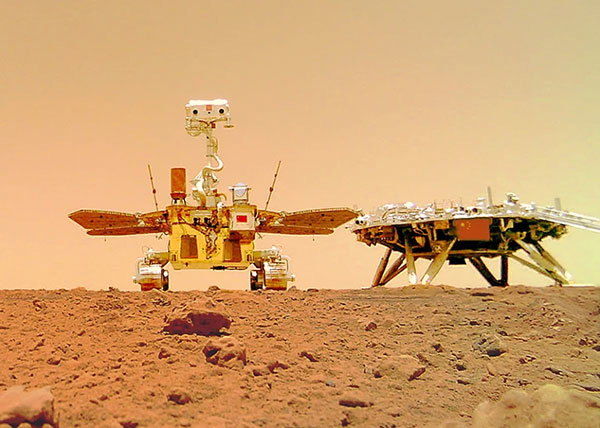
| A radar on Zhurong can penetrate the surface to a depth of 100 metres. (Xinhua/Shutterstock) | |||||
China’s rover peers under Mars surfaceChina’s Zhurong rover has peered under the surface of Mars — down to 100 metres — and has found evidence of two huge floods that shaped the landscape. Since May last year, Zhurong has been exploring Utopia Planitia, in Mars’s northern hemisphere. Images from the rover’s ground-penetrating radar found layered patterns under the surface, which the authors suggest are made of sedimentary rocks carried in by two major floods around 3 billion and 1.6 billion years ago. But other scientists say that, although radar is good at detecting layers of subsurface material, it’s less proficient at identifying what layers are made of. Nature | 5 min read |
|||||
Brazil election might hinge on COVIDBrazilians preparing for presidential elections in October will consider whether to re-elect Jair Bolsonaro, whose response to COVID-19 has been heavily criticized by public-health researchers. Evidence suggests that Brazil was a COVID-19 epicentre, exporting the virus beyond its borders and experiencing terrible loss of life within them. But with one in three Brazilians unable to afford to eat properly last year, food security and economic inflation could prove to be more urgent issues for voters than pandemic concerns. Nature | 5 min read |
|||||
Plan to save ‘drowning’ Pacific atoll islandsPolitical leaders from Pacific atoll island nations whose very existence is threatened by climate change have launched a global partnership aimed at protecting the sovereignty and rights of their countries. The Rising Nations Initiative was launched last week, on the sidelines of the United Nations General Assembly meeting in New York City. Tuvalu Prime Minister Kausea Natano told the assembly that rising sea levels are harming everything from crops to infrastructure, driving Tuvaluans to emigrate. “This is how a Pacific atoll dies,” Natano said. “This is how our islands will cease to exist.” So far, the United States, Germany, South Korea and Canada have supported the initiative. Associated Press | 6 min read |
|||||
|
|||||
|
|||||
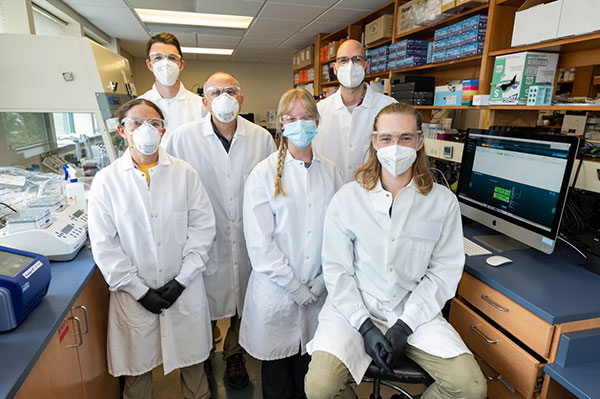
| These scientists traced a new coronavirus lineage to one office — through sewage. (Jeff Miller/UW-Madison) | |||||
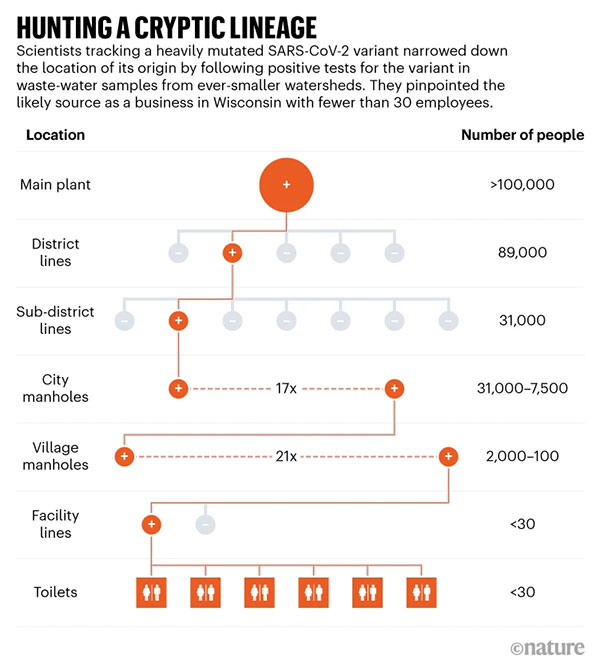
Tracking a variant to a single buildingVirologists, environmental biogeochemists and city workers have teamed up to trace a heavily mutated variant of SARS-CoV-2 through the sewers in Wisconsin. Eventually, they traced the lineage to waste water from a single business with fewer than 30 employees, although the person carrying the virus has not been identified. The variant is one of thousands that are probably circulating globally, and there is no evidence that it is spreading. But tracking cryptic lineages can help to treat people who might be harbouring an infection without knowing it, reduce the chances of it spreading and possibly help to forecast broader trends in SARS-CoV-2 evolution. Nature | 8 min read |
|||||
|
|||||
Time to clear the airCOVID-19 has refocused our attention on what pioneering nurse Florence Nightingale called “the very first canon of nursing”: clean indoor air.
|
|||||
Quote of the day“The issue presented here is whether the bumble bee, a terrestrial invertebrate, falls within the definition of fish.”California’s Supreme Court has upheld that bumble bees, while not strictly speaking fish, are close enough to gain protection under the state's endangered species act. (IFLScience | 4 min read) |
|||||
|
|
|||||
|
|||||
|
|
|||||
|
|||||
|
You received this newsletter because you subscribed with the email address: - Please add [email protected] to your address book. Enjoying this newsletter? You can use this form to recommend it to a friend or colleague — thank you! Want to switch to the weekly edition or change your email address? Update your preferences. Had enough? Unsubscribe from the Nature Briefing. Fancy a bit of a read? View our privacy policy. Forwarded by a friend? Get the Briefing straight to your inbox: subscribe for free. Want to master time management, protect your mental health and brush up on your skills? Sign up for our free short e-mail series for working scientists, Back to the lab. Get more from Nature: Register for free on nature.com to sign up for other newsletters specific to your field and email alerts from Nature Research journals. Would you like to read the Briefing in other languages? 关注Nature Portfolio官方微信订阅号,每周二为您推送Nature Briefing精选中文内容——自然每周简报。
Nature | The Springer Nature Campus, 4 Crinan Street, London, N1 9XW, United Kingdom Nature Research, part of Springer Nature. |