CRISPR-baby scientist faces the music at gene-editing summit
What matters in science today | View this email in your browser Thursday 29 November 2018 Hello Nature readers, Today we hear from the CRISPR-baby scientist in his own words, discover that mitochondrial DNA can come from fathers too and consider what life looks like after the digital revolution. He Jiankui spoke at the second international summit on human genome editing in Hong Kong. (Alex Hofford/EPA-EFE/Shutterstock) CRISPR-baby scientist faces the music The scientist who claims to have helped produce the first people born with edited genomes faced a tough crowd yesterday at a gene-editing summit in Hong Kong. He Jiankui gave a 20-minute talk about his unpublished work in animals and humans before opening a 40-minute Q&A session (watch it here). He faced difficult questions about the ethics of his work and his choice to keep it mostly under wraps until after the babies were born, and left many unanswered. Meanwhile, prominent geneticist George Church is one of the few scientists who seem to be looking on the bright side of He’s controversial claim. “Let’s be quantitative before we start being accusatory,” Church told Science. “As long as these are normal, healthy kids it’s going to be fine for the field and the family.” Nature | 9 min read & Science | 6 min read Read more: Genome-edited baby claim provokes international outcry Mitochondria can come from both parents There is fresh evidence that in rare cases, children can inherit mitochondrial DNA from their fathers and not just their mothers, as had long been thought. Advanced gene-sequencing techniques allowed researchers to identify 17 people who had some paternal mitochondrial DNA, which is normally obliterated early in the fertilization process. But ‘paternal leakage’ is unlikely to upset our ability to use mitochondria to trace human history: “Occasional paternal transmission events seem to have left no detectable mark on the human genetic record,” say the authors of the study. Nova | 7 min read FEATURES & OPINION The invisible diminishment of insects Insects are “the little things that run the natural world”, said naturalist E. O. Wilson — and this invisible army of environmental engineers is dwindling. Scientists are struggling to understand what it means to have animals still exist in their billions, yet also be horrifically diminished. “We see a hundred of something, and we think we’re fine,” says entomologist David Wagner, “but what if there were 100,000 two generations ago?” The New York Times Magazine | 34 min read OUTLOOK (Illustration: Jan Kallwejt) Life after the digital revolution An explosion in information technology is remaking the world, leaving few aspects of society untouched. Nature explores how health, work and society are feeling the effects. Estonia is often held up as a model of how to do ‘e-government’ well. But technical glitches and privacy concerns mean that some states have stumbled with new technology. (10 min read) Are you worried about the effects of smartphones, video games and social media on our mental well-being? Many researchers contend that evidence of harm — and of the effectiveness of corrective interventions — is notably lacking. (13 min read) Dig into the data and there is plenty of evidence that robotics and artificial intelligence won’t necessarily leave us all idle. The question is less about whether a job will survive, and more about whether it will still be recognizable. (13 min read) Read the whole collection | 8 features & comment articles This collection is editorially independent and produced with financial support from the Max Planck Society. QUOTE OF THE DAY “We were paid zero dollars to produce the national assessment. In fact, there was a reverse financial motive.” Climate scientist Katharine Hayhoe counters claims that the researchers who contributed to a United States government climate report are motivated by money over science. (The New York Times) This newsletter is always evolving — tell us what you think! Please send your feedback to [email protected]. Thanks for reading!Flora Graham, senior editor, Nature Briefing Join our community You received this newsletter because you subscribed with the email address: Forwarded by a friend? Get the Briefing straight to your inbox: subscribe for free. Had enough? Unsubscribe from the Nature Briefing. Fancy a bit of a read? View our privacy policy. Nature | The Springer Nature Campus, 4 Crinan Street, London, N1 9XW, United Kingdom Nature Research, part of Springer Nature. © 2018 Springer Nature Limited. All rights reserved.

Is this your brand on Milled? Claim it.
|
|||||
|
|||||
|
Hello Nature readers, |
|||||
|
|||||
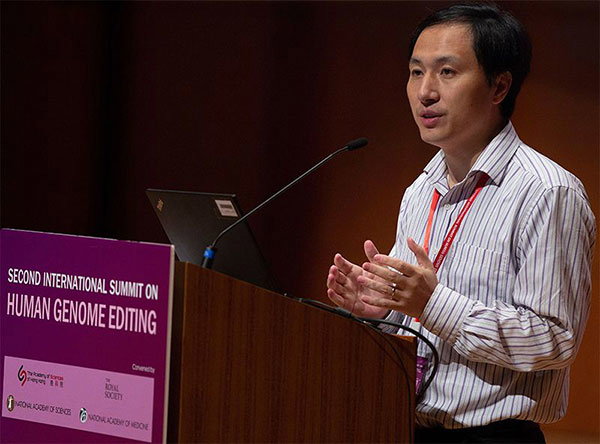
| He Jiankui spoke at the second international summit on human genome editing in Hong Kong. (Alex Hofford/EPA-EFE/Shutterstock) | |||||
CRISPR-baby scientist faces the musicThe scientist who claims to have helped produce the first people born with edited genomes faced a tough crowd yesterday at a gene-editing summit in Hong Kong. He Jiankui gave a 20-minute talk about his unpublished work in animals and humans before opening a 40-minute Q&A session (watch it here). He faced difficult questions about the ethics of his work and his choice to keep it mostly under wraps until after the babies were born, and left many unanswered. Meanwhile, prominent geneticist George Church is one of the few scientists who seem to be looking on the bright side of He’s controversial claim. “Let’s be quantitative before we start being accusatory,” Church told Science. “As long as these are normal, healthy kids it’s going to be fine for the field and the family.” Nature | 9 min read & Science | 6 min readRead more: Genome-edited baby claim provokes international outcry |
|||||
|
|
|||||
Mitochondria can come from both parentsThere is fresh evidence that in rare cases, children can inherit mitochondrial DNA from their fathers and not just their mothers, as had long been thought. Advanced gene-sequencing techniques allowed researchers to identify 17 people who had some paternal mitochondrial DNA, which is normally obliterated early in the fertilization process. But ‘paternal leakage’ is unlikely to upset our ability to use mitochondria to trace human history: “Occasional paternal transmission events seem to have left no detectable mark on the human genetic record,” say the authors of the study. Nova | 7 min read |
|||||
|
|||||
The invisible diminishment of insectsInsects are “the little things that run the natural world”, said naturalist E. O. Wilson — and this invisible army of environmental engineers is dwindling. Scientists are struggling to understand what it means to have animals still exist in their billions, yet also be horrifically diminished. “We see a hundred of something, and we think we’re fine,” says entomologist David Wagner, “but what if there were 100,000 two generations ago?” The New York Times Magazine | 34 min read |
|||||
|
|||||
QUOTE OF THE DAY“We were paid zero dollars to produce the national assessment. In fact, there was a reverse financial motive.”Climate scientist Katharine Hayhoe counters claims that the researchers who contributed to a United States government climate report are motivated by money over science. (The New York Times) |
|||||
|
|
|||||
|
|||||
|
|
|||||
|
|||||
|
You received this newsletter because you subscribed with the email address: - Forwarded by a friend? Get the Briefing straight to your inbox: subscribe for free. Nature | The Springer Nature Campus, 4 Crinan Street, London, N1 9XW, United Kingdom Nature Research, part of Springer Nature. |