Engineered yeast could replace cancer drug-making plants
What matters in cancer research |

Is this your brand on Milled? Claim it.
|
||
|
||
|
Hello Nature readers, |
||
|
||
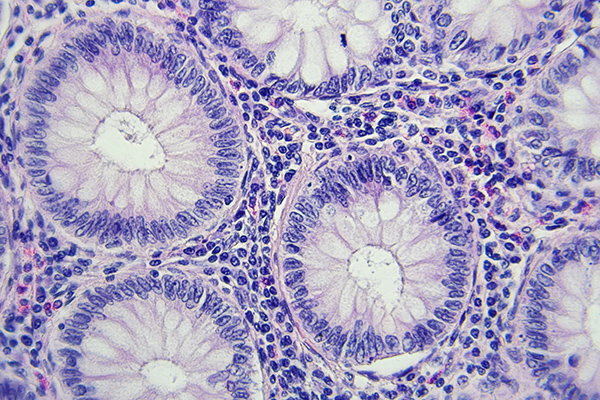
| An experimental blood test can detect colorectal cancer before it has taken hold. (dzika_mrowka/Getty) | ||
Blood test detects colon polypsA blood test for colorectal cancer is also highly sensitive for precancerous polyps, enabling the test to be both diagnostic and preventative. The study screened 1,500 adults in China, Japan and Spain and found that the test detected 92% of stage I, II or III colorectal cancers and 81% of advanced adenomas, or precancerous polyps. Colonoscopy remains the most effective way to screen for colorectal cancer, but the test could be used to identify those with the highest risk. Reuters | 3 min readRead more in this related editorial in The Lancet Gastroenterology & Hepatology. Reference: The Lancet Gastroenterology & Hepatology paper |
||
Twice-rejected melanoma drug okayedThe US Food and Drug administration has approved Replimune’s twice-rejected advanced melanoma drug, for adults with cancer that cannot be surgically removed or which has progressed after immunotherapy. The only other treatment for patients with this type of cancer is tumour-infiltrating lymphocyte therapy, which uses a patient’s cells to fight tumours and is difficult to provide broad access to, says medical oncologist Hussein Tawbi. Full approval of vusolimogene oderparepvec (Tudriqev) hinges on a successful phase III trial. The listed price of the drug will be US$450,000 per course of therapy. STAT | 6 min read |
||
A win for skin cancer vaccinesAn mRNA vaccine combined with immunotherapy has succeeded in reducing recurrence of skin cancer and stopping its spread, according to interim trial results announced by the companies involved. The treatment combines the immunotherapy Keytruda with a personalized mRNA vaccine based on an analysis of a patient’s own tumour. Reuters | 4 min read |
||
|
||
Yeast replaces cancer-drug-making flowerResearchers have found a way to replace the use of an endangered flower (Sinopodophyllum hexandrum) in the manufacturing of the common cancer drugs etoposide and teniposide. The team loaded more than 60 genetic edits and 45 new genes into baker’s yeast (Saccharomyces cerevisiae) to enable the fungus to produce a precursor that can be converted into both drugs with just one step. This method could be applied to other plant-derived medicines, say the researchers. Nature | 3 min readReference: Science paper |
||
|
||
|
||
|
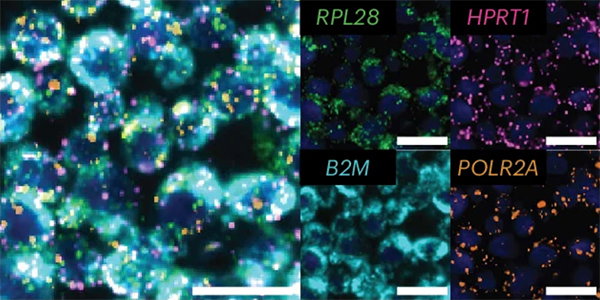
Scientists have developed a tissue-imaging technique called PASTA that enables them to light up many different molecule types in one sample, one after another (pictured). PASTA works by tagging targets — including proteins, DNA and RNA — with “barcodes” that can then be lit up by matching fluorescent probes, which can be washed off and swapped for the next set of probes. (Nature Methods | 8 min read) Reference: Nature Methods paper (Michel, H.A. et al./Nat. Methods) |
||
|
||
AI could help patients survive the system“There are a lot of concerns about how AI can and should be used in healthcare,” write digital-health executive Jennifer Goldsack and physician Lee Fleisher. “But helping patients and their families navigate their care to ensure that all the benefits of modern cancer care are accessed is one that AI can address right now.” The paradox of modern cancer care is that despite the myriad of diagnostic and treatment advances, the healthcare system within which this life-changing science sits remains very tough to navigate, they write. “If AI is going to transform cancer care, its first test should be whether it can help patients access, understand and complete the care their clinicians recommend.” Fierce Healthcare | 6 min readRead more about AI in cancer screening in Nature Medicine (13 min read). |
||
Should newborns be screened for cancer?The contrasting prognoses of two siblings both born with a cancer-causing genetic mutation, demonstrates the power of newborn screening for retinoblastoma, argues paediatric oncologist Lisa Diller. While one sibling, whose cancer was caught at two and a half, lost both eyes, the other, who was screened and monitored as a newborn for retinoblastoma, kept her vision without radiotherapy or chemotherapy. Newborn screening for cancer isn't generally offered, but Diller and others are looking to change that as part of a broader global effort to screen newborns for an array of genetic disorders. Babies are already screened for 40 conditions at birth in the United States, but deciding what should be included in a wider rollout is not straightforward. Science News | 14 min read |
||
Iron logic unites bacteria and cancerBacteria that evade antibiotics and cancer cells that survive treatment use the same iron-juggling trick to stay alive. Both cells slip into a sluggish survival-mode state in which they can wait out treatment, and then come back to life. That shared vulnerability could be a new target for drugs, argue chemical biologist Raphael Rodriguez and cell biologist Patrizia Agostinis. Both cell types capture enough iron to fuel their survival but lock away excess that would otherwise be toxic to them. Disrupting that balance with drugs could wipe out cells responsible for cancer relapse or antibiotic resistance, they say. Nature Reviews Molecular Cell Biology | 10 min read |
||
Quote of the week“Something absolutely fascinating is happening with his immune system.”Haemoto-oncologist Rebecca Auer reflects on the unusual case of a heart surgery causing a man with severe skin cancer to go into remission, and develop a severe bee sting allergy. (New Scientist | 5 min read) |
||
|
|
||
|
||
|
|
||
Free newsletters from NatureWant more? Update your preferences to sign up to our other Nature Briefing newsletters:
|
||
|
||
|
You received this newsletter because you subscribed with the email address: - Please add [email protected] to your address book. Had enough? To unsubscribe from this Briefing, but keep receiving your other Nature Briefing newsletters, please update your subscription preferences. To stop all Nature Briefing e-mails forever, click here to remove your personal data from our system. Fancy a bit of a read? View our privacy policy. Forwarded by a friend? Get the Briefing straight to your inbox: subscribe for free. Get more from Nature: Register for free on nature.com to sign up for other newsletters specific to your field and e-mail alerts from Nature Portfolio journals. Nature Portfolio | The Springer Nature Campus, 4 Crinan Street, London, N1 9XW, United Kingdom Nature Portfolio, part of Springer Nature. |