First image of a solid made of electrons
What matters in science |

Is this your brand on Milled? Claim it.
|
|||||
|
|||||
|
Hello Nature readers, |
|||||
|
|||||
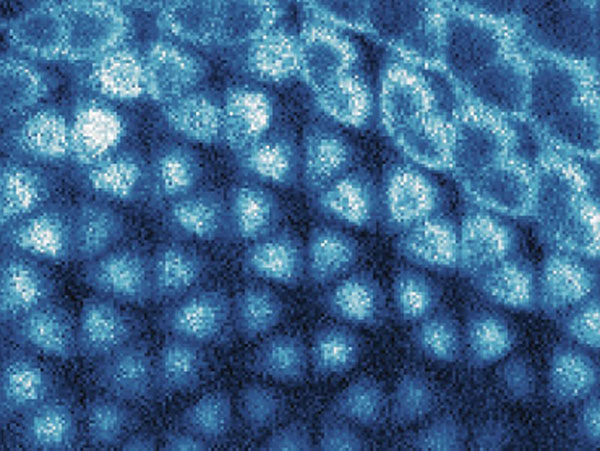
| This scanning tunneling microscope image of a graphene sheet reveals that a ‘Wigner crystal’ — a honeycomb arrangement of electrons — has formed inside a layered structure underneath. (H. Li et al./Nature) | |||||
This is a solid made of electronsIf the conditions are just right, some of the electrons inside a material will arrange themselves into a tidy honeycomb pattern — like a solid within a solid. Physicists have now for the first time directly imaged these ‘Wigner crystals’, named after theorist Eugene Wigner. Researchers built a device containing atom-thin layers of two semiconductors and cooled it to just a few degrees above absolute zero. This slowed the electrons between the two layers enough so that they formed the elusive material. Nature | 4 min readReference: Nature paper |
|||||
|
|
|||||
Arctic sea ice hits 2021 minimumThis summer’s minimum Arctic sea-ice cover was the twelfth-lowest ever — and scientists warn that the long-term trend towards shrinking continues. Ice coverage declined to 4.72 million square kilometres on 16 September, the US National Snow and Ice Data Center has reported. Owing to a cool and cloudy Arctic summer, this year’s annual minimum was the highest since 2014. But such ‘good’ years are becoming rarer, putting pressure on animals, such as polar bears, that rely on the ice. Nature | 4 min read |
|||||
|
|
|||||
Jupiter’s Great Red Spot is swirling fasterThe winds spinning around the outer edge of Jupiter’s striking Great Red Spot are speeding up, according to long-term observations by the Hubble telescope. Observations over the past century have already revealed that the storm is mysteriously shrinking. Hubble data collected between 2009 and 2020 add a new twist. Compared with a decade ago, when wind speeds in the Great Red Spot’s outer ring were typically just above 90 metres per second, they now exceed 100 metres per second. Space.com | 5 min readReference: Geophysical Research Letters paper |
|||||
|
|||||
Starting in science: the real storyOver the past three years, Nature reporters have documented, in real time, two scientists’ journeys through a pandemic and a personal crisis. Spouses Alison Twelvetrees, a neuroscientist, and molecular biologist Daniel Bose have each taken on the epic challenge of launching their own laboratory. In part two of this three-part story, Ali and Dan try to keep the lights on at their new labs while designing experiments, preparing lectures and supervising students. Nature | 15 min read |
|||||
|
|
|||||
Lessons from Microsoft’s ‘net zero’ planIn January, Microsoft announced that it had paid for the removal of 1.3 million tonnes of carbon dioxide from the atmosphere. Among its purchases were projects to expand forests in the Americas, regenerate soil across US farms and entomb carbon in rocks in Iceland. Microsoft staff working on the company’s carbon-negative programme and research scientists who analyse strategies for carbon reduction and removal summarize the lessons learnt. They also describe the barriers that stand in the way of the company’s ultimate goal, which it plans to reach by 2050: removing all of the emissions it has produced since it was founded in 1975. Nature | 10 min read |
|||||
|
|||||
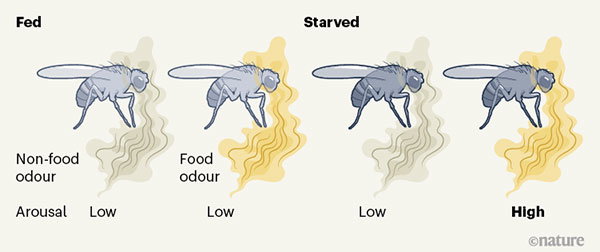
Flies sense the world while sleepingWhen asleep, humans are able to respond to important stimuli — such as a baby crying — while filtering out more-trivial sensory cues. Now we know that fruit flies can, too. Normally, sleeping fruit flies are more likely to wake up when they smell an odour that they dislike when they’re awake. But when the flies fell asleep hungry, the scent of food became more likely to jolt them out of dreamland — implying that flies process olfactory information, as well as the value attached to different odorants, during sleep. “These findings suggest that the fruit fly, with a brain of only about 100,000 neurons, could be used to investigate how sensory processing differs between sleeping and waking states,” write biologists Wanhe Li and Alex Keene. Nature | 6 min read (Nature paywall)This News & Views article is exclusively available to readers with subscriber access to Nature. Click here for help getting logged in with your institution’s subscription. Reference: Nature paper |
|||||
|
|||||
| Hungry fruit flies were more likely to be awakened by tasty odours. | |||||
Quote of the day“Anyone who went to his clinic could have children they have no idea about.”After her father died, Catherine Simpson discovered that she had been conceived at a clinic in London that had used sperm — without permission — from men undergoing fertility treatments. (The Guardian | 20 min read) |
|||||
|
|
|||||
|
|||||
|
|
|||||
|
|||||
|
You received this newsletter because you subscribed with the email address: - Please add [email protected] to your address book. Enjoying this newsletter? You can use this form to recommend it to a friend or colleague — thank you! Want to switch to the weekly edition or change your email address? Update your preferences. Had enough? Unsubscribe from the Nature Briefing. Fancy a bit of a read? View our privacy policy. Forwarded by a friend? Get the Briefing straight to your inbox: subscribe for free. Want to master time management, protect your mental health and brush up on your skills? Sign up for our free short e-mail series for working scientists, Back to the lab. Would you like to read the Briefing in Arabic? Sign up for the weekly round-up e-mail, curated and translated by the editors of Nature Arabic Edition. Nature | The Springer Nature Campus, 4 Crinan Street, London, N1 9XW, United Kingdom Nature Research, part of Springer Nature. |