GLP-1 obesity drugs slow signs of ageing in mice
What matters in science |

Is this your brand on Milled? Claim it.
|
||
|
||
|
Hello Nature readers, |
||

|
||
| A flash flood in Nepal on 26 August claimed more than 1,000 lives, and more than 4,000 people remain missing. (Arun Sankar/AFP via Getty) | ||
Nepal satellite images showed warning signsSatellite images taken just days before the high-altitude collapse of rock and ice that caused a catastrophic flash flood in Nepal showed concerning signs of an unstable glacier system, geophysicist Manoochehr Shirzaei tells Nature. However, such events are still difficult to predict using existing monitoring systems, he says. An effective early-warning system would need to integrate several approaches that screen glacial regions, ramp up surveillance of any that are identified as potentially unstable and model what might happen in the event of a collapse. Nature | 5 min read |
||
Obesity drugs slow ageing in miceThe GLP-1 medication semaglutide — sold as Wegovy for the treatment of obesity — might have anti-ageing properties, a study in mice suggests. Researchers found that older female mice taking a GLP-1 drug lived longer than did mice not taking one, and the treatment slowed several biological changes associated with ageing, such as inflammation. The treated mice also performed better at cognitive tests than did untreated mice on a strict diet, which suggests the drug has benefits that aren’t explained by calorie reduction alone, says biologist and study co-author Danica Chen. Nature | 5 min readReference: Nature paper |
||
|
||
Canada nabs US science talentThe Canadian government has announced that the nation’s universities have recruited 64 international researchers as part of a campaign to attract foreign talent. Forty-eight of these researchers are moving from the United States, taking up positions in fields ranging from health sciences to engineering. The group will receive a total of 500 million Canadian dollars (about US$360 million) in funding for eight years. Many US scientists face funding uncertainty as the administration of President Donald Trump attempts to cut research grants. Nature | 5 min read |
||
Tiny worms speed through narrow spacesCalifornia blackworms (Lumbriculus variegatus) can move faster in confined spaces than they can in open ones. Researchers found that the tiny worms could zip through narrow tubes that were only around twice their width in around one minute, but took much longer to traverse wider channels — results that held true in computer models of strings of beads. The findings could inform the design of robots that squeeze through tight spaces, which could be used to slither through rubble or deliver drugs inside people’s bodies. Science News | 4 min readReference: Physical Review Letters paper |
||
|
||
Roman Space Telescope is no one-trick ponyThe Nancy Grace Roman Space Telescope was launched to map the invisible Universe, but its biggest discoveries could emerge from its use beyond this goal, argues astronomer Priyamvada Natarajan. The telescope’s data will immediately become public, enabling scientists to interrogate its findings for their own research goals, and one quarter of the instrument’s operational time will be allocated to pursuits that can deviate from its core objectives. “Transformative scientific infrastructure does more than answer the queries that justified its construction. It expands the realm of questions that can be asked at all,” Natarajan writes. Nature | 5 min read |
||
The impact of words unspokenIn a world of self-service and remote working, people are speaking fewer words aloud each day now than they were 20 years ago, and the decline is particularly pronounced in people under the age of 25. This dwindling number of spoken words could have knock-on effects, some researchers worry. Replacing speech with text-based messages bypasses some of the cognitive effort required to listen and respond to another person, and saved message histories eliminate the need to remember what’s been said — shortcuts that could cause long-lasting changes in the brain over time. The Washington Post | 8 min read (free registration required)Reference: Perspectives on Psychological Science paper |
||
|
||
|
||
|
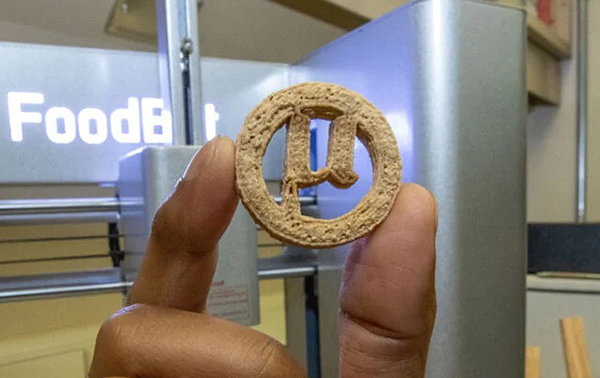
This cookie, called a µBite, was made from recycled plastic and food waste. Researchers used a process called oxidative hydrothermal dissolution to break down polyethylene terephthalate and crop offcuts such as corn stalks into small molecules. They then fed these molecules to engineered yeast that can convert them into an edible, 3D-printable slurry. A stint in the microwave solidifies the printout into a biscuit. The team have yet to taste their creation, but say the treats smell good enough to eat. (Science Alert | 4 min read) Reference: American Chemical Society meeting abstract (SIU Carbondale Communications) |
||
Quote of the day“I even had PhD hats for my champagne bottles.”Archaeologist Sarah Bockmeyer threw a huge party when she completed her decade-long PhD programme. She and other researchers told Nature how they celebrated reaching career milestones, and why it’s important to take the time to recognize your achievements. (Nature | 9 min read) |
||
|
|
||
|
||
|
|
||
Free newsletters from NatureWant more? Update your preferences to sign up to our other Nature Briefing newsletters:
|
||
|
||
|
You received this newsletter because you subscribed with the email address: - Please add [email protected] to your address book. Had enough? To unsubscribe from this Briefing, but keep receiving your other Nature Briefing newsletters, please update your subscription preferences. To stop all Nature Briefing e-mails forever, click here to remove your personal data from our system. Fancy a bit of a read? View our privacy policy. Forwarded by a friend? Get the Briefing straight to your inbox: subscribe for free. Get more from Nature: Register for free on nature.com to sign up for other newsletters specific to your field and e-mail alerts from Nature Portfolio journals. Would you like to read the Briefing in other languages? 关注Nature Portfolio官方微信订阅号,每周二为您推送Nature Briefing精选中文内容——自然每周简报。
Nature Portfolio | The Springer Nature Campus, 4 Crinan Street, London, N1 9XW, United Kingdom Nature Portfolio, part of Springer Nature. |