Honesty study retracted over faked data
What matters in science |

Is this your brand on Milled? Claim it.
|
|||||
|
|||||
|
Hello Nature readers, |
|||||
|
|||||
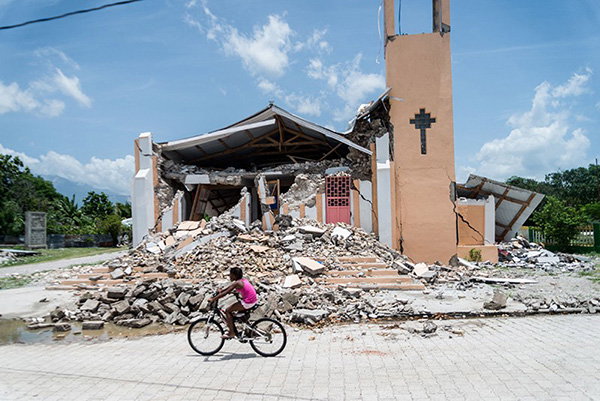
| The earthquake in Haiti this month has destroyed many buildings, such as the Church St. Anne in Chardonnières, shown here. (Reginald Louissaint Jr/AFP via Getty) | |||||
Home seismometers reveal Haiti quakeA network of inexpensive seismometers, installed in people’s living rooms, gardens and workplaces across Haiti, is helping scientists to unravel the inner workings of the magnitude-7.2 earthquake that hit the country on 14 August. Its seismometers feed data into a system that displays the locations and magnitudes of Haitian earthquakes on a web-based portal in real time. The US$500 stations are not as sophisticated as Haiti’s official $50,000 monitoring stations. “But when it comes to locating quakes, determining magnitude, doing basic seismology — they are really excellent,” says seismologist Eric Calais. Nature | 6 min read |
|||||
|
|
|||||
Honesty study retracted over faked dataAn influential 2012 paper about how to promote honesty when filling out forms will be retracted because it was based on fabricated data. The authors had already published a 2020 study showing that the original paper’s conclusions could not be replicated. As part of that replication effort, the original data were opened up to scrutiny, eventually leading to anonymous data-integrity sleuths at the Data Colada blog to uncover “that the data were fabricated… beyond any shadow of a doubt”. BuzzFeed News | 13 min readReference: PNaS paper 1 (to be retracted) & PNaS paper 2 |
|||||
|
|
|||||
Zhurong marks three months on MarsChina’s Zhurong rover has completed its initial goal of surviving 90 sols on Mars — equivalent to 92 days on Earth. Since arriving on 14 May, Zhurong has travelled 889 metres to view its discarded landing equipment, stopping by rocks and dunes along the way. It is now headed towards another geological feature described as a ‘groove’ that is 1.6 kilometres away. Space.com | 5 min readRead more: First video and sounds from China’s Mars rover intrigue scientists (Nature | 4 min read) |
|||||
|
|||||
|
|||||
|
|||||
How to address rigour in a grant proposalAddressing rigour and reproducibility concerns in your research proposals will reassure potential funders, say grant-writing coaches Jennifer Wilson and Crystal Botham. Their three-question framework guides writers to explain their experimental choices. “Justifying scientific choices requires deliberate practice to achieve strong, persuasive writing,” they say. “The grant writer must be aware of and unafraid to share the limitations to their science.” Nature | 6 min read |
|||||
|
|
|||||
Child asthma study sparks ethical debateA study that gave some child participants a placebo instead of a vitamin D supplement has raised questions about the ethics of such trials. The children had asthma and were being treated with corticosteroids, which already put them at risk of bone fractures and diminished growth — and which vitamin D deficiency would exacerbate. To justify the study design, the researchers said the children on the placebo would probably not have received supplements in the real world because vitamin D testing is not routine. The study included many Black children and kids from disadvantaged backgrounds, heightening the ethical risk. The controversy adds fuel to the debate over studies in which a control group is meant to receive the ‘usual care’ but ends up receiving no care at all. Science | 18 min read |
|||||
|
|||||
|
|||||
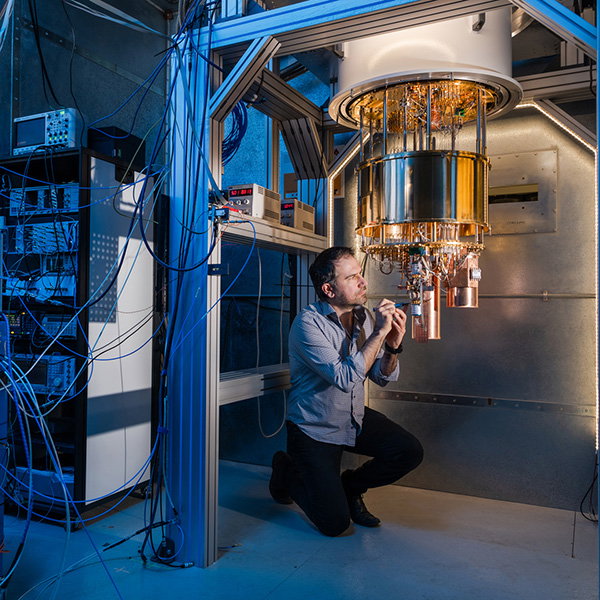
| At the National Physical Laboratory (NPL) in London, Alessandro Rossi researches quantum metrology, the scientific study of measurements based on quantum-physics principles. His work echoes the counterintuitive idea from quantum physics that something can be in two states or two places at the same time, says Rossi. “I feel that I myself live a contradiction. I study quantum physics — the most unreliable, spooky, weird type of science — and apply it to metrology, which is supposed to be among the most reliable, precise and repeatable of disciplines. To think how these two things come together successfully is mind-boggling.” (Nature | 3 min read) | |||||
Quote of the day“It's important to hold two things in your head at the same time. One is obviously how far we have to go, but another is how far we've come.”Climate scientist Kate Marvel, who has emphasized the need for courage over hope to face the future, sees reasons for optimism in the recent United Nations Intergovernmental Panel on Climate Change (IPCC) climate report. (Hot Take newsletter | 9 min read) |
|||||
|
|
|||||
|
|||||
|
|
|||||
|
|||||
|
You received this newsletter because you subscribed with the email address: - Please add [email protected] to your address book. Enjoying this newsletter? You can use this form to recommend it to a friend or colleague — thank you! Want to switch to the weekly edition or change your email address? Update your preferences. Had enough? Unsubscribe from the Nature Briefing. Fancy a bit of a read? View our privacy policy. Forwarded by a friend? Get the Briefing straight to your inbox: subscribe for free. Want to master time management, protect your mental health and brush up on your skills? Sign up for our free short e-mail series for working scientists, Back to the lab. Would you like to read the Briefing in Arabic? Sign up for the weekly round-up e-mail, curated and translated by the editors of Nature Arabic Edition. Nature | The Springer Nature Campus, 4 Crinan Street, London, N1 9XW, United Kingdom Nature Research, part of Springer Nature. |