How dangerous is Africas explosive Lake Kivu?
What matters in science |

Is this your brand on Milled? Claim it.
|
|||||
|
|||||
|
Hello Nature readers, |
|||||
|
|||||
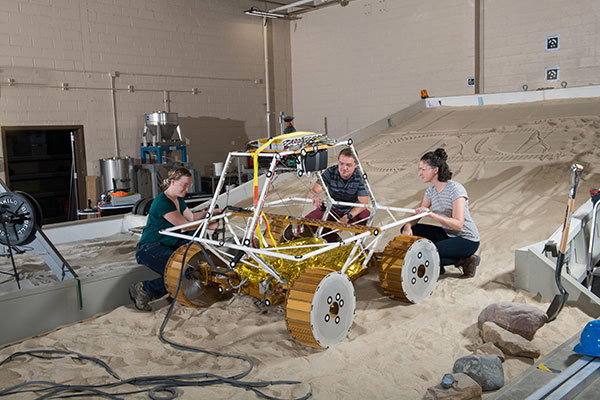
| Researchers at NASA's Glenn Research Center in Cleveland, Ohio, test a model of VIPER on simulated lunar terrain. (NASA/GRC/Bridget Caswell) | |||||
NASA’s Moon rover goes out for iceThe Volatiles Investigating Polar Exploration Rover (VIPER), set to launch in 2023, will be the first spacecraft to land at the Moon’s south pole. The region holds great scientific promise: its reserves of ice have been preserved for billions of years and contain information about the origin and evolution of the Solar System. But some researchers worry that the landing site isn’t guaranteed to have an abundance of frozen water. They recommend that NASA first launch a small satellite called Lunar Trailblazer, which will map water on the Moon. Nature | 6 min read |
|||||
|
|
|||||
How climate worries hurt youngstersChildren and young people are feeling distress, anger and other negative emotions about climate change. A survey of 10,000 16- to 25-year-olds in 10 countries found that nearly 60% are ‘very worried’ or ‘extremely worried’, partly because governments aren’t doing enough to avoid a climate catastrophe. However, young people do feel reassured when governments act. Nature | 4 min read |
|||||
|
|
|||||
Catchy music is infectiousSong-download patterns closely resemble the spread of an infectious disease through a population, according to a study that used infectious-disease models to analyse how new songs became popular on the streaming service MixRadio. By far, the most infectious genre was electronica, although rock and hip-hop also spread fast through a susceptible population of fans. Of course, there could be people who are ‘immune’ to genres like electronica, says disease modeller Thomas Rawson. “My nan, for example, is particularly resistant to the infection of trap and dubstep.” The Guardian | 5 min readReference: Proceedings of the Royal Society A paper |
|||||
|
|
|||||
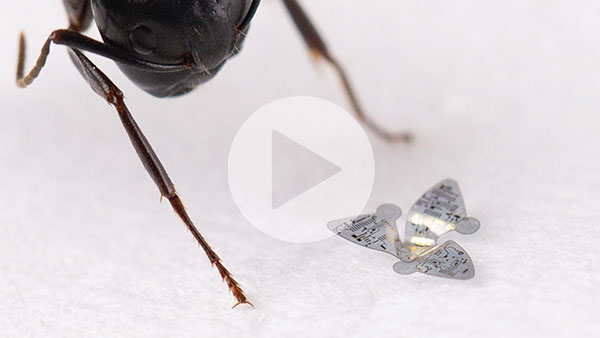
Seed-inspired sensors ride the windSpinning ‘helicopter’ seeds provided the inspiration for tiny electronic devices that float through the air. These circuit chips with wings fall slowly and can carry a host of electronic components, such as sensors and wireless-communication antennae. They can be manufactured in large numbers, and dropped from a height that allows high-resolution data collection over a large area. Nature | 4 min read |
|||||
|
|||||
|
|||||
|
|||||
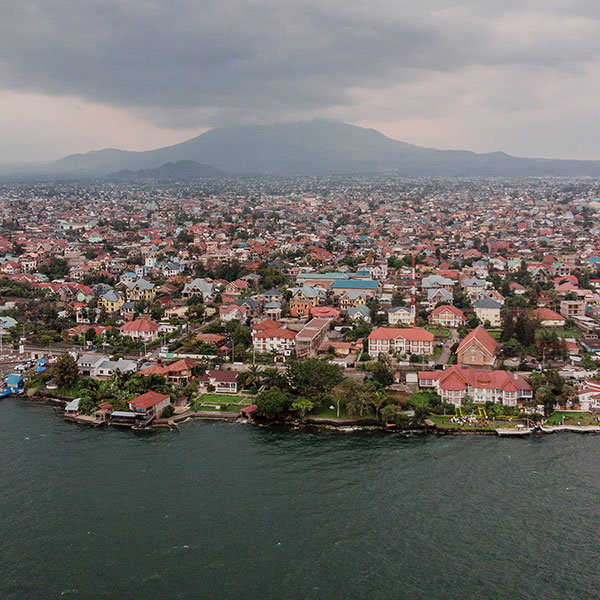
| The city of Goma, in the Democratic Republic of the Congo, sits on the shore of Lake Kivu. (Guerchom Ndebo for Nature) | |||||
|
|
|||||
Africa’s explosive Lake KivuLake Kivu is a geological anomaly: the surface is fresh and filled with fish, but the depths hold huge quantities of dissolved carbon dioxide, methane and hydrogen sulfide. The picturesque lake, nestled between the Democratic Republic of the Congo and Rwanda, has the potential to explosively release these gases in a rare phenomenon known as a limnic eruption. That could fill the surrounding valley with suffocating and toxic gas, potentially killing millions of people. Energy companies are keen to ramp up extraction of methane from the lake for power. Scientists are scrambling to determine whether this will make the lake safer — or potentially set off a ticking time bomb. Nature | 13 min read |
|||||
|
|
|||||
Learn from Greece’s AI COVID testsWithout the capacity to screen all incoming travellers for COVID-19, Greece launched a system that uses a machine-learning algorithm to determine who should be tested. Researchers found that it was more effective at identifying asymptomatic infected people than was random testing or testing on the basis of a traveller’s country of origin. But it also presents challenges, argues a Nature editorial — from ensuring that individuals’ privacy is protected to the need to independently verify its accuracy. It’s a reminder of why proposals for a pandemic treaty must consider rules and protocols on the proper use of artificial intelligence (AI) and big data. Nature | 6 min readRead more: A pandemic treaty needs rules for data access that everyone can trust (Nature | 5 min read, from June) Reference: Nature paper |
|||||
|
|
|||||
Nature Careers Podcast: MentoringEveryone is different, so your style of mentoring has to be unique for every person, says chemist Jen Heemstra in the latest Nature Careers Podcast. “My role is to be a bit like an athletic coach. I want to help everyone be able to perform at their best.” And sometimes there are situations where as a mentor, you have to have difficult conversations with your pupil. “It has an emotional cost not only for them, but for us, right, unless you're a sadist,” says sociologist Martin Gargiulo. But “you need to be there to help that person to get to the level that you want him or her to be”. Nature Careers Podcast | 11 min listen |
|||||
Quote of the day“We were grabbing all of this white, which we thought was snow, and we were putting it all over our faces…. But the strange thing, instead of being cold like snow, it was hot.”Barbara Kent was at summer camp in New Mexico during the world’s first atomic bomb detonation, called Trinity. A bill to extend compensation to those who lived downwind of the test was introduced in the US Senate on Wednesday. (National Geographic | 18 min read) |
|||||
|
|
|||||
|
|||||
|
|
|||||
|
|||||
|
You received this newsletter because you subscribed with the email address: - Please add [email protected] to your address book. Enjoying this newsletter? You can use this form to recommend it to a friend or colleague — thank you! Want to switch to the weekly edition or change your email address? Update your preferences. Had enough? Unsubscribe from the Nature Briefing. Fancy a bit of a read? View our privacy policy. Forwarded by a friend? Get the Briefing straight to your inbox: subscribe for free. Want to master time management, protect your mental health and brush up on your skills? Sign up for our free short e-mail series for working scientists, Back to the lab. Would you like to read the Briefing in Arabic? Sign up for the weekly round-up e-mail, curated and translated by the editors of Nature Arabic Edition. Nature | The Springer Nature Campus, 4 Crinan Street, London, N1 9XW, United Kingdom Nature Research, part of Springer Nature. |