How many elementary particles are there? Maybe 17, maybe nearly 1,000
What matters in science |

Is this your brand on Milled? Claim it.
|
|||||
|
|||||
|
Hello Nature readers, |
|||||
|
|||||
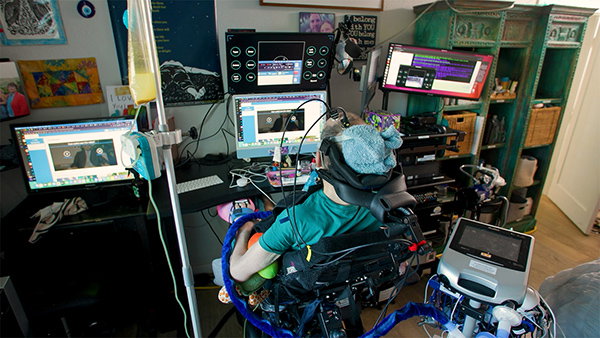
| Casey Harrell has used his brain–computer interface for nearly two years. (Regents of the University of California, Davis) | |||||
Long term use of at-home brain implantA man with paralysis uses a brain implant to help him to communicate and use his computer at home. The brain–computer interface (BCI) translates the neural activity of 48-year-old Casey Harrell, who was diagnosed with a type of motor neuron disease six years ago, into text that appears on a computer screen and enables him to operate a computer, send text messages and e-mails and continue his job working in climate advocacy. It is “nothing short of revolutionary”, says Harrell. Nature | 5 min readReference: Nature Medicine paper |
|||||
Obesity drugs might boost testosteroneThe latest generation of obesity drugs might increase testosterone levels and improve the quality of sperm in men, according to a systematic review. Researchers identified five randomized controlled trials of GLP-1 medications that included measurements of testosterone levels. The results of two of these showed that testosterone levels rose in those taking GLP-1 drugs, and one trial also showed an increase in sperm quality. More robust trials are needed to confirm the association, says endocrinologist and review co-author Pratibha Natesh. But emerging evidence from other sources points in the same direction. The results were presented at the Endocrine Society’s annual meeting. Nature | 5 min read |
|||||
|
|||||
Chinese social-media sleuth flags dataFour senior Chinese academics have been disciplined after ‘Student Geng’ — a vlogger and former PhD student whose real name is Geng Hongwei — flagged data anomalies in their published papers in a series of social-media videos. In the posts, watched almost ten million times, Geng analyses patterns in the data of papers published in Nature and other Nature-branded journals and concludes that some figures might have been fabricated. Geng’s virality has laid bare some challenges faced by China’s academic system, which is “very prone” to misconduct in part because of the high volume of papers its researchers publish, says research-integrity sleuth Elisabeth Bik. Nature | 10 min read |
|||||
|
|||||
Tech titans’ age-defying effortsSome rich folks are testing a laundry list of life-extension tricks, despite questions about effectiveness and safety. Experts tend to agree that many of these efforts — such as supplementation with the textile dye and medical treatment methylene blue — have a sound basis in biology, but lack experimental evidence in humans. Biogerontologist Matt Kaeberlein calls it “a signal-to-noise problem”: in the limited available data about these interventions, he says, “there’s signal there, but there’s a whole lot of noise”. That makes it hard for the public to separate the two. Nature | 10 min read |
|||||
Tax robots, not people“If artificial intelligence and automation begin to replace human labour at scale, the key economic question won’t be the speed at which jobs vanish — it will be who pays the bill,” argues complexity scientist Ljubica Nedelkoska. She suggests that governments must start looking beyond income tax and levy a surcharge on tech-driven windfalls instead. Or people could hold a direct stake in AI-generated profits through a sovereign wealth fund, rather than those gains accruing entirely to private shareholders. Nature | 7 min read |
|||||
How many elementary particles are there?Even if you know your fermions from your bosons, the actual number of fundamental particles — the electrons, quarks and other building blocks of physics — is still uncertain. From the 17 that feature on posters on classroom walls, “where you stop depends on your taste for complexity and mystery”, explains science writer Natalie Wolchover. “Plausible answers range from 17 to — in all seriousness — 995.5.” Quanta | 13 min read |
|||||
Quote of the day“Public health messaging often assumes that people avoid care because they lack accurate information. Survivors show us that the reality is more complex.”Those who have recovered from Ebola “understand the disease as a lived experience shaped by fear, isolation, care and return home, rather than simply a clinical diagnosis”, write five public-health experts. (Nature Africa | 9 min read et en français) |
|||||
|
|
|||||
|
|||||
|
|
|||||
Free newsletters from NatureWant more? Update your preferences to sign up to our other Nature Briefing newsletters:
|
|||||
|
|||||
|
You received this newsletter because you subscribed with the email address: - Please add [email protected] to your address book. Enjoying this newsletter? You can use this form to recommend it to a friend or colleague — thank you! Had enough? To unsubscribe from this Briefing, but keep receiving your other Nature Briefing newsletters, please update your subscription preferences. To stop all Nature Briefing emails forever, click here to remove your personal data from our system. Fancy a bit of a read? View our privacy policy. Forwarded by a friend? Get the Briefing straight to your inbox: subscribe for free. Want to master time management, protect your mental health and brush up on your skills? Sign up for our free short e-mail series for working scientists, Back to the lab. Get more from Nature: Register for free on nature.com to sign up for other newsletters specific to your field and email alerts from Nature Portfolio journals. Would you like to read the Briefing in other languages? 关注Nature Portfolio官方微信订阅号,每周二为您推送Nature Briefing精选中文内容——自然每周简报。
Nature Portfolio | The Springer Nature Campus, 4 Crinan Street, London, N1 9XW, United Kingdom Nature Portfolio, part of Springer Nature. |