How the end of smallpox contributed to the mpox outbreak
What matters in science |

Is this your brand on Milled? Claim it.
|
|||||
|
|||||
|
Hello Nature readers, |
|||||
|
|||||
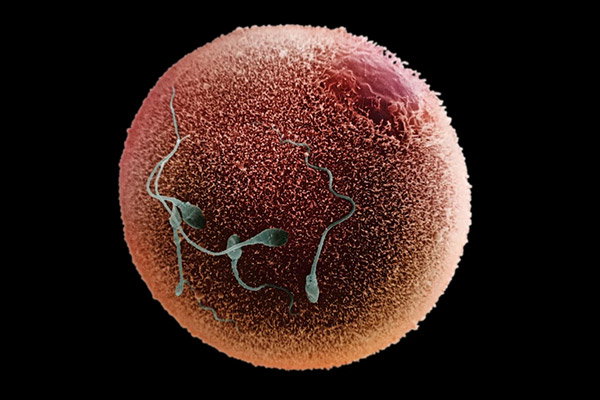
| Despite its critical role in reproduction, the fusion of egg and sperm (artificially coloured in this image) in vertebrates is a molecular mystery that has proved difficult to crack. (D. Phillips/Science Photo Library) | |||||
How sperm and egg hook upResearchers have identified three proteins that work together as matchmakers between sperm and egg cells. They used the artificial-intelligence tool AlphaFold to predict the interactions between proteins of sperm cells. It predicted that three such proteins form a complex, which creates a place for an egg protein to bind. “It’s not the old concept of having a key and a lock to open the door anymore,” says reproductive biologist Enrica Bianchi. “It’s more complicated.” Nature | 4 min readReference: Cell paper |
|||||
Mega-magnet breaks field recordA magnet at the Steady High Magnetic Field Facility (SHMFF) in China has sustained a steady magnetic field of 42.02 tesla, which is more than 800,000 times stronger than Earth’s — making it the world’s most powerful resistive magnet. High-field magnets are handy tools for uncovering hidden properties of advanced materials, such as superconductors, and could offer researchers glimpses of entirely new physical phenomena. The drawback is the power these mammoth magnets consume: the SHMFF’s magnet used 32.3 megawatts of electricity to produce its record-breaking field. “You’ve got to have a very good science case to justify that resource,” says condensed-matter physicist Alexander Eaton. Nature | 4 min read |
|||||
How the end of smallpox led to mpox“We vaccinated for smallpox and eradicated it. But look, something came out of that: monkeypox,” said Uganda’s health minister, Jane Ruth Aceng, in August. Smallpox and mpox are closely related diseases — having immunity to one boosts immunity to the other. Once smallpox was eradicated, and the vaccination campaigns halted, population immunity to both diseases waned. Researchers were aware of this risk, but at the time, mpox wasn’t seen as a big enough threat. Now, African nations are scrambling to rebuild the medical expertise to diagnose and treat mpox outbreaks; skills that disappeared along with the vaccines. NPR | 9 min read |
|||||
|
|||||
Don’t skip your coffee breaksChemist turned science journalist Victoria Atkinson is championing the humble coffee break. Stepping out of the lab for a moment, she writes, is far from a waste of time. In fact, her breaks with colleagues during her master’s and PhD was where the real learning began — helping her to pick up the lab tips and tricks she didn’t get in the classroom. Chemistry World | 5 min read |
|||||
Futures: A sequence of memoriesAn 89-year-old considers what it means to be home as she watches her life play before her eyes in the latest short story for Nature’s Futures series. Nature | 6 min read |
|||||
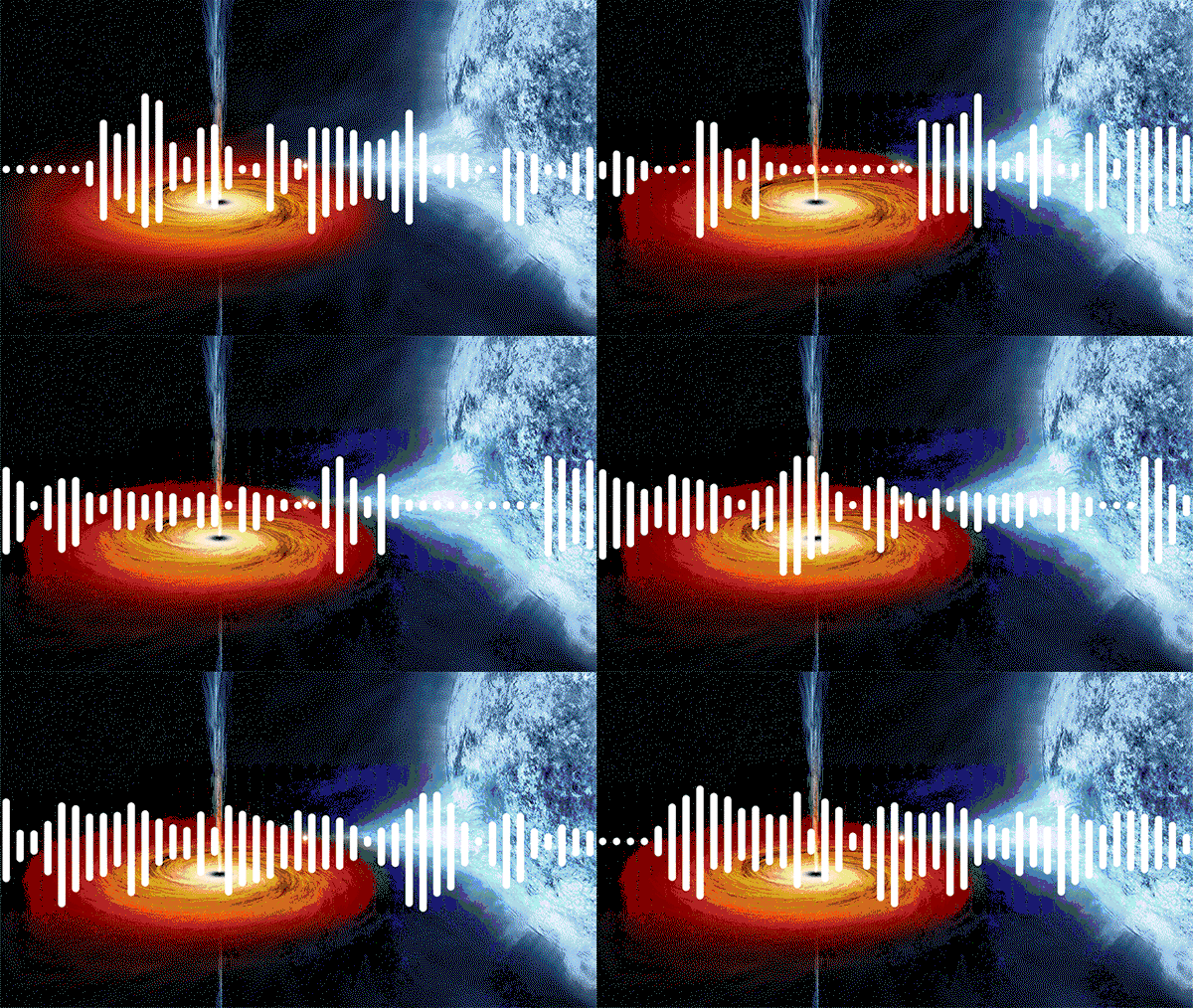
Podcast: An unusual microquasarA type of binary-system called a microquasar has been found to be firing out γ-rays at high energy-levels, evidence that it might be a long-theorized natural particle-accelerator known as a PeVatron. These objects are thought to be a source of galactic cosmic rays, the origins of which are currently a mystery. “Supernova explosions have been good candidates for accelerating these cosmic rays and people haven't really considered microquasars, at least not recently,” says astrophysicist Jamie Holder, who wrote about the paper in the accompanying Nature News & Views article. “So this is kind of revitalizing this idea that maybe these types of systems could contribute as well.” Nature Podcast | 30 min listenSubscribe to the Nature Podcast on Apple Podcasts, Spotify or YouTube Music, or use the RSS feed. |
|||||
|
|||||
Quote of the day“Science is about letting the chips fall, and sometimes this means accepting that the truth is not simple, even if it would make our lives easier if it were.”Science historian Naomi Oreskes pushes back on the idea of Occam’s razor — that the best explanation is usually the simplest one — in the pursuit of scientific knowledge. (Scientific American | 5 min read) |
|||||
|
|
|||||
|
|||||
|
|
|||||
Free newsletters from NatureWant more? Update your preferences to sign up to our other Nature Briefing newsletters:
|
|||||
Access Nature and 54 other Nature journals
Nature+ is our most affordable 30-day subscription, giving you online access to a wide range of specialist Nature Portfolio journals, including Nature. |
|||||
|
|||||
|
You received this newsletter because you subscribed with the email address: - Please add [email protected] to your address book. Enjoying this newsletter? You can use this form to recommend it to a friend or colleague — thank you! Had enough? To unsubscribe from this Briefing, but keep receiving your other Nature Briefing newsletters, please update your subscription preferences. To stop all Nature Briefing emails forever, click here to remove your personal data from our system. Fancy a bit of a read? View our privacy policy. Forwarded by a friend? Get the Briefing straight to your inbox: subscribe for free. Want to master time management, protect your mental health and brush up on your skills? Sign up for our free short e-mail series for working scientists, Back to the lab. Get more from Nature: Register for free on nature.com to sign up for other newsletters specific to your field and email alerts from Nature Portfolio journals. Would you like to read the Briefing in other languages? 关注Nature Portfolio官方微信订阅号,每周二为您推送Nature Briefing精选中文内容——自然每周简报。
Nature Portfolio | The Springer Nature Campus, 4 Crinan Street, London, N1 9XW, United Kingdom Nature Portfolio, part of Springer Nature. |