How ‘thunderquakes’ probe underground geology
What matters in science |

Is this your brand on Milled? Claim it.
|
||
|
||
|
Hello Nature readers, |
||
|
||
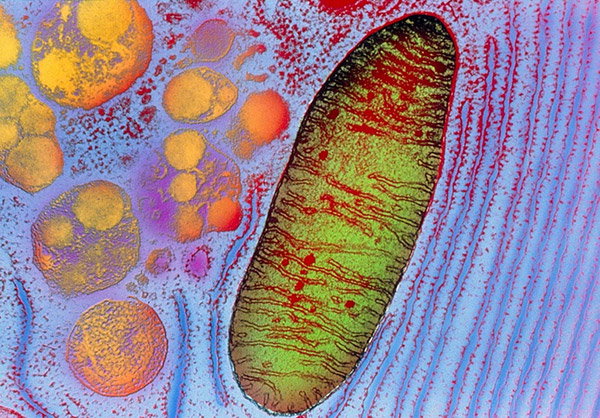
| Transplanting healthy mitochondria — organelles that produce energy in cells — is being explored as a way to treat diseases that damage these organelles in tissues. The healthy mitochondria can be taken up by the damaged cells and, in some cases, boost cell survival and partially restore tissue functions. (K. R. Porter/SPL) | ||
Patient’s mitochondria injected into eyesScientists have extracted mitochondria from a woman’s leg muscles and injected them into the vitreous fluid of her eyes in an attempt to treat severe blindness. The procedure caused no inflammation or side effects — but had a limited effect on restoring responses to light in the eyes, and did not restore the woman’s vision. The study shows that it was “relatively safe” to inject the person’s own mitochondria into the eyes, says mitochondria biologist Temurkhan Ayupov. Nature | 6 min readReference: ResearchSquare preprint (not peer reviewed) |
||
|
||
Do many studies use the wrong antibody?More than 50 studies on cell ageing have apparently used the wrong antibody to identify a key protein in experiments, according to a science sleuth. The latest case comes two months after Sholto David, a UK-based independent molecular biologist, identified hundreds of studies with a similar error and three months after he and another researcher spotted problems with antibody-validation images in the catalogue of one of the world’s largest suppliers, Thermo Fisher Scientific. Nature | 8 min read |
||
|
||
‘Thunderquakes’ reveal what lies beneathThunder generates acoustic waves that can help scientists probe the Earth for hidden geological structures, such as sinkholes. Researchers used a technique called distributed acoustic sensing, which detects tiny deformations in ordinary fibre-optic cable. A disused cable that snaked underneath their campus for more than 4 kilometres acted as more than 2,100 sensors, which the team used to show that it could one day be “possible to monitor the shallow subsurface continuously, using infrastructure that is already in the ground and seismic energy that is already coming from the sky”, write geoscientists Nolan Roth and Tieyuan Zhu. The Conversation | 6 min readReference: Science Advances paper |
||
How to build ‘pro-worker’ AIStudies of the US labour market suggest that automation has played a crucial part in increasing inequality — and this dynamic is likely to intensify with the adoption of AI, argues economist Daron Acemoglu. Acemoglu has joined thousands of economists and AI researchers in signing We Must Act Now, a statement urging policymakers and technology leaders to steer AI towards complementing, rather than replacing, human labour. “What is at stake is not only shared prosperity, but also our democratic system,” he writes. “Societies cannot remain stable if large numbers of people are excluded from economic opportunity.” Nature | 7 min read |
||
Why seaweed is everywhereMarine heatwaves and nutrient-rich agricultural pollution are creating an ecological paradox: wild kelp forests are dying off, but floating seaweeds and microalgal blooms are multiplying. Symptoms include sargassum smothering Atlantic shorelines — and releasing hazardous sulfide as it decays — and ‘dead zones’ caused by oxygen-depleting algal blooms. Local authorities are fighting back with seaweed-thwarting offshore barriers and trawlers, and kelp-forest restoration efforts are happening around the world. Sierra | 6 min read |
||
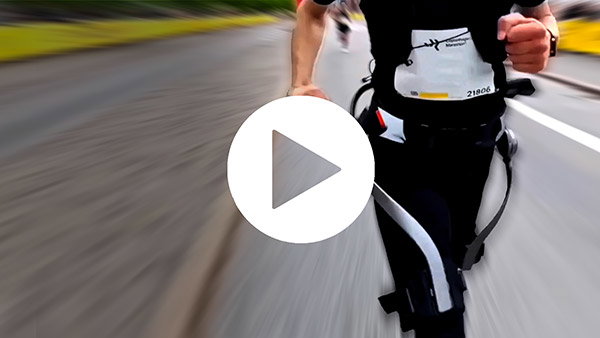
Video: the exoskeletons next doorTechnology to help people walk, run and jump is moving rapidly from labs to hiking trails. These exoskeletons look very different from the huge mech suits of science fiction, and as the technology continues to develop they might become part of everyday life sooner than you think. Nature | 3 min video |
||
|
||
Quote of the day“This is not the outcome we were working toward, but it does not change why this mission was worth attempting.”NASA Administrator Jared Isaacman responds to news that the LINK mission to raise the orbit of the Swift Observatory will not save the ageing NASA satellite from an impending fiery death. (New Scientist | 3 min read) |
||
|
|
||
|
||
|
|
||
Free newsletters from NatureWant more? Update your preferences to sign up to our other Nature Briefing newsletters:
|
||
|
||
|
You received this newsletter because you subscribed with the email address: - Please add [email protected] to your address book. Had enough? To unsubscribe from this Briefing, but keep receiving your other Nature Briefing newsletters, please update your subscription preferences. To stop all Nature Briefing e-mails forever, click here to remove your personal data from our system. Fancy a bit of a read? View our privacy policy. Forwarded by a friend? Get the Briefing straight to your inbox: subscribe for free. Get more from Nature: Register for free on nature.com to sign up for other newsletters specific to your field and e-mail alerts from Nature Portfolio journals. Would you like to read the Briefing in other languages? 关注Nature Portfolio官方微信订阅号,每周二为您推送Nature Briefing精选中文内容——自然每周简报。
Nature Portfolio | The Springer Nature Campus, 4 Crinan Street, London, N1 9XW, United Kingdom Nature Portfolio, part of Springer Nature. |