How we know: the rise of evidence-based medicine
What matters in science |

Is this your brand on Milled? Claim it.
|
|||||
|
|||||
|
Hello Nature readers, |
|||||

|
|||||
| Lab-grown immature sperm cells could be used to study early stages of human sperm development and reasons for male infertility. (Juergen Berger/Science Photo Library) | |||||
Researchers inch toward lab-grown spermScientists have successfully engineered human blood cells so they transform into immature sperm, and incubated these cells in a tiny pouch grown on a mouse’s kidney. The blood cells were reprogrammed into induced pluripotent stem cells, which the team could ‘coax’ into embryonic cells that can give rise to eggs or sperm. The researchers then mixed the immature cells with non-reproductive cells found in the testicles of developing mice, which provide the environment to support sperm development. The procedure is a step toward eventually making mature sperm cells in the lab. Nature | 5 min readReference: Cell Stem Cell paper |
|||||
Preprints unchanged by peer reviewThe central conclusions of biomedical preprints rarely change during the peer review process, according to a study of more than 70,000 preprints. The study, which is itself currently a preprint, found that almost 40% of main conclusions were unchanged between preprint and journal-published versions of paper abstracts, and another 50% underwent only minor revisions. The authors say the findings suggest that preprints are a reliable source of information, although some scientists say the finding should be interpreted more cautiously. The study only included preprints that went on to be published in a journal, so didn’t assess the veracity of unpublished preprints. Nature | 5 min readReference: bioRxiv preprint (not peer reviewed) |
|||||
NSF plans cuts to core scienceThe US National Science Foundation (NSF) is planning to expropriate money from its core science programmes to fund an initiative from the White House Office of Science and Technology Policy (OSTP), say NSF staff members and an internal NSF ledger seen by Nature. The move would force the agency to rescind funding for research proposals that are nearly finalized. The OSTP did not respond to Nature’s request for comment, nor did the offices of the legislators that oversee the NSF’s spending plans. An NSF spokesperson denied reports that the funds would be redirected to a handful of so-called ‘X-Labs’ that focus on applied research. NSF staff members who spoke to Nature say they fear retaliation if they speak out, and are not allowed to pass on what they know to researchers. “We don’t know where the money’s going or what’s going on,” one said. “We cannot communicate to the community at all. We’re forbidden.” Nature | 6 min read |
|||||
Hunger chose Hannibal’s Alps routeHannibal’s history-making crossing of the Alps probably went via the Col de la Traversette — because otherwise his army would have starved. The almost 3,000-metre-high pass is the most energy-efficient route across the Alps. Still, researchers calculated that the 15-day traverse would have required more than 230 tonnes of food and supplies for the Carthaginian army of 46,000 men, 7,000 horses and 37 war elephants. Nautilus | 4 min readReference: Proceedings of the National Academy of Sciences paper |
|||||
|
|||||
How evidence changed the worldIn Beyond Belief, science journalist and Nature editor Helen Pearson charts the rise of evidence-based medicine and explores how rigorous research has transformed health and social policy. Pearson shares examples of success stories, in which solid evidence overturned bad practices, and the people behind them, many of whom were treated as mavericks for championing randomized trials. “Anyone can read and enjoy the book, yet there are nuggets for experienced readers,” writes public-policy researcher Peter John in his review. “The author writes as a believer, and her passion is engaging.” Nature | 8 min read |
|||||
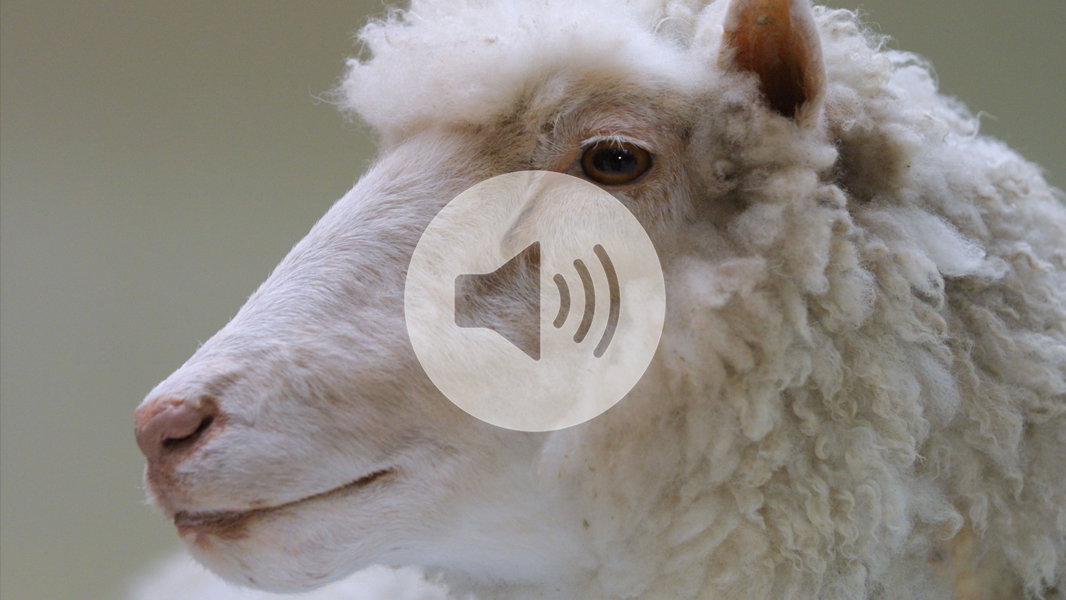
Podcast: Hello, DollyIn this week’s Briefing Chat, I joined host Benjamin Thompson to discuss the legacy of Dolly the sheep; the first mammal cloned from an adult cell. And we got excited about the first real-time observations of a mid-ocean ridge splitting apart. Nature Podcast | 10 min listenSubscribe to the Nature Podcast on Apple Podcasts, Spotify or YouTube Music, or use the RSS feed. |
|||||
|
|||||
| (Jeremy Sutton-Hibberty/Alamy) | |||||
Quote of the day“The never-ending slop submissions take a serious mental toll to manage and sometimes also a long time to debunk. Time and energy that is completely wasted while also hampering our will to live.”Software developer Daniel Stenberg, who created the open-source cURL tool that underpins much of the Internet, explains why the project has ended its ‘bug bounty’ programme that paid developers to find security flaws — a symptom of how AI code tools are disrupting the norms of open-source community labour. (Financial Times | 28 min read, intermittent paywall) |
|||||
|
|
|||||
|
|||||
|
|
|||||
Free newsletters from NatureWant more? Update your preferences to sign up to our other Nature Briefing newsletters:
|
|||||
|
|||||
|
You received this newsletter because you subscribed with the email address: - Please add [email protected] to your address book. Enjoying this newsletter? You can use this form to recommend it to a friend or colleague — thank you! Had enough? To unsubscribe from this Briefing, but keep receiving your other Nature Briefing newsletters, please update your subscription preferences. To stop all Nature Briefing emails forever, click here to remove your personal data from our system. Fancy a bit of a read? View our privacy policy. Forwarded by a friend? Get the Briefing straight to your inbox: subscribe for free. Want to master time management, protect your mental health and brush up on your skills? Sign up for our free short e-mail series for working scientists, Back to the lab. Get more from Nature: Register for free on nature.com to sign up for other newsletters specific to your field and email alerts from Nature Portfolio journals. Would you like to read the Briefing in other languages? 关注Nature Portfolio官方微信订阅号,每周二为您推送Nature Briefing精选中文内容——自然每周简报。
Nature Portfolio | The Springer Nature Campus, 4 Crinan Street, London, N1 9XW, United Kingdom Nature Portfolio, part of Springer Nature. |