Humans and great apes giggle in the same rhythms
What matters in science |

Is this your brand on Milled? Claim it.
|
|||||
|
|||||
|
Hello Nature readers, |
|||||
|
|||||
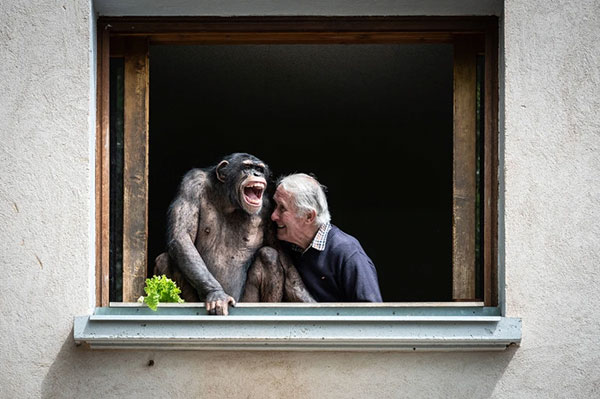
| A shared pattern of laughter between humans and great apes hints that vocal motor control might have evolved from a common ancestor that lived millions of years ago. (Jean-Philippe Ksiazek/AFP via Getty) | |||||
Humans and apes share a laughChimpanzees (Pan troglodytes), gorillas (Gorilla gorilla) and children laugh in similar rhythms when tickled. Researchers found that kids and apes left evenly spaced intervals between laughing sounds during a tickle attack, though children had a faster laughter rhythm compared with apes. Laughter might have picked up pace during the course of human evolution, the team suggests, which could reveal “something about laughter itself, but also, in a way, about the evolution of human speech”, says primatologist and study co-author Chiara De Gregorio. Nature | 4 min readReference: Communications Biology paper |
|||||
Gene ‘megacluster’ boosts antibiotic arsenalA newly discovered gene ‘megacluster’ in Streptomyces bacteria enables them to produce a variety of potent antibiotic compounds. These compounds act as a multi-pronged offensive weapon against other species, with each targeting different stages of the bacterial metabolic process. It’s more difficult for bacteria to develop resistance to attacks that hit several targets, so the discovery could lead to the development of new antibiotics, experts say. The research has “discovered something new in a system so extensively studied — hidden in plain sight,” says medicinal chemist Mark Blaskovich. Nature | 4 min readReference: Nature paper |
|||||
Sea turtles are only ok navigatorsGreen sea turtles (Chelonia mydas) use Earth’s geomagnetic field as a map, but are only able to follow it approximately. Researchers tracked eight turtles as they made a journey of more than 1000 kilometres. They found that the animals tended to plough ahead in one direction for extended periods, then stop to reorient when they’d strayed from their course. The turtles have only “an approximate idea of where they are and where they’re going”, says marine ecologist and study co-author Graeme Hays. So they take “circuitous routes that eventually get them where they want to be”. Science | 5 min readReference: Science Advances paper |
|||||
|
|||||
Skin healing without scarsScientists are exploring the potential of printable inks that could prevent scarring after burn trauma. These gels are laced with cultures of skin cells to coax the body into rebuilding healthy skin after burns, rather than launching the frenzied emergency-repair pathway that leads to scar tissue. In initial clinical trials, the inks will have to be administered by doctors with a syringe. But researchers are also developing robotic arms that could one day precisely map a person’s injury and print the gel directly onto it. Knowable | 7 min read |
|||||
How to catch a neutrinoNeutrinos, a type of fundamental subatomic particle, are elusive. They carry no charge, have almost no mass and generally pass through objects and living things with no discernible effect — all factors that make them difficult to detect. Collecting data on these mysterious particles requires some of the most ambitious experimental set-ups in the business, which are detecting neutrinos in Antarctic ice, the caves of an active Canadian mine and at the bottom of the Mediterranean sea. Quanta | Picture-filled scroll |
|||||
The ISS is on its last legs — what’s next?Earlier this month, astronauts on board the International Space Station (ISS) had to shelter in a docked capsule because of an air leak in the Russian part of the station. All was well in the end, but it was “a dose of engineering reality”, writes Christopher Newman, an expert in space law and policy. “NASA and Russia’s space agency Roscosmos dispute the seriousness of the problem,” he writes. “Not only is the structure under strain, but also the fabric of the agreement that keeps the ISS running.” Private space stations were always envisaged as the next step, but they’re ill-prepared to take over, Newman argues. The Conversation | 8 min read |
|||||
|
|||||
|
|||||
|
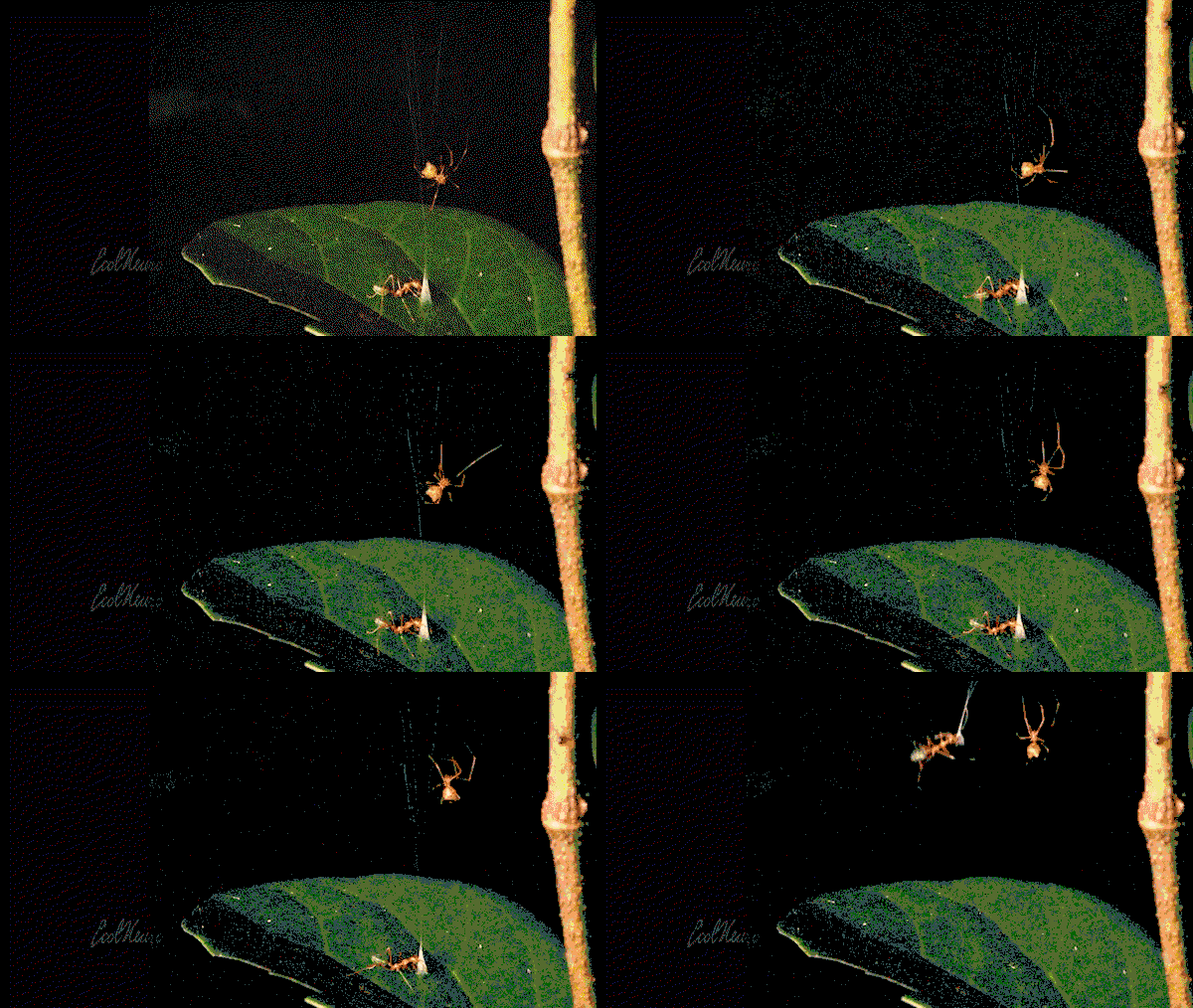
This newly described ‘ballista’ spider (Propostira sp.) uses a spring-loaded snare to catch prey. The arachnid’s trap flings unsuspecting green tree ants (Oecophylla smaragdina) into a waiting web at an acceleration of more than 4,900 kilometres per second, around 100 times greater than that of a Formula One car, says sensory biologist and study co-author Ajay Narendra. The team aren’t sure why these spiders evolved this strategy, but suggest that it could protect them from angry worker ants that might attempt to rescue their colleague. (CNN | 6 min read) Reference: Current Biology paper (Ajay Narendra et al./Current Biology (CC BY 4.0)) |
|||||
Quote of the day“It’s like a 1,000-lane highway where all the cars are moving in opposite directions.”Mathematician Michael Shelley and colleagues found that the 1.8-millimetre-long sperm of Drosophila melanogaster flies slide against one another and move constantly as a fluid mass, which keeps the cell’s tails from becoming tangled up. (The New York Times | 5 min read) |
|||||
|
|
|||||
|
|||||
|
|
|||||
Free newsletters from NatureWant more? Update your preferences to sign up to our other Nature Briefing newsletters:
|
|||||
|
|||||
|
You received this newsletter because you subscribed with the email address: - Please add [email protected] to your address book. Enjoying this newsletter? You can use this form to recommend it to a friend or colleague — thank you! Had enough? To unsubscribe from this Briefing, but keep receiving your other Nature Briefing newsletters, please update your subscription preferences. To stop all Nature Briefing emails forever, click here to remove your personal data from our system. Fancy a bit of a read? View our privacy policy. Forwarded by a friend? Get the Briefing straight to your inbox: subscribe for free. Want to master time management, protect your mental health and brush up on your skills? Sign up for our free short e-mail series for working scientists, Back to the lab. Get more from Nature: Register for free on nature.com to sign up for other newsletters specific to your field and email alerts from Nature Portfolio journals. Would you like to read the Briefing in other languages? 关注Nature Portfolio官方微信订阅号,每周二为您推送Nature Briefing精选中文内容——自然每周简报。
Nature Portfolio | The Springer Nature Campus, 4 Crinan Street, London, N1 9XW, United Kingdom Nature Portfolio, part of Springer Nature. |