Landmark bat study suggests they evolved in Europe
What matters in science |

Is this your brand on Milled? Claim it.
|
||||||
|
||||||
|
Hello Nature readers, |
||||||
|
||||||
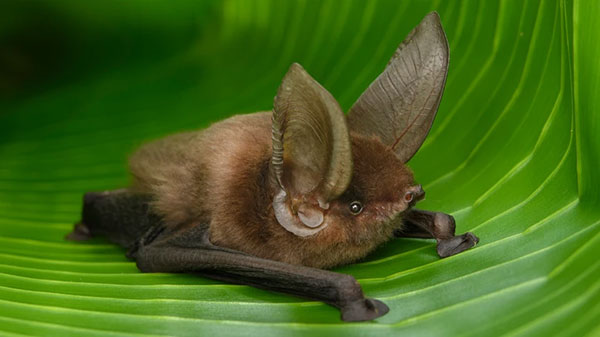
| The Madagascar sucker-footed bat (Myzopoda aurita) is one of the 103 bat species that now has a reference genome. (Chien Lee/NPL) | ||||||
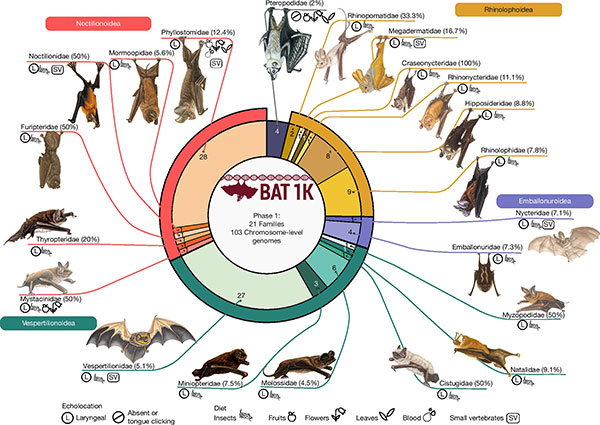
Genomics taps into why bats are so coolBats are special: they’re the only mammals that can fly, they can tolerate viruses without getting sick and they have exceptional longevity and cancer resistance. So scientists are welcoming a tour de force study of bat genomics: the first phase of the Bat1K Project, which aims to generate chromosome-level genomes for all living bat species. Notably, the study suggests that bats evolved in Europe, challenging previous hypotheses of African, Asian or North American origins. “This is a landmark study for bat biology, and for comparative genomics more generally,” writes evolutionary biologist Josefin Stiller in an accompanying Nature News & Views article. The Washington Post | 8 min read & Nature News & Views | 8 min readReference: Nature paper |
||||||
|
||||||
| Phase 1 of the Bat1K project includes at least one species from each of the 21 currently recognized bat families. (see a larger version of this graphic here) (Ariadna E. Morales et al./Nature (CC BY 4.0)) | ||||||
AlphaFold database goes viralThe AlphaFold Protein Structure Database — a repository of predicted structures for nearly every known protein on Earth — has been upgraded to better represent viruses. Researchers added more than 8,000 protein dimers — pairs of interacting molecules — from 23 virus families, all with human-infecting members. The addition is part of the launch of a ‘pandemic preparedness portal’ within the widely used and freely available AlphaFold database. “This is an essential resource for understanding virus diversity, evolution and function,” says virologist Edward Holmes. Nature | 5 min read |
||||||
Why don’t GLP-1s work for everyone?Around 10–15% of people taking popular GLP-1 drugs such as Wegovy lose little to no weight — and researchers don’t really know why. Solving this mystery might lead to new medications for people who don’t benefit from currently available drugs, and could make it possible to match individuals to treatments that are most likely to work for them. Nature | 5 min read |
||||||
| ||||||
|
||||||
|
||||||
Futures: The CourierThe criminal underworld has a new way to pass secret messages in the latest short story for Nature’s Futures series. Nature | 6 min read |
||||||
Five best science books this weekAndrew Robinson’s pick of five science books to read this week includes a survey of great science journalism, a dip into cold-water kelp forests and an argument in favour of giving alchemy the credit it deserves. Nature | 4 min read |
||||||
Podcast: bank accounts reveal signs of abuseFinancial abuse — a form of domestic abuse involving control over a person’s money and spending — can leave victim-survivors burdened with debts and undermine their independence, but it can be difficult to document. By comparing the anonymized bank data of UK women who have experienced financial abuse with that of those who haven’t, researchers have identified some telltale signs, such as declining credit scores and little spending on self-care. The team hopes that their findings can be used to help identify victim-survivors and inform policies to help them restore their financial freedom. Nature Podcast | 24 min listenSubscribe to the Nature Podcast on Apple Podcasts, Spotify or YouTube Music, or use the RSS feed. |
||||||
Quote of the day“We’re [here for] a blink of an eye compared with the age of the universe. If I spend that blink of an eye trying to extend it to two blinks of an eye, I’m not sure if that is actually a worthwhile thing to be spending my life doing.”The life-extension efforts of tech billionaires are a waste of time, and distract from the enjoyment of normal life, says theoretical physicist Jim Al-Khalili. (The Guardian | 5 min read) |
||||||
|
|
||||||
|
||||||
|
|
||||||
|
||||||
|
If you enjoy this newsletter, please recommend it to a friend or colleague. Click here to forward it by e-mail. Thank you! You received this newsletter because you subscribed with the email address: - To stop all Nature Briefing e-mails forever, click here to remove your personal data from our system. |
||||||
|
Nature Portfolio | The Springer Nature Campus, 4 Crinan Street, London, N1 9XW, United Kingdom Nature Portfolio, part of Springer Nature. |