Lung microbiome linked to a mysterious tissue-scarring condition
What matters in science |

Is this your brand on Milled? Claim it.
|
|||||
|
|||||
|
Hello Nature readers, |
|||||
|
|||||
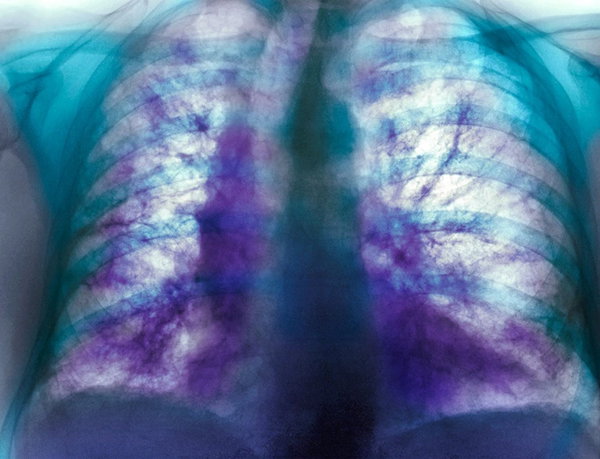
| Idiopathic pulmonary fibrosis is a life-threatening disease in which lung tissue becomes scarred — shown in purple on this X-ray. (SPL) | |||||
Microbiome linked to rare lung conditionResearchers have identified a genetic link between the lung microbiome and a mysterious lung-scarring condition called idiopathic pulmonary fibrosis (IPF). The team found that mice with a mutation to a gene called toll-like receptor 5 (Tlr5) are more susceptible to IPF than are mice without the mutation. This mutation results in a faulty copy of the TLR5 receptor, which is usually activated in response to lung injury and stops the overgrowth of harmful types of bacteria. A treatment that activated TLR5 prevented some fibrosis in a mouse model of IPF. Nature | 4 min readReference: Science Translational Medicine paper |
|||||
CAR-T enables kidney transplantsA single dose of engineered immune cells has helped three people with ‘highly sensitized’ immune systems to receive life-saving kidney transplants. People in this group are often ineligible for transplants because their bodies usually reject the donated organ. Researchers engineered the recipient’s own immune cells into chimeric antigen receptor (CAR) T cells that ultimately reduce the trouble-making antibodies that push their immune systems into overdrive. More than a year after receiving the cells, the three people are now living with new kidneys and without notable side effects. Nature | 5 min readReference: New England Journal of Medicine paper 1 & paper 2 |
|||||
Trump team proposes funding overhaulThe administration of President Donald Trump has issued a far-reaching proposal to fundamentally overhaul federal science funding in the United States from 1 October. New proposed rules would put political appointees in control of federal grants; de-emphasize peer review; limit international collaborations; and restrict federal financial support for the publication of US scientists’ results in scientific journals. The proposed changes have been met with alarm by scientists, who are concerned that the moves will politicize research. “If it gets through, we’re screwed,” says psychologist Colette Delawalla, the director of the advocacy group Stand Up for Science. Nature | 7 min read |
|||||
Upgraded quantum chip met with scepticismTech giant Microsoft has unveiled Majorana 2, a quantum chip that it says keeps the company on track to develop practical quantum computers faster than its competitors. Microsoft scientists report that the chip is able to hold information for more than 20 seconds, which is 1,000 times longer than its predecessor. Some researchers are sceptical. “I believe this is just another step in Microsoft’s almost decade-long track record of publishing unreliable results,” says experimental physicist Vincent Mourik. Nature | 5 min readReference: arXiv preprint (not peer reviewed) |
|||||
|
|||||
|
|||||
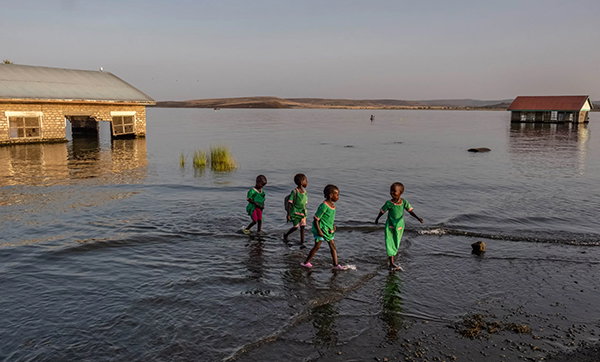
| Flooded buildings in Komote, Kenya, such as this primary school, have been overtaken by crocodiles looking for a safe place to breed. (Tommy Trenchard for NPR) | |||||
A beloved lake is turning against its peopleLake Turkana in Kenya is the largest desert lake in the world and a UNESCO world heritage site. On its shores, the Leakey family and other palaeontologists discovered a trove of hominin fossils that transformed our understanding of human evolution. The lake’s levels have long fluctuated, but since 2018 it has been rising fast, overwhelming villages, drowning schools and destroying pastures. “It's a complex web of interactions that created this situation,” says lake researcher Kevin Obiero, who points to tectonic activity, changes in weather patterns driven by climate change, and increased sediment flow into the lake caused by deforestation and agriculture. NPR | 15 min read |
|||||
Soil metabolism without the microbesIn 2013, a team of researchers reported that some of the biochemical reactions associated with metabolism continued in soil samples after they’d been totally sterilized. Last year, they published results showing that microbe-free soil can keep these reactions up for a full six years. The findings suggest that some steps of the metabolic process are possible outside the boundaries of a cell — and could even predate life on Earth. Quanta | 8 min readReference: Biogeosciences paper (from 2013) & Science Advances paper (from 2025) |
|||||
What makes us want to be togetherSome animals, such as mice and people, love to socialize. They love it so much that researchers suggest that the desire to spend time with others is a basic need in these species — with serious health consequences for going without. But exactly how much mingling an animal needs varies greatly between social species, and even within them. Neuroscientists are now searching the brain for the drivers of this need to be sociable, and why the right balance of networking and alone time differs between individuals. Knowable | 10 min read |
|||||
Quote of the day“Gender becomes a conveyor belt of illness and death.”Women in the Democratic Republic of the Congo are more likely to be traditional healers and caregivers to the sick, which puts them at an increased risk of infection during the ongoing Ebola outbreak, says epidemiologist Luke Nyakarahuka. (Nature Health | 4 min read) |
|||||
|
|
|||||
|
|||||
|
|
|||||
Free newsletters from NatureWant more? Update your preferences to sign up to our other Nature Briefing newsletters:
|
|||||
|
|||||
|
You received this newsletter because you subscribed with the email address: - Please add [email protected] to your address book. Enjoying this newsletter? You can use this form to recommend it to a friend or colleague — thank you! Had enough? To unsubscribe from this Briefing, but keep receiving your other Nature Briefing newsletters, please update your subscription preferences. To stop all Nature Briefing emails forever, click here to remove your personal data from our system. Fancy a bit of a read? View our privacy policy. Forwarded by a friend? Get the Briefing straight to your inbox: subscribe for free. Want to master time management, protect your mental health and brush up on your skills? Sign up for our free short e-mail series for working scientists, Back to the lab. Get more from Nature: Register for free on nature.com to sign up for other newsletters specific to your field and email alerts from Nature Portfolio journals. Would you like to read the Briefing in other languages? 关注Nature Portfolio官方微信订阅号,每周二为您推送Nature Briefing精选中文内容——自然每周简报。
Nature Portfolio | The Springer Nature Campus, 4 Crinan Street, London, N1 9XW, United Kingdom Nature Portfolio, part of Springer Nature. |