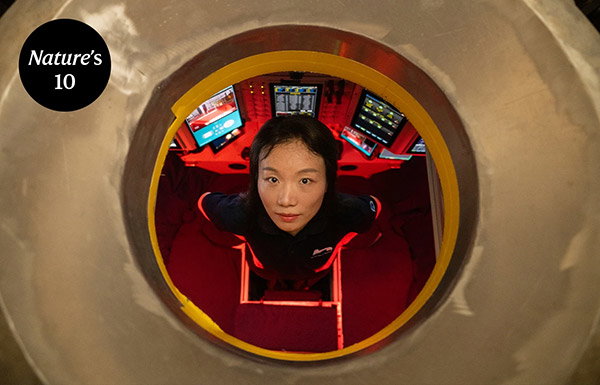
Meet Nature’s 10: the people who shaped science in 2025
What matters in science |

Is this your brand on Milled? Claim it.
|
|||||
|
|||||
|
Hello Nature readers, |
|||||
| |||||
|
|||||
Yearly temperatures reach dangerous highsThis year looks likely to tie with 2023 as the second-hottest ever on record. Last year was the hottest. “The three-year average for 2023-2025 is on track to exceed 1.5 ℃ for the first time,” says Samantha Burgess of the European Union’s Copernicus Climate Change Service, referring to the Paris Agreement pledge to limit global warming to 1.5 °C above pre-industrial levels. “These milestones are not abstract — they reflect the accelerating pace of climate change and the only way to mitigate future rising temperatures is to rapidly reduce greenhouse gas emissions.” Euronews | 2 min read |
|||||
AI-designed antibodies race toward trialsScientists say they are on the cusp of turning antibodies designed by artificial intelligence (AI) into potential therapies just a year after they debuted the first example of an entirely AI-designed antibody. Previously, the structure of antibodies proved somewhat of a black box to AI models. But new and improved models — such as an updated version of AlphaFold — have more successfully predicted the shape of flexible structures that give antibodies the specificity they need to bind to foreign molecules. Researchers at several companies now say they’ve designed ‘drug-like’ antibodies. Nature | 5 min read |
|||||
All aboard the ancient party boatArchaeologists have discovered an ancient Egyptian pleasure boat buried off the coast of Alexandria. Researchers estimate that the 35-metre-long vessel dates back to the early first century AD. The well-preserved cruiser seems to match the description of similar vessels by the ancient Greek historian Strabo, who wrote that they were “luxuriously fitted out” and carried passengers who “play the flute and dance without restraint and with extreme licentiousness”. It’s “phenomenal to have the archaeological correlate” to these ancient descriptions for the first time, says archaeologist Damian Robinson. The Guardian | 5 min read |
|||||
|
|||||
|
|||||
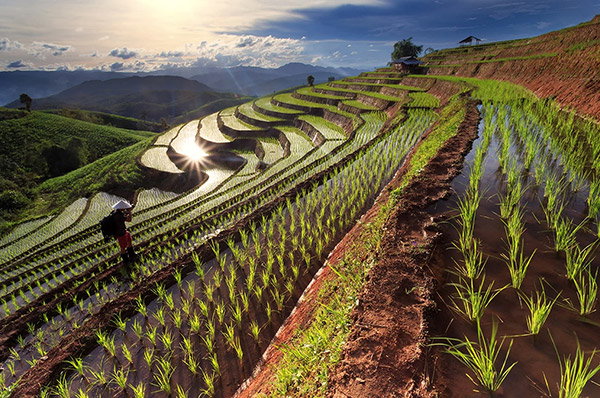
| In the 1960s, it took just 20 years to increase global average rice yields by 50%. Looking back from 2022, increasing global average rice yields by 50% took 40 years. (Narathip Ruksa/Getty) | |||||
Affordable food requires researchA global drop in public and private investment in agricultural science in the past four decades is partly to blame for high food prices, write the authors of a new analysis. “It will take decades for the harmful consequences of current R&D spending slowdowns to be realized, including increased environmental damage, poverty, malnutrition and civil or military strife,” they write. They urge countries to “rapidly ramp up — in fact, double — their collective spending on agrifood R&D in the next five years”. Nature | 14 min read |
|||||
How trust was broken during the pandemicThe rapid development of vaccines against COVID-19 was a scientific triumph that, along with other public-health measures, saved millions of lives. But communication missteps by public-health specialists and governments during the pandemic ended up damaging public trust in vaccines and scientific research, argues physician and science communicator Kristen Panthagani. “If there was one thing I could change about the pandemic, it would have been for governmental and public-health institutions to have focused on listening to the public's questions,” says Panthagani. “Connecting with people on social media was kind of an afterthought.” Nature | 5 min read |
|||||
The awakening of Oliver SacksNeurologist Oliver Sacks is known for his compelling case studies, published in essays and books such as Awakenings. But his patient stories were often enmeshed with his own complex inner life, writes journalist Rachel Aviv, who draws on Sacks’s previously unreleased correspondence and journals. In a letter to one of his brothers, Sacks himself characterized the cases in The Man Who Mistook His Wife for a Hat as “half-report, half-imagined, half-science, half-fable, but with a fidelity of their own — are what I do, basically, to keep MY demons of boredom and loneliness and despair away”. The New Yorker | 35 min read |
|||||
Quote of the day“Ensuring the survival of uncontacted territories not only defends the autonomy of their inhabitants, it also sustains the living systems that uphold the Earth’s atmosphere, biodiversity and climate.”On a recent expedition, bioethicist and environmentalist Kerry Bowman had a fleeting encounter with a man from an uncontacted Indigenous community. The experience crystalized Bowman’s view that the international law that guarantees uncontacted people’s right to remain isolated must be respected on the ground. (Mongabay | 8 min read) |
|||||
|
|
|||||
|
|||||
|
|
|||||
Free newsletters from NatureWant more? Update your preferences to sign up to our other Nature Briefing newsletters:
|
|||||
|
|||||
|
You received this newsletter because you subscribed with the email address: - Please add [email protected] to your address book. Enjoying this newsletter? You can use this form to recommend it to a friend or colleague — thank you! Had enough? To unsubscribe from this Briefing, but keep receiving your other Nature Briefing newsletters, please update your subscription preferences. To stop all Nature Briefing emails forever, click here to remove your personal data from our system. Fancy a bit of a read? View our privacy policy. Forwarded by a friend? Get the Briefing straight to your inbox: subscribe for free. Want to master time management, protect your mental health and brush up on your skills? Sign up for our free short e-mail series for working scientists, Back to the lab. Get more from Nature: Register for free on nature.com to sign up for other newsletters specific to your field and email alerts from Nature Portfolio journals. Would you like to read the Briefing in other languages? 关注Nature Portfolio官方微信订阅号,每周二为您推送Nature Briefing精选中文内容——自然每周简报。
Nature Portfolio | The Springer Nature Campus, 4 Crinan Street, London, N1 9XW, United Kingdom Nature Portfolio, part of Springer Nature. |