Misfolded proteins might be one reason why immunotherapy fails
What matters in cancer research |

Is this your brand on Milled? Claim it.
|
|||||
|
|||||
|
Hello Nature readers, |
|||||
|
|||||
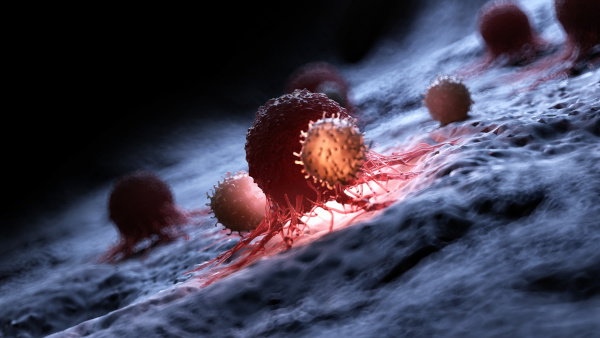
| Immunotherapy drugs train the immune system to target cancer cells — but they fail when T cells become overstimulated and exhausted. (3DMedisphere/Science Photo Library) | |||||
What causes immunotherapy to fail?A build-up of toxic, misfolded proteins causes immune cells to become exhausted and might make cancer immunotherapy less effective. Researchers examined the proteins inside exhausted T cells taken from mice with colon and bladder tumours. Instead of slowing protein synthesis in response to stress, these T cells ramped up the production of misfolded proteins, creating a ‘proteotoxic stress response’ that overwhelmed the cell. This pathway could be targeted as a way to prevent T-cell exhaustion and boost cancer immunotherapies, the authors conclude. Reference: Nature paper (1 October) |
|||||
‘Armoured’ CAR Ts attack solid tumoursCAR T cells often can’t penetrate solid tumours. But attempts to embolden them by adding immune-boosting molecules to the mix have failed because this cocktail can be toxic if not targeted directly at the tumour. Researchers have solved this problem by creating ‘armoured’ CAR T cells that carry a fusion of PD-L1 and IL-12 proteins into the tumour. Greater antitumour activity was seen in mice with prostate and ovarian cancers given these boosted CAR T cells compared with controls. “We believe our αPD-L1–IL-12 engineering strategy presents an opportunity to improve CAR-T cell clinical efficacy and safety across multiple solid tumour types,” write the researchers. Reference: Nature Biomedical Engineering paper (1 October) |
|||||
How oncologists respond to drug shortagesUS oncologists appeared to follow expert guidance when it came to responding to shortages of the cancer drugs cisplatin and carboplatin in 2023. This was “an encouraging sign, given historically slow integration of guidelines into clinical practice”, writes health-services researcher John Lin and his co-authors. After drug shortages were announced, the American Society of Clinical Oncology provided guidance on how to prioritize use of cisplatin and carboplatin for the people who needed it most — and prescribing data appeared to reflect this advice. “National organizations should prepare for future drug shortages by developing systems for real-time responses,” the authors conclude. Reference: JAMA Oncology Research Letter (2 October) |
|||||
Restore order, calm cancerChemotherapy often makes it harder for cancer cells to replicate by unleashing genetic chaos. In a counterintuitive move, researchers have reduced the spread of an aggressive form of breast cancer in mice by doing the opposite. They restored order to cancer cell division by blocking a protein called EZH2, which would otherwise cause triple-negative breast cancer cells to divide abnormally, allowing cells to travel to distant organs. Reference: Cancer Discovery paper (2 October) |
|||||
Drug resistance tracked cell by cellThe evolution of drug resistance in ovarian cancer has been tracked in real time by sequencing tumor cells removed during surgery and then monitoring changes in circulating tumour DNA. The technique, called CloneSeq-SV, was used to examine changes across 18 people with high-grade serous ovarian cancer over more than five years. “Using this new method, we could see that the cells that are resistant were present at the time of diagnosis, and that they were able to multiply as cells that were more sensitive to treatment died off,” computational oncologist and study co-author Sohrab Shah said in a statement. Reference: Nature paper (1 October) |
|||||
In the news
|
|||||
|
|||||
Ageing and cancer: a feedback loopAround 90% of cancers occur in people over 50, and cancer and its treatments can also drive ageing, creating a feedback loop that exacerbates frailty and contributes to other age-related diseases. As the world’s population ages, the healthcare and economic burdens related to cancer will be “far from trivial”, argues a Nature Reviews Cancer editorial. “Studying cancer within the context of ageing is therefore essential,” says the editorial, which is linked to a focus issue on the subject. Nature Reviews Cancer | 5 min readRead more about ageing and cancer in this focus issue published by Nature Reviews Cancer. |
|||||
|
|||||
|
|||||
|
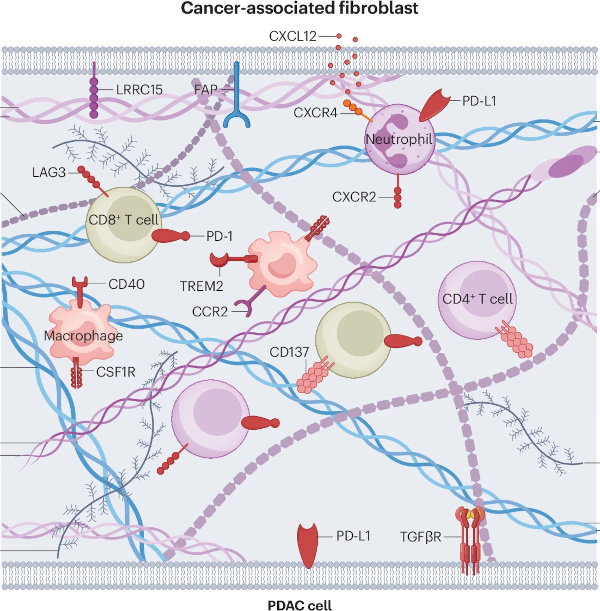
Structural-support molecules called collagens in the extracellular matrix surrounding pancreatic cancer cells can influence patient outcomes. For instance, people with high levels of collagen I (depicted above in blue) had a median survival of 6.4 months, compared with 14.6 months for those with low collagen I levels, according to a retrospective study. View a high-resolution version of this image here. (Nature Reviews Clinical Oncology | 80 min read) Reference: Clinical Cancer Research paper (2015) (Kung, HC. et al./Nat Rev Clin Oncol) |
|||||
Quote of the week“If smoking was the cancer villain of the 20th century, eating ultra-processed food may be its 21st-century counterpart.”Ultra-processed foods could be behind the rise of colorectal cancer in young people, writes global public health researcher Devi Sridhar. One study suggests that eating yogurt regularly could reduce the risks. (The Guardian | 5 min read) |
|||||
|
|
|||||
|
|||||
|
|
|||||
Free newsletters from NatureWant more? Update your preferences to sign up to our other Nature Briefing newsletters:
|
|||||
Access Nature and 54 other Nature journals
Nature+ is our most affordable 30-day subscription, giving you online access to a wide range of specialist Nature Portfolio journals, including Nature. |
|||||
|
|||||
|
You received this newsletter because you subscribed with the email address: - Please add [email protected] to your address book. Enjoying this newsletter? You can use this form to recommend it to a friend or colleague — thank you! Had enough? To unsubscribe from this Briefing, but keep receiving your other Nature Briefing newsletters, please update your subscription preferences. To stop all Nature Briefing emails forever, click here to remove your personal data from our system. Fancy a bit of a read? View our privacy policy. Forwarded by a friend? Get the Briefing straight to your inbox: subscribe for free. Get more from Nature: Register for free on nature.com to sign up for other newsletters specific to your field and email alerts from Nature Portfolio journals. Nature Portfolio | The Springer Nature Campus, 4 Crinan Street, London, N1 9XW, United Kingdom Nature Portfolio, part of Springer Nature. |