More than half of advanced lung cancers go untreated in the US
What matters in cancer research |

Is this your brand on Milled? Claim it.
|
|||||
|
|||||
|
Hello Nature readers, |
|||||
|
|||||
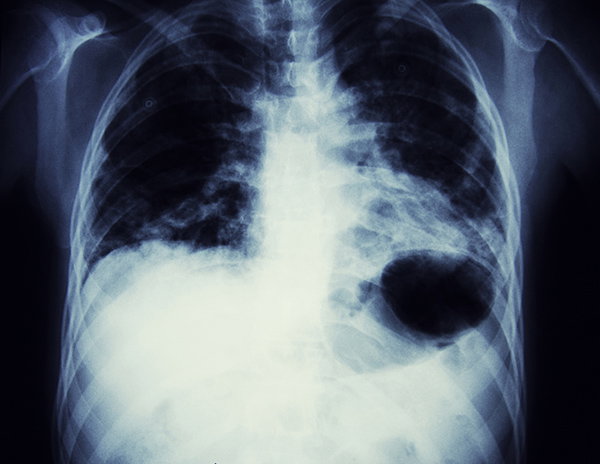
| Many lung tumours are caught at a late stage because the lungs have few pain receptors and screening is not widely available. (muratseyit/Getty) | |||||
More than half of lung cancers go untreatedAround 52% of people with metastatic lung cancers in the United States never receive treatment. A study of more than 250,000 people found that the proportion of people with advanced lung cancer who were treated increased only slightly from 45% to 48% between 2006 and 2021. During this 15-year period, dozens of promising new therapies became available, some that keep the disease under control for years. But only around two-thirds of people with advanced lung cancer see an oncologist. Some people are too sick to seek treatment when their lung tumours are found. Others, particularly those who smoked cigarettes in the past, are fatalistic about their disease, even though life-extending treatments are now available. The New York Times | 8 min readReference: JAMA Oncology paper (7 May) |
|||||
Quantum ‘thermometer’ for diseased cellsA ‘thermometer’ made of quantum nanosensors can detect the temperature in individual cells. With it, researchers have found that temperature varies by as much as 1 ºC in different parts of a cancer cell. The sensors could also detect signs of oxidative stress and the production of free radicals, reactive molecules that can damage DNA. The crystal fragments that made up the tool didn’t seem to damage cancer cells when injected or absorbed, but the researchers want to make them even smaller so they can “spy on cellular activities”, says chemist and study co-author Nobuhiro Yanai. “It’s a fantastic milestone,” says physicist Sarah Mann. “It will be so useful for disease detection.” Nature | 6 min readReference: Science Advances paper (29 April) |
|||||
FDA to speed up approvals with live dataThe US Food and Drug administration (FDA) is moving to make clinical trials more efficient by reviewing data in real time and possibly working with companies which use AI for monitoring and recruitment. Two early-stage clinical trials by drug companies AstraZeneca and Amgen for lymphoma and small cell lung carcinoma, respectively, will use the real-time data platform built by Paradigm to allow FDA reviewers live access to their clinical data. The broader goal is to allow for more continuous trials without pauses between phases and to incentivize running trials in the United States rather than China or Australia. STAT | 6 min read |
|||||
‘Dark proteins’ have a ‘Pluto’ momentThousands of ‘dark proteins’ encoded by the human genome have been rebranded as ‘peptideins’, a name that combines ‘peptide’ — the word for short amino-acid chains — with ‘protein’. These molecules have not historically been recognized as one of the 20,000 functional proteins in the human body, but are known to be involved in diseases such as childhood cancers. Just like astronomers tightened the definition of what it means to be a planet after the discovery of thousands of draft planets, similarly, some ‘canonical’ proteins will also probably be reclassified as peptideins. “We think of this almost as a Pluto moment,” says bioinformatician Jonathan Mudge, a member of the TransCODE Consortium, which proposed the name change. Nature | 7 min readReference: Nature paper (6 May) |
|||||
In the news
|
|||||
|
|||||
A third circulatory systemFor 400 years, we’ve known that the body has two ways to transport cells, fluid, waste and hormones: the cardiovascular system and the lymphatic system. In 2018, pathologist Neil Theise, gastroenterologist Rebecca Wells and their co-authors published their findings on a third system called the interstitium — an interconnected web of collagen and gel that sits under the skin and between organs. The interstitium could play a role in the spread of cancer cells, which seem to travel through it before reaching the lymph vessels. A drug that disrupts the flow of tumour cells through the interstitium called narmafotinib has shown promise in clinical trials for pancreatic cancer when combined with chemotherapy. The New York Times | 10 min readReference: Scientific Reports paper (2018) |
|||||
|
|||||
|
|||||
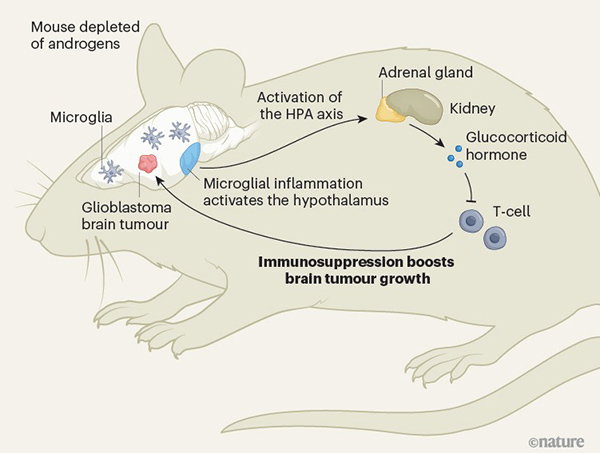
| Mice that have fewer male sex hormones called androgens have faster brain tumour growth. Without androgens, the immune system is suppressed by a brain-adrenal gland pathway, which leads to the release of steroid hormones called glucocorticoids that block tumour-killing T cells from being activated. (Nature News & Views | 7 min read) Reference: Nature paper (6 May) | |||||
Quote of the week“There it was, my recent cancer diagnosis, infiltrating my life again, via a spinach-pushing bot. I hated it… My bot couldn’t get my diagnosis off its mind.”Alexandra Frost says the chatbot ChatGPT now refers to her cancer diagnosis in almost every response and she hates it. “What it gets very, very wrong, like people, is that it’s hard to live a normal life with the cancer filter always on,” she writes. (Slate | 7 min read) |
|||||
|
|
|||||
|
|||||
|
|
|||||
Free newsletters from NatureWant more? Update your preferences to sign up to our other Nature Briefing newsletters:
|
|||||
Access Nature and 54 other Nature journals
Nature+ is our most affordable 30-day subscription, giving you online access to a wide range of specialist Nature Portfolio journals, including Nature. |
|||||
|
|||||
|
You received this newsletter because you subscribed with the email address: - Please add [email protected] to your address book. Enjoying this newsletter? You can use this form to recommend it to a friend or colleague — thank you! Had enough? To unsubscribe from this Briefing, but keep receiving your other Nature Briefing newsletters, please update your subscription preferences. To stop all Nature Briefing emails forever, click here to remove your personal data from our system. Fancy a bit of a read? View our privacy policy. Forwarded by a friend? Get the Briefing straight to your inbox: subscribe for free. Get more from Nature: Register for free on nature.com to sign up for other newsletters specific to your field and email alerts from Nature Portfolio journals. Nature Portfolio | The Springer Nature Campus, 4 Crinan Street, London, N1 9XW, United Kingdom Nature Portfolio, part of Springer Nature. |