mRNA cancer vaccines pass major milestone
What matters in cancer research |

Is this your brand on Milled? Claim it.
|
||
|
||
|
Hello Nature readers, |
||
|
||
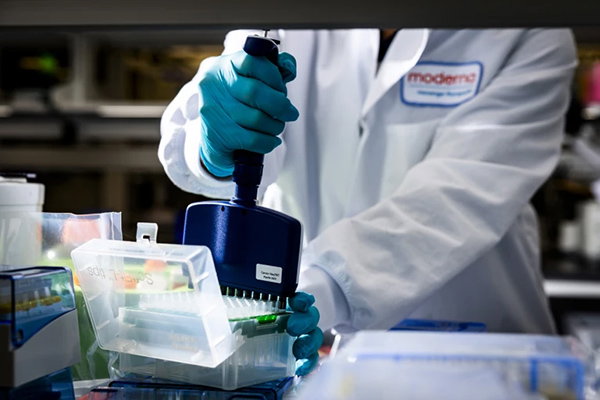
| The same technology used to develop the COVID-19 shots is being used to make mRNA cancer vaccines. (Adam Glanzman/Bloomberg/Getty) | ||
mRNA vaccine holds cancer backA personalised mRNA vaccine developed by Merck and Moderna has become the first to show success in a late-stage clinical trial. In an unpublished study of 1,100 people with advanced melanoma, an mRNA vaccine called intismeran reduced the chance of cancer recurrence when combined with the immunotherapy drug pembrolizumab, compared with immunotherapy alone. Each participant in the trial had their tumour sequenced to identify their unique mutated proteins or neoantigens. An mRNA vaccine was then made that instructs the body to make those neoantigens — priming the body to recognise the cancer as a threat. Nature | 3 min read |
||
Cancer-killing cells in those who live to 110People who live to 110 years and older have large populations of a rare type of immune cell that can kill cancer. These killer T cells might help people to live to extraordinarily long ages by fighting off cancer — although this has yet to be proved. “Most of immune ageing research has focused on decline,” says biologist Kosuke Hashimoto, who co-authored the research. “Our study suggests that even at extreme old age, the immune system may still selectively adapt.” Nature | 7 min readReference: Cell Reports paper (19 August) |
||
|
||
In the news
|
||
|
||
CRISPR takes the brakes off T cellsScientists looked at 20,000 genes and found two that, if snipped out using CRISPR, turn sluggish T cells into an army of millions that ignore multiple suppression signals to swarm and take out five types of cancer in mice. Removing the first gene, P2RY8, caused five to ten million T cells to infiltrate the solid tumours, a breakthrough that makes it easier to study these otherwise rare immune cells. “That completely changed what was possible,” says bioinformatician Qi Liu who co-authored the paper. Slicing out the second gene, GNAS, blocked the cancer’s immune suppression signals. “What we found is that many of those off switches run through one shared circuit, and disabling GNAS let the T cells stop listening to all of them at once,” says Liu. Reference: Nature paper (12 August) |
||
Why cancer resists daraxonrasibThe development of mutant KRAS proteins drives resistance to a promising drug for pancreatic cancer. Researchers sequenced more than 800 genes in 44 people with pancreatic cancer before and after they underwent treatment with daraxonrasib. They found that more than half of participants had a reactivated RAS pathway signalling after treatment — a finding that could guide combination drug strategies. Reference: Nature Medicine paper (11 August)Go deeper with this News & Views article (6 min read) |
||
|
||
The rush to freezeWith cancers on the rise in young people, the field of oncofertility has never been more important. But only around half of early-onset patients diagnosed from 2013 to 2021 spoke to their health-care practitioner about preserving their fertility. Others struggled to get an appointment with fertility clinics before their cancer treatment started. The expense can be a barrier too, with embryo freezing costing up to US$20,000. STAT | 6 min read |
||
|
||
|
||
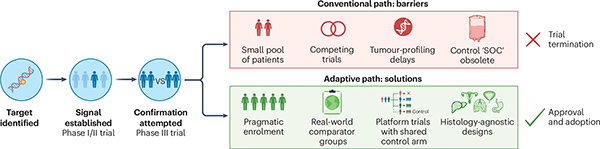
| Innovative, pragmatic clinical-trial designs that can run with a small group of participants are needed to test drugs for rare cancers, write oncologists Fen Saj and Lipika Goyal. (Nature Reviews Clinical Oncology News & Views | 6 min read) | ||
Quote of the week“Go get a pint of Ben and Jerry’s, watch your favorite movie, remember that life is good, and bad things happen sometimes — but that doesn’t make it a bad life.”Social-media influencer Sydney Towle has died at the age of 26 from metastatic bile duct cancer. Her vibrant online presence blended her medical journey with travel, scuba diving and optimism, boldly challenging assumptions about how young people with cancer should live. The above quote is from one of her videos. (The New York Times | 7 min read) |
||
|
|
||
|
||
|
|
||
Free newsletters from NatureWant more? Update your preferences to sign up to our other Nature Briefing newsletters:
|
||
|
||
|
You received this newsletter because you subscribed with the email address: - Please add [email protected] to your address book. Had enough? To unsubscribe from this Briefing, but keep receiving your other Nature Briefing newsletters, please update your subscription preferences. To stop all Nature Briefing e-mails forever, click here to remove your personal data from our system. Fancy a bit of a read? View our privacy policy. Forwarded by a friend? Get the Briefing straight to your inbox: subscribe for free. Get more from Nature: Register for free on nature.com to sign up for other newsletters specific to your field and e-mail alerts from Nature Portfolio journals. Nature Portfolio | The Springer Nature Campus, 4 Crinan Street, London, N1 9XW, United Kingdom Nature Portfolio, part of Springer Nature. |