Naked mole rat queens use a smell to stay on top
What matters in science |

Is this your brand on Milled? Claim it.
|
|||||
|
|||||
|
Hello Nature readers, |
|||||
|
|||||
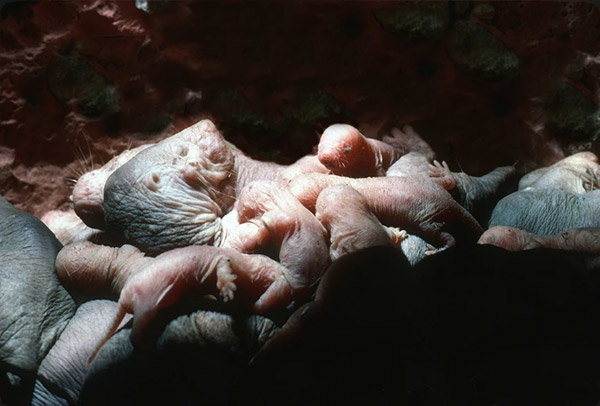
| Naked mole rats are a rare mammal example of eusociality, in which one queen is responsible for all reproduction in a colony, while other, infertile individuals rear the offspring and complete laborious tasks such as gathering food. (Neil Bromhall/Getty) | |||||
How naked mole rat queens keep the throneNaked mole rat (Heterocephalus glaber) queens produce a chemical that prevents other females in their colony from reproducing. The smell of isopropyl myristate — which is also a common ingredient in skincare products — alters the production of hormones in other females, which traps them in a prepubescent-like state. Researchers found that the chemical alone can maintain the status quo in mole-rat colonies when the queen is not physically present. The study solves the “longstanding mystery” of why only one female in a naked mole rat colony reproduces, says behavioural scientist Melissa Holmes. Nature | 4 min read or watch the 12 min videoReference: Nature paper |
|||||
Why astronauts waste away in spaceExposure to microgravity aboard the International Space Station causes mitochondria in human cells and C. elegans worms to produce fewer proteins. The effect seems to be caused by a disruption to cell adhesion — cells’ ability to stick together with proteins on their surface — caused by microgravity. The findings could help to explain why astronauts’ bone- and muscle-mass decreases after stints in space. Nature | 5 min readReference: Nature Communications paper |
|||||
T-cell overdrive links virus to MSEpstein-Barr virus (EBV) triggers a particularly strong immune response from a particular type of T cell, which hints at why the virus is implicated in the development of the autoimmune disorder multiple sclerosis (MS). Researchers found that the activity of CD4+ T cells in response to EBV was twice as high in people with MS compared to people without the condition, but responsiveness decreased markedly when CD4+ cells were depleted. A treatment that depletes B cells, the immune cells that EBV infects, also reduced CD4+ response, because the cells had fewer stimuli to respond to. Nature | 5 min readReference: Science Translational Medicine paper |
|||||
Scientists hunt Cyclospora sourceHealth officials in the United States are racing to pin down the origins of a widespread outbreak of the diarrhoeal disease cyclosporiasis. The parasite that causes the disease, Cyclospora cayetanensis, is difficult to trace because there’s a delay between consuming contaminated food and the appearance of symptoms, researchers say. The efforts are also complicated by cuts to health agencies made by the US government. “The number of staff working on these outbreaks is not what it used to be”, says Joel Barratt, former leader of the parasite surveillance team at the US Centers for Disease Control and Prevention. Nature | 6 min read |
|||||
|
|||||
|
|||||
|
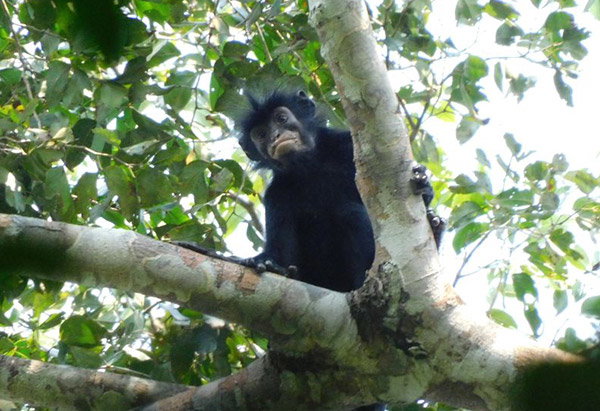
This little one is a likweli, a type of monkey that has been confirmed as a species new to science: Colobus congoensis. The elusive species was first spotted by researchers in the forests of the Democratic Republic of Congo in 2008 and individuals have been sought after ever since. It is only the fifth new species of monkey to be described in Africa since the early 1950s. Researchers hope that a designation could enable officials to designate the species as protected, so they can’t be hunted for meat. (BBC | 5 min read) Reference: PLOS One paper (Junior Amboko (CC-BY 4.0)) |
|||||
|
|||||
How workable are plans for a better world?Two recent major reports have laid out ways to move beyond growth for growth’s sake, in favour of focusing on making lives better and protecting the Earth. But not all economists think that these plans — which include ideas such as global taxes on the very rich — are realistic. Growth, they argue, has a proven track record of reducing extreme poverty, and large-scale redistribution of wealth will never fly politically. Or it might be a matter of fine-tuning, rather than ditching, growth. ‘Green growth’, for example, hinges on cleaner technologies, while ‘degrowth’ strategies involving simply producing and consuming less could be implemented at certain scales, such as in cities. Nature | 6 min readReference: The Global Justice Report & The Roadmap for Eradicating Poverty Beyond Growth |
|||||
The houses built to burn downIn South Carolina, members of a non-profit organization are burning down houses on purpose. The group are studying how blazes tear through, and spread between, these custom-built casas to learn how to build homes that are more fireproof. As climate change makes wildfires ever more frequent, tweaks to the design of houses, and entire neighbourhoods, could limit the damage wrought by these destructive events, the team says. The New York Times | 7 min visual-packed read |
|||||
‘My research on mice is distressing me’What do you do if you love your research but not the difficult realities that come with experimenting on animals? Three researchers familiar with the work advise a PhD student grappling with this problem that emotional reactions are valid. “When students are mocked for showing emotion about animal research, that reflects a problem with the research culture,” says one of them, lab technician Fernando Gonzalez-Uarquin. Self-care strategies, such as getting enough sleep and disengaging from work each day, can help build resilience. And becoming more composed when conducting animal procedures doesn’t indicate a lack of empathy. “A calm and confident researcher handles animals better than a stressed one, which matters for animal welfare,” Gonzalez-Uarquin says. Nature | 10 min read |
|||||
Quote of the day“Flying is generally black and white. Research is not.”Fighter pilot Ajit Krishnan is one of the four astronauts selected for Gaganyaan, India’s first human space mission, which is scheduled for a late-2028 launch. He enrolled into a doctoral research programme at the Indian Institute of Science to prepare for the mission, his first experience at a civilian research institute. (Nature India | 6 min read) |
|||||
|
|
|||||
|
|||||
|
|
|||||
Free newsletters from NatureWant more? Update your preferences to sign up to our other Nature Briefing newsletters:
|
|||||
|
|||||
|
You received this newsletter because you subscribed with the email address: - Please add [email protected] to your address book. Enjoying this newsletter? You can use this form to recommend it to a friend or colleague — thank you! Had enough? To unsubscribe from this Briefing, but keep receiving your other Nature Briefing newsletters, please update your subscription preferences. To stop all Nature Briefing emails forever, click here to remove your personal data from our system. Fancy a bit of a read? View our privacy policy. Forwarded by a friend? Get the Briefing straight to your inbox: subscribe for free. Want to master time management, protect your mental health and brush up on your skills? Sign up for our free short e-mail series for working scientists, Back to the lab. Get more from Nature: Register for free on nature.com to sign up for other newsletters specific to your field and email alerts from Nature Portfolio journals. Would you like to read the Briefing in other languages? 关注Nature Portfolio官方微信订阅号,每周二为您推送Nature Briefing精选中文内容——自然每周简报。
Nature Portfolio | The Springer Nature Campus, 4 Crinan Street, London, N1 9XW, United Kingdom Nature Portfolio, part of Springer Nature. |